
You’ve probably seen the ticker RENTA pop up on a crypto screen and wondered what it actually does. Is it just another meme coin hoping for a viral moment? Or is there real technology behind it? The answer lies in a project called Renta Network, which describes itself as a blockchain-based Web3 rental ecosystem that enables users to rent anything through NFTs, smart contracts, and an AI-enhanced platform focused on property and asset sharing worldwide.
It sounds ambitious-tokenizing everything from apartments to power tools so you can rent them without middlemen. But how does it work under the hood, and is it worth your attention in mid-2026? Let’s break down the mechanics, the market reality, and the risks involved.
The Core Concept: Renting via Blockchain
Renta Network isn't trying to build a new social media app or a decentralized exchange. Its goal is specific: revolutionize the sharing economy by removing traditional intermediaries like Airbnb or Turo. Instead of paying fees to a central company, owners list their assets directly on the blockchain, and renters access them using digital keys.
The magic happens through something called PropertyNFTs. These aren’t pictures of monkeys; they are functional tokens representing the right to use a physical or digital asset. When you rent a camera or a studio apartment through this network, you receive a PropertyNFT that acts as your digital lease agreement.
- Ownership vs. Usage: You don’t buy the asset. You buy the temporary right to use it.
- Smart Contracts: The terms of the rental (duration, price, rules) are locked into code. No one can change them unilaterally.
- Escrow Payments: Money is held securely until the rental conditions are met, protecting both the owner and the renter.
This setup aims to solve common rental headaches: hidden fees, slow refunds, and lack of transparency. By moving these agreements on-chain, Renta Network promises faster settlements and higher security.
Technology Stack: Why Ethereum Layer-2 Matters
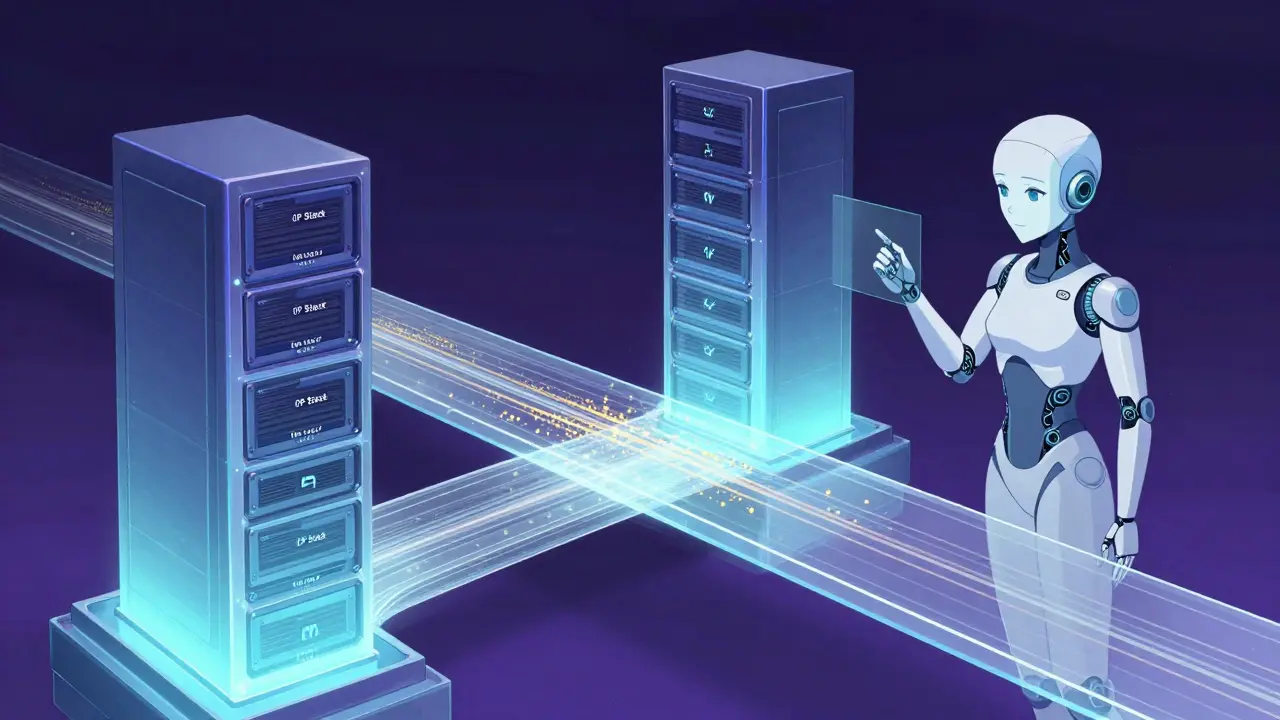
If you’ve tried sending money on Ethereum mainnet, you know gas fees can be brutal. Imagine trying to rent a bike for an hour but having to pay $50 in transaction fees. It doesn’t make sense. That’s why Renta Network built its protocol on an Ethereum Layer-2 solution using OP Stack technology.
According to technical overviews published in May 2026, this architecture allows for near-instant transactions at a fraction of the cost. This is critical for a rental platform where users might extend a booking, cancel early, or return an item quickly. High-frequency interactions need low friction.
| Feature | Ethereum Mainnet | Renta Network (L2) |
|---|---|---|
| Transaction Speed | Seconds to minutes | Near-instant |
| Gas Fees | High ($10-$100+) | Low (fractions of a cent) |
| Scalability | Limited | High (via OP Stack) |
| Security Base | Native | Inherited from Ethereum |
The integration of AI components also plays a role here. The platform uses artificial intelligence to match renters with available assets automatically, streamlining the search process that usually involves scrolling through endless listings.
The RENTA Token: Utility and Economics
Every Web3 ecosystem needs a native currency, and Renta Network uses the RENTA token. It serves three primary functions within the ecosystem:
- Rental Payments: Users pay for assets using RENTA. This ensures seamless settlement within the smart contracts.
- Gas Fees: Transaction costs on the Layer-2 network are paid in RENTA, keeping operational expenses low.
- Liquidity Incentives: Users can stake RENTA or provide liquidity to pools that support the marketplace, earning rewards in return.
However, looking at the numbers paints a different picture than the white paper promises. As of late 2025 and early 2026, trading activity has been remarkably quiet. Data from Crypto.com showed a 24-hour trading volume of just $2 USD in November 2024. More recently, CoinGecko conversions indicated no significant price movement since May 2026, with prices hovering around fractions of a cent (e.g., ~$0.000095).
This lack of liquidity is a major red flag for traders. While the utility is clear on paper, the actual market participation is minimal. Without active buyers and sellers, entering or exiting positions can be difficult.
Market Reality: Confusion and Competition
Here is where things get tricky. If you search for "RENTA" on major aggregators, you might find two completely different projects.
First, there is Renta Network, the property rental platform we discussed. Second, there is a project called rentahuman, which also uses the ticker RENTA. As of June 2026, rentahuman showed slightly more activity, with daily volumes in the hundreds of dollars range, whereas Renta Network often shows zero or negligible volume.
This ticker overlap creates serious confusion. Traders buying the wrong asset could face total loss if the project they intended to support is inactive. Always check the contract address and the project description carefully before buying.
Furthermore, Renta Network faces competition from other niche tokens. For instance, Rentible (RNB) is another Web3 rental token listed on CoinGecko. While still small-cap, Rentible had a measurable market capitalization of roughly $29,000 in June 2026, suggesting slightly more investor interest than Renta Network, which lacks transparent market cap data on many platforms.
Risks and Red Flags to Watch
Before you consider adding RENTA to your portfolio, let’s look at the cold hard facts regarding risk.
- Opacity in Team Identity: Unlike established projects, Renta Network’s founding team and legal entity are not prominently disclosed in public summaries. This anonymity makes accountability difficult if issues arise.
- Stagnant Price Action: A token with no price movement for weeks suggests a lack of market interest or potential delisting risks from smaller exchanges.
- Unproven Adoption: There are no public metrics showing thousands of users renting cars or homes on the platform. The "global vision" remains largely theoretical based on available data.
- Liquidity Risk: With daily volumes sometimes under $10, you might not be able to sell your tokens without crashing the price.
While the technology stack (OP Stack + NFTs) is sound, execution is everything in crypto. Right now, the execution metrics for user adoption are weak.

How to Use Renta Network (If You Proceed)
If you believe in the long-term vision and want to participate despite the risks, here is the general workflow:
- Get a Compatible Wallet: You’ll need a Web3 wallet that supports Ethereum Layer-2 networks and ERC-721/ERC-1155 NFTs (like MetaMask).
- Acquire RENTA Tokens: Purchase RENTA from a centralized exchange that lists it (check current availability on platforms like Bitget or Coinbase, though listings may vary).
- Bridge to L2: Move your tokens to the Renta Network Layer-2 chain to minimize gas fees.
- Interact with the Marketplace: Browse available PropertyNFTs, review the smart contract terms, and initiate a rental payment using your RENTA balance.
Note that detailed step-by-step guides for non-technical users are scarce. The learning curve is steep, and customer support channels are not well-documented in public reviews.
Final Thoughts on Renta Network
Renta Network represents an interesting intersection of AI, NFTs, and Layer-2 scaling. The idea of tokenizing usage rights is innovative and aligns with broader trends in the sharing economy. However, innovation alone doesn’t guarantee success.
In mid-2026, the project appears to be in a holding pattern. The tech is there, the white paper is updated, but the market hasn’t rallied behind it. For developers and researchers, it’s a fascinating case study in Web3 infrastructure. For investors, it’s a high-risk, low-liquidity asset that requires extreme caution. Always verify which RENTA token you are dealing with, and never invest more than you can afford to lose.
Is Renta Network (RENTA) a safe investment?
No cryptocurrency is guaranteed safe, but RENTA carries significant risks due to extremely low liquidity, anonymous team details, and stagnant trading volume. It should be considered a high-risk speculative asset.
What is the difference between Renta Network and rentahuman?
They are two completely different projects that unfortunately share the same ticker symbol (RENTA). Renta Network focuses on property rentals via NFTs, while rentahuman is a separate entity. Always check the contract address to avoid confusion.
Which blockchain does Renta Network use?
Renta Network operates on an Ethereum Layer-2 solution built using OP Stack technology. This allows for faster and cheaper transactions compared to the Ethereum mainnet.
Can I really rent physical assets with RENTA?
Theoretically, yes. The platform uses PropertyNFTs to represent usage rights for physical or digital assets. However, as of 2026, there is little public evidence of widespread real-world adoption or large-scale asset listings.
Where can I buy RENTA tokens?
RENTA has been listed on various exchanges including Bitget and tracked by aggregators like CoinGecko and Crypto.com. However, availability and liquidity can change rapidly, so check current listing status before attempting to trade.