
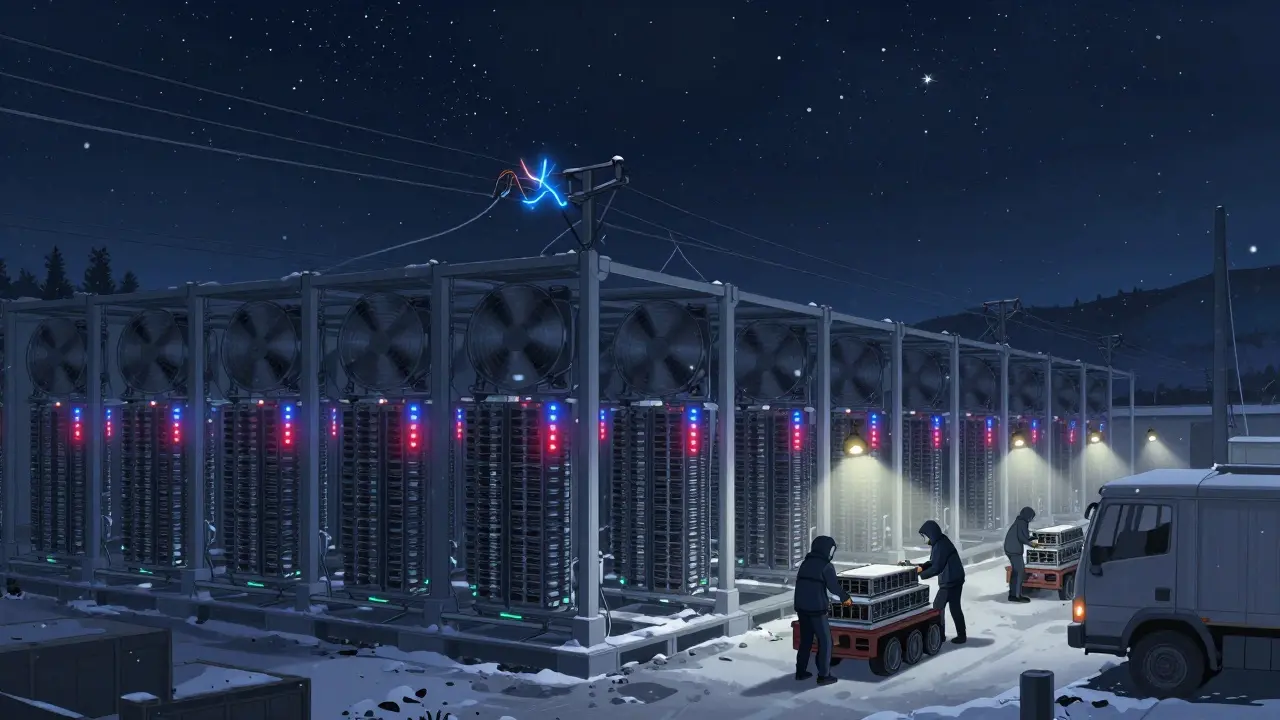
Back in 2021, Kazakhstan was the second-largest Bitcoin mining hub in the world. Mines in Ekibastuz ran nonstop, powered by cheap coal-generated electricity left over from Soviet-era infrastructure. Miners flocked there because energy was cheap, regulations were loose, and the grid had spare capacity. But by 2025, that story had flipped. Miners started packing up. Machines were moved out. Hash rate dropped. And Kazakhstan’s grip on the global Bitcoin network began slipping.
Why Kazakhstan Lost Its Mining Edge
Kazakhstan didn’t lose Bitcoin mining because miners suddenly got tired of it. They left because the country couldn’t keep up. As mining operations exploded, electricity demand surged. By 2021, crypto miners were using nearly 7% of the entire national power supply. That’s not a small number-it’s enough to blackout entire neighborhoods. When protests broke out over rolling blackouts affecting hospitals and schools, the government didn’t hesitate. They cut power to mining farms overnight. That wasn’t the first time Kazakhstan had done this. Similar grid cuts happened in 2022 and again in early 2024. Each time, miners scrambled to find backup generators or temporary power deals. But the message was clear: your mining rig isn’t a priority. Your profit isn’t worth the risk to a family’s heater. Even when the grid came back online, trust didn’t. Miners realized they were playing Russian roulette with their machines. One day, the power’s on. The next, it’s gone-no warning, no compensation. And with Bitcoin’s network difficulty climbing every few days, even a few hours of downtime meant lost revenue and missed rewards.The Canaan Exit: A Turning Point
The biggest signal that things had changed came in July 2025, when Canaan, one of the world’s top Bitcoin mining equipment manufacturers, officially shut down its Kazakhstan operations. Canaan had been running over 6.67 EH/s of hash rate there just months before. By July, that number had dropped to 5.56 EH/s. They didn’t just turn off machines-they shipped them out. Canaan didn’t leave because Kazakhstan was expensive. They left because it was unreliable. In the same quarter, they also shut down a struggling site in South Texas. But unlike Texas, where power contracts are clear and grid outages are rare, Kazakhstan offered no guarantees. Canaan reported mining just 89 BTC in July 2025-a number they blamed directly on the Kazakhstan exit. Half of the offline machines were already reinstalled in other countries by August. The rest followed in the next two months. This wasn’t an isolated case. Other miners quietly followed. Some moved to Texas. Others went to Georgia, Paraguay, or even restarted operations in parts of Canada where renewable energy is abundant and regulations are stable. The message from industry insiders? If you can’t count on your power, you can’t count on your profit.Where Did the Hash Rate Go?
The global Bitcoin network didn’t slow down. In fact, it hit a record 1.041 billion terahashes per second in September 2025-up nearly 50% from the year before. So where did all that extra power come from? The United States pulled ahead hard. With over 35% of the global hash rate, the U.S. now dominates Bitcoin mining. Texas leads the pack, thanks to deregulated energy markets and a growing number of data centers repurposed for mining. Georgia, with its cheap hydroelectric power and pro-crypto laws, jumped to the top five. Canada holds steady at 9.6%, and even smaller players like Paraguay and El Salvador are gaining traction. Kazakhstan still holds 14.8% of the global hash rate as of late 2025. That’s a lot-but it’s down from over 18% at its peak. China, after its 2021 ban, is slowly creeping back with state-backed mining farms in Sichuan and Inner Mongolia, now holding 12%. Iran, despite sanctions, still manages 2.3% thanks to subsidized electricity and a black-market mining culture that never fully died. The shift isn’t just geographic-it’s strategic. Miners aren’t just moving machines. They’re moving into places with long-term power contracts, carbon-neutral energy sources, and legal clarity. Kazakhstan’s government is trying to catch up, but it’s playing catch-up with a broken clock.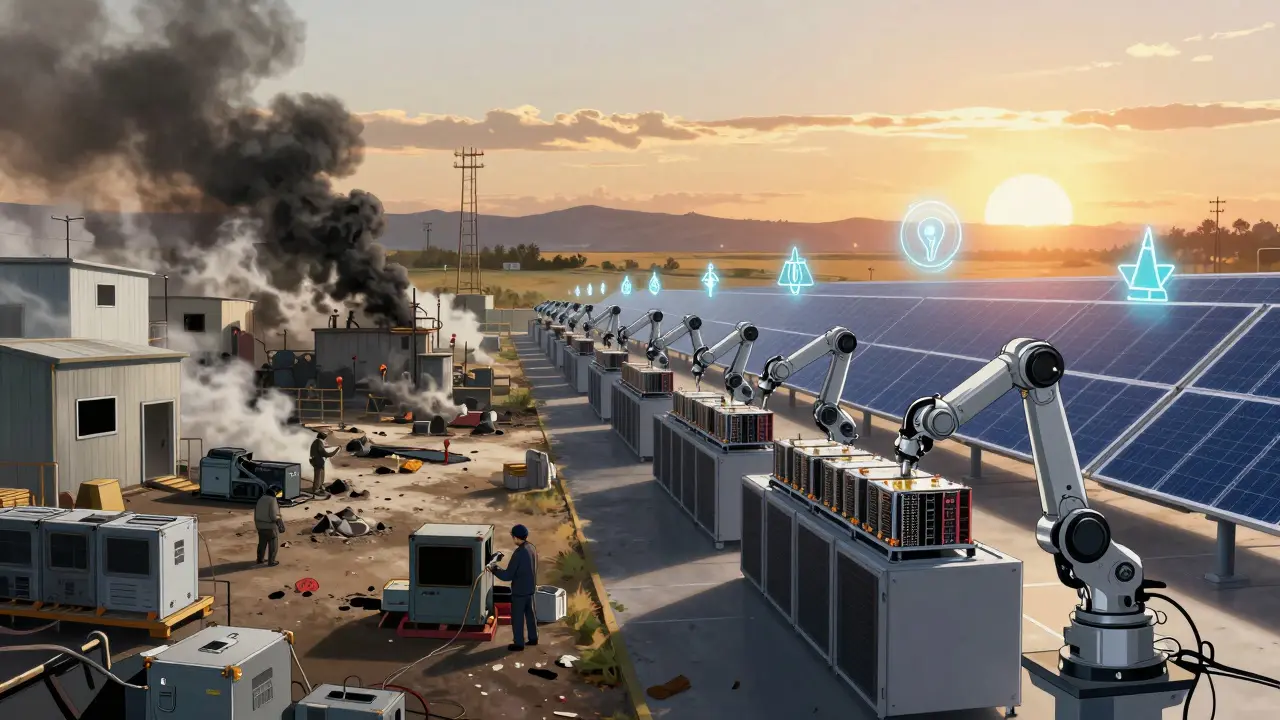
Kazakhstan’s Attempt to Rebuild
The Kazakh government didn’t just give up. In early 2025, they introduced a new energy policy: 70% of new thermal power plant output goes to the national grid. Only 30% is allowed for crypto mining. That’s a hard cap. It’s meant to protect homes, schools, and hospitals from future mining-induced blackouts. They also started cracking down on illegal transactions. In Q1 2025 alone, Kazakh banks blocked 15,800 unauthorized crypto transfers worth over $3 million. That’s not just about money-it’s about control. The state wants to know who’s mining, where the power is going, and how much tax they owe. Some miners still operate legally under these rules. But the margin for error is razor-thin. A single power spike, a delayed payment to the grid operator, or a regulatory audit can shut you down. For large-scale operators with global operations, that’s not worth the risk.What This Means for Bitcoin
The migration from Kazakhstan isn’t a collapse. It’s a realignment. Bitcoin’s network is stronger than ever. The hash rate keeps climbing, even as miners shift locations. That’s because the network doesn’t depend on any one country. It thrives on decentralization. When miners move from unstable regions to stable ones, the network gets more secure. More distributed hash rate means fewer single points of failure. If Kazakhstan had kept growing unchecked, a single grid failure could’ve crippled a big chunk of the network. Now, that risk is spread across dozens of countries. Institutional investors are watching this closely. Hash rate growth is one of the best leading indicators for Bitcoin’s long-term health. When miners invest in new machines and keep running, it shows they believe in the price. The fact that global hash rate hit record highs in 2025-even as Kazakhstan pulled back-means the market isn’t scared. It’s adapting.
Is Kazakhstan Still a Viable Option?
For small-time miners with backup generators and low overhead? Maybe. There are still operators running rigs in Kazakhstan, especially in rural areas where power is cheaper and oversight is lighter. But for anyone serious about scaling, the answer is no. The risks outweigh the rewards. Even if you get a legal permit, you’re still at the mercy of a grid that’s been proven unreliable. And if the government decides to raise energy fees for miners next year? You’re stuck. No contracts, no recourse. Compare that to Texas, where you can sign a 5-year power agreement with a utility company. Or Georgia, where the government offers tax holidays for mining equipment imports. Or even Canada, where renewable energy credits can offset operational costs. Kazakhstan’s days as a top-tier mining hub are over. That doesn’t mean it’s dead. But it’s no longer the place you choose if you want to build something lasting.What’s Next for Bitcoin Mining?
The future of Bitcoin mining isn’t about finding the cheapest electricity. It’s about finding the most predictable electricity. Miners now prioritize:- Long-term power contracts with fixed rates
- Renewable energy sources to reduce carbon footprint
- Clear, stable regulations that don’t change overnight
- Proximity to data centers with redundant power systems
- Access to technical support and spare parts
Why did Bitcoin miners leave Kazakhstan?
Miners left Kazakhstan because the national grid couldn’t handle the power demand from mining operations. Repeated blackouts, government power cuts, and unpredictable regulations made it too risky to operate there. Even though electricity was cheap, the lack of reliability made long-term mining unviable. Major companies like Canaan officially exited in mid-2025 after losing significant hash rate due to unplanned outages.
How much hash rate did Kazakhstan lose?
Kazakhstan’s share of global Bitcoin hash rate dropped from over 18% at its peak in 2021 to 14.8% by late 2025. While it’s still the third-largest mining country after the U.S. and China, the decline was sharp and steady, especially after mid-2025 when major operators began relocating machines to more stable regions.
Where are miners going instead?
Most miners are moving to the United States-especially Texas-where power is deregulated and reliable. Other top destinations include Georgia (cheap hydro power), Canada (stable regulations), Paraguay (renewable energy), and parts of Europe like Sweden and Iceland. These places offer long-term power contracts, legal clarity, and grid stability.
Is Kazakhstan still mining Bitcoin?
Yes, but on a much smaller scale. Kazakhstan still holds 14.8% of the global hash rate as of late 2025, mostly from smaller, legal operations that comply with the government’s 70/30 power allocation rule. However, large-scale industrial miners have mostly left. The country is no longer a preferred location for serious mining operations.
What’s the impact on Bitcoin’s security?
Bitcoin’s security actually improved. The global hash rate hit a record 1.041 billion TH/s in September 2025, despite Kazakhstan’s decline. When miners move from unstable regions to reliable ones, the network becomes more distributed and harder to attack. Hash rate migration isn’t a threat-it’s a sign of the network adapting and growing stronger.
Could Kazakhstan regain its mining dominance?
It’s unlikely without major infrastructure investment. Kazakhstan would need to build new power plants dedicated to mining, eliminate regulatory uncertainty, and offer long-term contracts to operators. Right now, the government prioritizes grid stability over mining growth. Until that changes, miners will keep choosing places with better reliability and predictability.









Linda Prehn
January 21, 2026 AT 15:27 PMKazakhstan just couldn't handle the heat. Miners weren't the problem the grid was. Power cuts during winter? That's not a policy that's a crime against humanity. And now everyone's just moving to Texas like it's the new crypto promised land. Honestly? Kinda sad to see a country collapse under its own ambition.
Brenda Platt
January 22, 2026 AT 04:35 AMThis is actually a beautiful example of Bitcoin's resilience. 🌍 Miners didn't panic-they just moved. And the network got stronger because of it. Decentralization isn't just a buzzword-it's survival. Kazakhstan's loss? A win for the whole ecosystem. More locations, less risk, more security. This is how crypto grows up.
george haris
January 22, 2026 AT 16:21 PMWait so if Kazakhstan had just built more power plants instead of cutting miners off, would this have been avoidable? Or was it always going to be a race to the bottom? I feel like governments everywhere are terrified of crypto because they can't control it. But if you treat miners like guests instead of threats, maybe they stick around and help build the grid. Just saying.
David Zinger
January 23, 2026 AT 04:53 AMTexas is not the future it's a corporate tax haven with zero oversight. Canada has better infrastructure, cleaner energy, and actual laws. Why are we pretending the US is winning? It's just the last place left where you can ignore regulations until someone gets hurt. Canada's been quietly building a real mining hub for years. We don't blackout schools to keep your ASICs running.
carol johnson
January 24, 2026 AT 02:04 AMI mean... if you're mining Bitcoin and your power goes out for 4 hours? You're basically throwing away $20k in lost rewards. That's not a risk. That's financial suicide. And yet people still act like Kazakhstan was some kind of paradise. It was a gamble with other people's electricity. No sympathy.
Steve Fennell
January 25, 2026 AT 22:35 PMThe real story here isn't about power cuts. It's about trust. Miners don't leave because of cost. They leave because they can't trust the rules to stay the same. One day you're a valued partner. The next you're a criminal. That's not a business environment. That's a hostage situation. And Bitcoin thrives where contracts are honored, not broken.
Catherine Hays
January 27, 2026 AT 14:34 PMSo let me get this straight. Miners got kicked out of China, then Kazakhstan, now they're flooding into the US? Who's really benefiting here? Big corporations with lobbyists. Not the little guy. This isn't decentralization. It's just moving the monopoly from one country to another. And don't even get me started on how many people in Texas are now paying higher bills because of this.
Mike Stay
January 27, 2026 AT 18:33 PMThe migration from Kazakhstan is not merely a geographic redistribution of hash rate; it is a paradigmatic shift in the operational calculus of industrial-scale Bitcoin mining. The fundamental metric has evolved from marginal cost per kilowatt-hour to the probability-weighted expectation of uninterrupted operational continuity over a multi-year horizon. The introduction of regulatory uncertainty as a systemic risk factor has rendered previously economically viable assets obsolete. The market is now pricing in reliability as a capital expenditure, not an externality. This is not a decline-it is an evolution toward institutional-grade infrastructure.
HARSHA NAVALKAR
January 28, 2026 AT 06:04 AMI read this and I just think... why do we even need so much computing power for one coin? Why not just make it more efficient? Or use less energy? I mean... isn't this just wasteful? I don't get it. People spend so much time arguing about where the machines go. But what about the planet?
Roshmi Chatterjee
January 29, 2026 AT 15:34 PMHonestly this is such a great example of how Bitcoin adapts. It’s not tied to any government, any grid, any ideology. When one place becomes hostile, the network just flows to where it can survive. That’s the beauty of it. No one owns it. No one can shut it down. And that’s why it’s going to outlast every central bank. Miners are the immune system of Bitcoin. They move. The network lives.
Jen Allanson
January 31, 2026 AT 02:21 AMThe fact that miners were allowed to consume 7% of a nation’s electricity is an indictment of regulatory failure. This was never sustainable. It was never ethical. And now that the market has corrected itself, we should not celebrate the migration-we should reflect on the irresponsibility that enabled it in the first place. Bitcoin does not excuse environmental negligence.
Harshal Parmar
February 1, 2026 AT 21:32 PMI know it sounds crazy but I think Kazakhstan is still underrated. I mean, they still have cheap coal and tons of space. If they just fixed the grid a bit and gave miners a 5-year guarantee on power prices? They could bring back half the hash rate. People are giving up too fast. It’s not over till it’s over. I’ve seen worse places come back from nothing. Give them time.
Clark Dilworth
February 2, 2026 AT 00:09 AMThe 70/30 power allocation policy is a textbook example of regulatory capture by legacy utilities. By capping mining at 30%, they're effectively protecting incumbent power distributors from competitive pressure. The real innovation isn't in the hardware-it's in the energy markets. Until Kazakhstan opens up to PPAs and independent power producers, they'll keep losing miners to places where the market works.
Barbara Rousseau-Osborn
February 3, 2026 AT 21:48 PMYou think this is bad? Wait till the US starts taxing mining profits like they do with oil. Then you'll see how fast everyone runs to Paraguay. And don't even get me started on how the government is already drafting bills to 'monitor' hash rate. This isn't freedom. It's just a different kind of control. They're all the same. They just want your money.
Arnaud Landry
February 5, 2026 AT 09:56 AMI don't trust any of this. The US government is secretly buying up all these mining rigs. They're using them to mine Bitcoin and then selling it to fund covert ops. That's why they're so eager to bring miners in. They don't care about the grid. They care about the blockchain ledger. This is all a front. I've seen the documents. They're watching us.
Mark Estareja
February 5, 2026 AT 14:52 PMThe hash rate numbers are misleading. They're counting machines, not uptime. Most of the new US rigs are idle 20% of the time waiting for grid signals. That’s not real capacity. That’s paper hash. Real miners know the difference. You can’t fool the network with ghost power.
Sara Delgado Rivero
February 6, 2026 AT 09:00 AMIf you're mining Bitcoin and you're not using renewable energy you're part of the problem. Stop pretending this is about freedom. It's about carbon emissions. Texas is burning gas. Georgia is using hydro but still draining rivers. We need to stop glorifying this. It's not innovation it's exploitation
Adam Fularz
February 6, 2026 AT 21:18 PMSo what you're saying is if you can't keep the lights on you shouldn't be mining? Newsflash: that's every country ever. This is just capitalism doing its thing. Move to where the power's stable. Or don't mine. Simple.