

Where you plug in your ASIC miners matters just as much as the hardware itself. In 2025, the geography of cryptocurrency mining has shifted dramatically from a wild west of underground operations to a structured global industry defined by regulatory clarity and energy sustainability. The days of hiding rigs in residential basements are largely over for serious operators. Today, success depends on navigating complex legal frameworks, securing cheap renewable power, and finding jurisdictions that welcome rather than fear blockchain infrastructure.
If you are looking to expand your mining operations or start a new facility, understanding the hierarchy of mining-friendly nations is critical. Some countries offer zero capital gains tax, while others provide surplus hydropower at industrial rates. Conversely, some regions carry severe regulatory risks that could shut down your business overnight. This guide breaks down the top destinations for crypto mining in 2025, analyzing their specific advantages, tax structures, and energy landscapes to help you make an informed decision.
The Global Leaders: United States and Institutional Stability
United States remains the dominant force in global Bitcoin mining due to its mature institutional framework and favorable risk-adjusted returns. According to the Hashrate Index, the US leads the market not just because of sheer volume, but because it offers the most predictable environment for large-scale corporate operations. The country benefits from a deep pool of venture capital, established legal precedents regarding digital assets, and a robust supply chain for mining hardware.
However, the US landscape is fragmented. Federal regulations provide a baseline, but state-level policies vary wildly. Texas and North Dakota have emerged as hotspots within the US, offering deregulated electricity markets and political support for energy-intensive industries. In contrast, states with high carbon taxes or strict environmental mandates may pose significant operational hurdles. For institutional miners seeking stability and access to public markets through publicly traded mining companies, the US offers unparalleled liquidity and legal certainty compared to emerging markets.
Central Asia's Powerhouse: Kazakhstan's Strategic Push
Kazakhstan has solidified its position as a major hub for cryptocurrency mining, accounting for over 6% of global hash rate through government-backed incentives. The Kazakhstani government views Bitcoin mining as a strategic tool to diversify its economy away from oil dependence. To attract foreign investment, they have implemented aggressive tax breaks and subsidized energy prices for registered mining entities.
A key advantage in Kazakhstan is the Astana International Financial Centre (AIFC). Businesses registered here enjoy exemption from corporate taxes until 2066, a massive incentive for long-term planning. Furthermore, personal crypto gains are generally not subject to capital gains tax, allowing individual miners to retain more of their profits. The country is also investing heavily in renewable energy infrastructure to mitigate the environmental impact of its growing hash rate, making it increasingly attractive to ESG-conscious investors. However, operators must remain vigilant about occasional grid instability during winter months when heating demand spikes.
Clean Energy Havens: Iceland and Norway
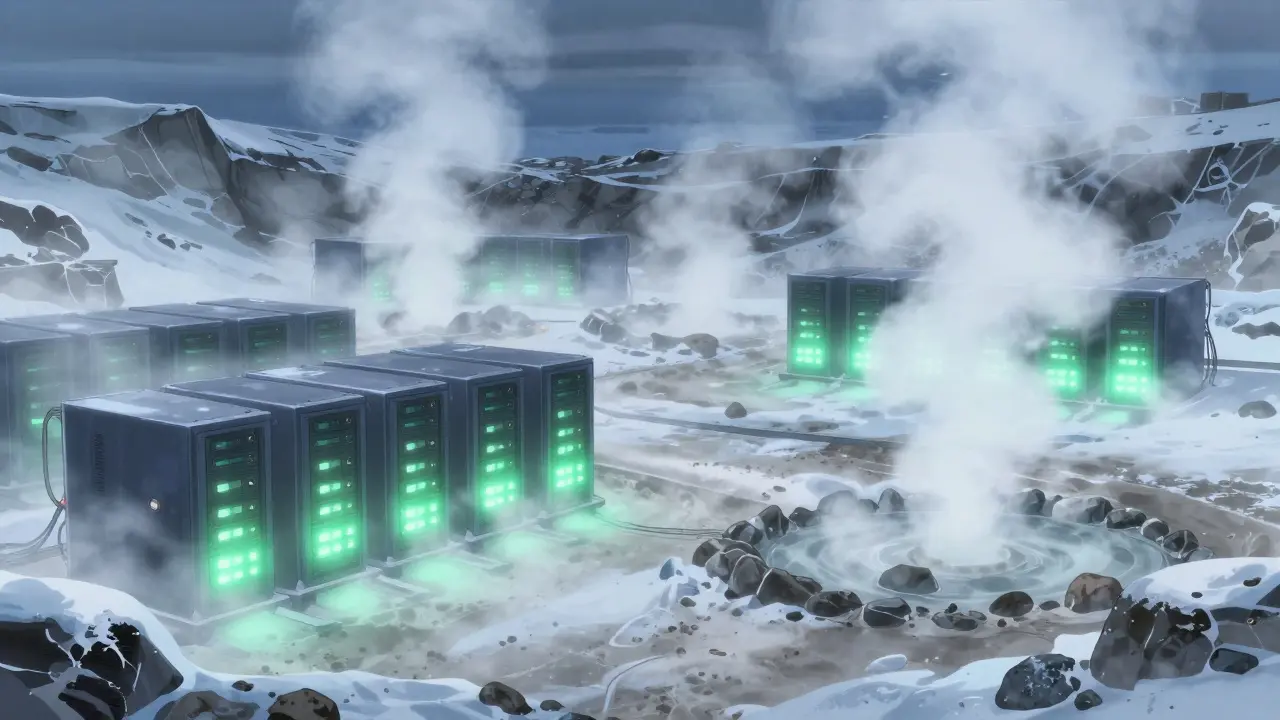
Iceland stands out as an ideal location for mining due to its naturally cool climate and abundant geothermal energy. The island nation’s low population density means there is minimal competition for electricity, resulting in some of the lowest energy costs in Europe. Perhaps even more valuable is the ambient temperature. Cooling ASIC miners requires significant energy; in Iceland, the cold air does much of this work naturally, drastically reducing overhead costs and extending hardware lifespan.
Norway offers a similar profile with abundant hydropower resources and a cool northern climate. Northern Norway, in particular, has surplus hydroelectric capacity that cannot be easily exported to neighboring countries. This makes it economically viable for miners to purchase power at competitive rates. However, Norway’s regulatory environment is less explicitly supportive than Kazakhstan’s. The government is currently debating the environmental impact of mining versus national green energy goals. While no ban exists, future policy shifts could introduce stricter licensing requirements or higher taxes, adding a layer of uncertainty for long-term contracts.

Regulatory Clarity and Tax Efficiency: Switzerland and Liechtenstein
Switzerland consistently ranks as one of the most crypto-friendly nations globally, driven by clear FINMA regulations and a welcoming financial sector. The Swiss Financial Market Supervisory Authority (FINMA) has provided detailed guidelines on how cryptocurrencies are treated under anti-money laundering laws and banking regulations. This clarity reduces compliance costs for businesses. Major Swiss banks are accustomed to working with crypto firms, providing easy access to traditional banking services that are often denied elsewhere.
Next door, Liechtenstein has revolutionized its legal framework with the Blockchain Act, which provides comprehensive legal certainty for token-based business models. This law covers everything from asset-backed tokens to decentralized finance protocols. For mining operations tied to broader blockchain projects, Liechtenstein offers a stable, low-tax environment with strong investor protection. It is particularly appealing for institutional investors who prioritize legal security over the ultra-low energy costs found in developing nations.
Emerging Opportunities: Georgia, Estonia, and Canada
Georgia has quietly become a top contender for miners due to its lack of capital gains tax on cryptocurrency and relatively low electricity costs. The country’s proactive stance on digital assets includes a dedicated regulatory body that oversees virtual currencies. With a stable political environment and proximity to European markets, Georgia offers a balanced mix of tax efficiency and operational ease.
Estonia continues to build its reputation as a digital-first society with active legalization efforts and a willingness to fund blockchain innovation. While energy costs are higher than in Central Asia or Scandinavia, the country’s advanced e-governance infrastructure makes administrative processes incredibly smooth. Business registration and tax filing can be done online in minutes, reducing bureaucratic friction significantly.
Canada presents a mixed bag. Provinces like Quebec and British Columbia offer vast surplus hydropower. However, the regulatory landscape is fragmented. Quebec has previously imposed moratoriums on new mining permits to protect grid stability, while other provinces actively recruit miners. Navigating Canadian mining requires careful provincial selection and close monitoring of local energy policies.
High-Risk, High-Reward Zones: China and El Salvador
China remains relevant in global mining despite an official ban, primarily through underground operations leveraging cheap hydropower. During rainy seasons in provinces like Sichuan, excess hydroelectricity is available at rock-bottom prices. Chinese manufacturers also dominate the hardware supply chain. However, operating here carries extreme regulatory risk. Raids, confiscations, and sudden policy changes are common. For most legitimate businesses, the legal exposure outweighs the cost savings.
El Salvador takes the opposite approach. As the first country to adopt Bitcoin as legal tender, it offers zero capital gains tax and strong presidential support for mining. The government has invested in volcanic-powered mining farms, promoting sustainability. While the political will is strong, the small size of the grid and economic volatility present operational challenges. It is a bold bet on Bitcoin’s future, suitable for those aligned with maximalist ideologies but requiring careful risk management.
| Country | Primary Advantage | Tax Policy | Energy Source | Regulatory Risk |
|---|---|---|---|---|
| United States | Institutional Framework | Varies by State | Mixed (Renewable & Fossil) | Low (Federal), Medium (State) |
| Kazakhstan | Tax Exemptions (AIFC) | No Capital Gains (Personal) | Coal & Renewable | Medium (Grid Stability) |
| Iceland | Cool Climate & Geothermal | Standard Corporate Tax | Geothermal/Hydro | Low |
| Switzerland | Legal Certainty | Competitive Corporate Tax | Hydro/Nuclear | Very Low |
| Georgia | No Capital Gains Tax | Favorable | Hydro | Low |
| El Salvador | Bitcoin Legal Tender | Zero Capital Gains | Volcanic/Renewable | High (Political/Economic) |
Key Factors for Choosing a Mining Location
When evaluating potential locations, look beyond just electricity price per kilowatt-hour. Consider the total cost of ownership, which includes cooling, labor, maintenance, and regulatory compliance. A cheap power source is useless if the government shuts down your operation due to non-compliance. Additionally, assess the reliability of the grid. Frequent outages can damage sensitive ASIC hardware and lead to significant downtime losses.
Sustainability is also becoming a market differentiator. Institutional investors are increasingly demanding proof of green energy usage. Countries like Iceland and Norway offer not only cheap power but also a clean energy narrative that enhances brand value. Finally, ensure there is adequate banking infrastructure. Being able to convert mined coins into fiat currency without facing frozen accounts is essential for cash flow management.
Is it legal to mine cryptocurrency in the United States?
Yes, cryptocurrency mining is legal in the United States. However, regulations vary by state. Some states like Texas encourage mining, while others may impose stricter environmental or zoning restrictions. Always check local state laws before setting up operations.
Which country has the cheapest electricity for crypto mining?
Countries like Kazakhstan, Iceland, and parts of Canada (such as Quebec) offer some of the lowest electricity rates due to abundant natural resources like coal, geothermal, and hydropower. However, prices fluctuate based on seasonality and government subsidies.
Does Kazakhstan charge capital gains tax on Bitcoin?
For individuals, personal crypto gains are generally not subject to capital gains tax in Kazakhstan. Companies registered in the Astana International Financial Centre (AIFC) enjoy corporate tax exemptions until 2066, making it highly attractive for businesses.
Why is Iceland good for crypto mining?
Iceland offers two main advantages: extremely cheap geothermal energy and a naturally cool climate. The cold weather reduces the need for expensive cooling systems for mining hardware, lowering overall operational costs and increasing equipment longevity.
What are the risks of mining in China?
Mining in China is officially banned, so any operations are illegal and underground. Risks include sudden raids by authorities, confiscation of hardware, and lack of legal recourse. While electricity may be cheap, the regulatory risk is exceptionally high.
How does El Salvador support crypto miners?
El Salvador adopted Bitcoin as legal tender and offers zero capital gains tax on crypto transactions. The government actively supports mining through initiatives like volcanic-powered data centers, aiming to boost the local economy and promote Bitcoin adoption.
Is Switzerland friendly to crypto businesses?
Yes, Switzerland is considered one of the most crypto-friendly countries. The Financial Market Supervisory Authority (FINMA) provides clear regulatory guidelines, and Swiss banks are generally open to serving crypto companies, ensuring legal and financial stability.