
Imagine trying to buy a cup of coffee with a $100 bill at a shop that only has five cents in change. That’s essentially what trading on Dezswap feels like right now. With a Total Value Locked (TVL) hovering around $514,190, this decentralized exchange is a tiny fish in an ocean dominated by leviathans like Uniswap and PancakeSwap. If you’ve stumbled upon Dezswap while hunting for obscure tokens or high-yield farming opportunities, you’re probably asking one critical question: is the potential reward worth the massive liquidity risk?
This isn’t your typical "best DEX" roundup where every platform looks shiny and safe. Dezswap operates in the shadows of major aggregators, often marked as "Untracked" on data giants like CoinMarketCap. That label alone should make any experienced trader pause. But before you swipe left, let’s break down exactly what Dezswap offers, where it falls short, and who-if anyone-should actually connect their wallet to this platform.
The Reality Check: What Is Dezswap?
At its core, Dezswap is a decentralized exchange (DEX) operating on a single blockchain network. Unlike multi-chain powerhouses that bridge assets across Ethereum, Polygon, and Arbitrum, Dezswap keeps things simple by sticking to one chain. This limitation cuts both ways. On one hand, it reduces complexity for users who don’t want to manage cross-chain bridges. On the other, it isolates the platform from the broader DeFi ecosystem, trapping liquidity in a silo.
The most glaring issue? Liquidity. In the world of automated market makers (AMMs), liquidity is oxygen. Without enough funds in the pools, trades suffer from high slippage. Slippage means you might agree to buy a token at $1.00 but end up paying $1.05 because there weren’t enough sellers at the lower price. With less than half a million dollars locked in the protocol, even a modest trade of $1,000 could move the market significantly against you. Compare this to Uniswap’s billions in TVL, where a $1,000 trade barely registers a ripple.
Why Data Providers Ignore Dezswap
You won’t find Dezswap trending on Twitter or featured in top-tier crypto newsletters. Major data aggregators classify it as an "Untracked Listing." This isn’t just a technical glitch; it’s a signal. Platforms like CoinGecko and CoinMarketCap require consistent volume and transparent data reporting to track an exchange. Dezswap’s untracked status suggests either extremely low trading activity or a lack of integration with standard analytics tools.
For a trader, this creates a blind spot. You can’t easily verify historical volume, check real-time order books, or compare fee structures against competitors using trusted third-party dashboards. You are flying blind, relying entirely on the interface Dezswap provides. And if that interface doesn’t show deep analytics, you’re making financial decisions based on incomplete information.
Who Should Actually Use Dezswap?
Despite the warnings, Dezswap isn’t completely useless. It serves a niche audience willing to accept higher risks for specific rewards. Here is who fits the profile:
- The Micro-Cap Hunter: If you are looking for brand-new tokens that haven’t listed on major exchanges yet, small DEXs like Dezswap are often the first stop. Early listings can offer explosive growth, but they come with extreme volatility.
- The Local Community Trader: Sometimes, smaller exchanges thrive within specific regional communities or token ecosystems. If you hold a token that primarily trades on Dezswap’s native chain, you have little choice but to use it.
- The Experimenters: Users testing new AMM models or governance structures might try Dezswap to see how its mechanics differ from established protocols. Just keep the position sizes small.
If you are trading Bitcoin, Ethereum, or stablecoins, Dezswap is likely the wrong tool for the job. The fees and slippage will eat into your profits compared to larger platforms.

Comparing Dezswap to Market Leaders
To understand the gap, look at the numbers. While exact fee structures for Dezswap are hard to pin down due to limited public documentation, we can compare its scale against industry standards. Most major DEXs charge between 0.3% and 0.6% per swap, plus gas fees. Dezswap’s competitive edge would need to be significantly lower fees or unique yield opportunities to justify the liquidity risk.
| Feature | Dezswap | Uniswap V3/V4 | PancakeSwap |
|---|---|---|---|
| Total Value Locked (TVL) | ~$514K | $4B+ | $2B+ |
| Data Tracking Status | Untracked / Limited | Fully Tracked | Fully Tracked |
| Blockchain Support | Single Chain | Multi-Chain (ETH, Poly, Arb, etc.) | Multi-Chain (BNB, ETH, Solana, etc.) |
| Liquidity Depth | Low (High Slippage Risk) | Very High (Minimal Slippage) | High (Moderate Slippage) |
| User Interface & Tools | Basic / Minimal Analytics | Advanced Charts & Aggregation | Gamified & Feature-Rich |
The Hidden Risks of Low-Liquidity DEXs
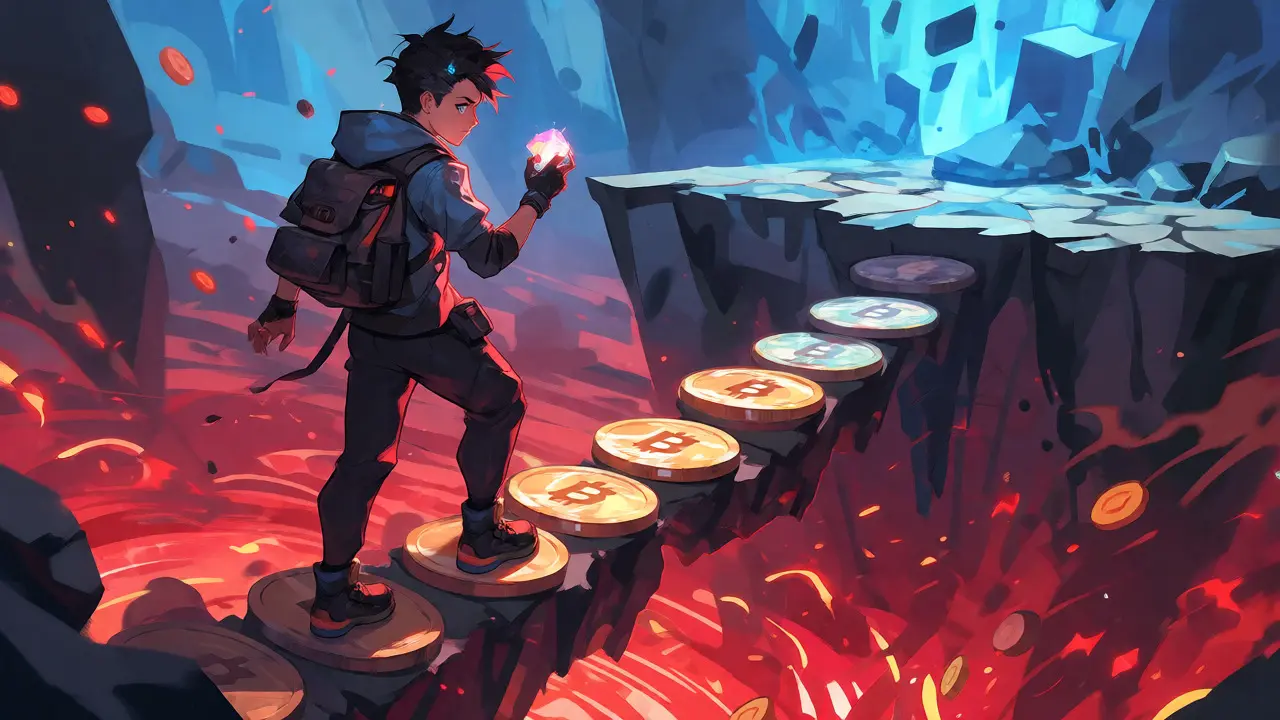
Trading on a platform with $500K in TVL introduces dangers that don’t exist on larger exchanges. First, consider price manipulation. With shallow order books, a single whale selling a large amount of a token can crash the price instantly. You might get stopped out of a position or see your portfolio value drop 20% in minutes simply because one person decided to exit.
Second, there’s the smart contract risk. Established exchanges undergo multiple audits by firms like CertiK or Trail of Bits. Smaller projects like Dezswap may skip these expensive audits or rely on community reviews. If the code has a bug, your funds are gone. There is no customer support hotline to call when a smart contract gets exploited.
Finally, exit liquidity is a real concern. Buying a token is easy; selling it is another story. If you buy $500 worth of a micro-cap token on Dezswap, can you sell it back without moving the price down by 10%? Often, the answer is no. You become stuck holding the bag until more buyers enter the pool.
How to Trade Safely on Dezswap
If you decide to dive in, don’t go in blind. Follow these rules to protect your capital:
- Check the Pair Volume: Before swapping, look at the 24-hour volume for that specific token pair. If it’s under $1,000, avoid trading large amounts.
- Set Strict Slippage Limits: Don’t leave slippage on "Auto." Set it manually to a percentage you can tolerate (e.g., 1-2%). If the transaction fails, it means the price moved too much, protecting you from a bad fill.
- Start Small: Test the platform with a small amount first. Ensure the UI works, the transaction confirms quickly, and you can withdraw your funds without issues.
- Verify the Contract Address: Scammers love creating fake tokens with similar names. Always double-check the contract address against official sources or community forums before adding it to your wallet.
Alternatives Worth Considering
If Dezswap feels too risky, look at platforms that balance innovation with security. For Ethereum-based trading, Uniswap remains the gold standard for reliability. If you prefer lower fees, PancakeSwap on BNB Chain offers a robust ecosystem with millions in daily volume. For Solana users, Orca provides concentrated liquidity with fast execution times.
These platforms aren’t just bigger; they are safer. They have survived years of market cycles, undergone rigorous auditing, and built communities that provide real-time feedback. When you choose a DEX, you’re choosing a partner for your financial journey. Does Dezswap feel like a reliable partner, or a gamble?
Final Verdict: Proceed with Caution
Dezswap is not a scam, but it is a niche player with significant limitations. Its low TVL and untracked status make it unsuitable for serious traders looking for efficiency and safety. However, for those hunting early-stage gems on a specific chain, it offers access to markets that larger exchanges ignore.
Treat Dezswap like a speculative venture, not a primary trading hub. Keep your positions small, monitor your slippage, and never invest money you can’t afford to lose. The crypto market moves fast, and while big ships turn slowly, speedboats like Dezswap capsize easily in rough waters.
Is Dezswap safe to use?
Safety depends on your definition. Technically, it uses smart contracts like other DEXs, so you retain custody of your keys. However, it lacks the extensive audit history and long-term track record of major exchanges. The primary risk is financial loss due to low liquidity and potential smart contract bugs, rather than theft of private keys.
Why is Dezswap considered "untracked"?
Data providers like CoinMarketCap mark Dezswap as untracked because its trading volume is too low to meet their reporting thresholds, or the data quality isn't sufficient for accurate global tracking. This limits visibility and makes it harder to analyze performance trends.
What happens if I trade a large amount on Dezswap?
You will likely experience high slippage. Because the liquidity pool is small ($514K TVL), a large trade consumes a significant portion of the available tokens, driving the price up (for buys) or down (for sells) dramatically during the transaction.
Does Dezswap support multiple blockchains?
No, current data indicates Dezswap operates on a single blockchain network. This limits its accessibility compared to multi-chain DEXs like Uniswap or PancakeSwap, which allow users to trade assets across different networks.
Can I earn yield on Dezswap?
Most DEXs allow liquidity providers to earn fees from trades. On Dezswap, you might earn a share of the trading fees by providing liquidity. However, given the low volume, the actual earnings may be negligible unless you are providing liquidity for a highly volatile or newly launched token.