
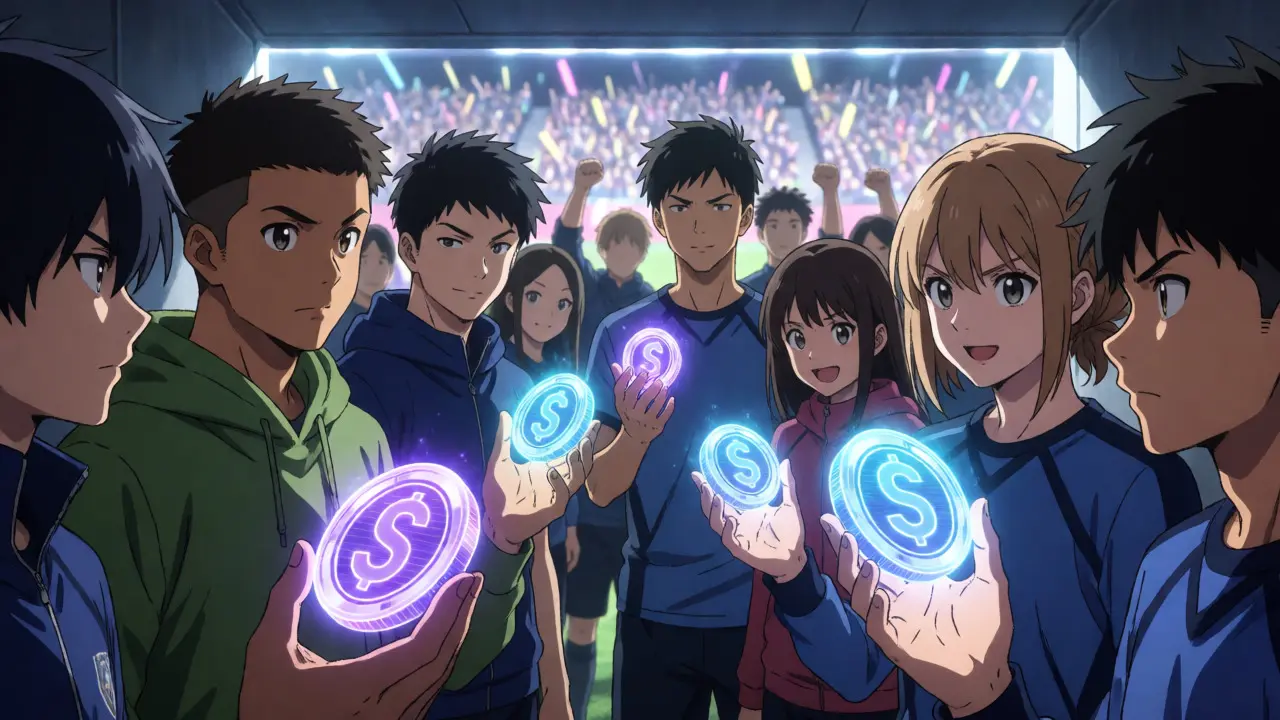
Remember the last time you felt like your opinion actually mattered to a brand? For most of us, it’s been years. You buy the jersey, you stream the album, you post the hashtag, but the decision-making power remains locked behind corporate boardroom doors. Social tokens are changing that dynamic by turning passive fans into active stakeholders. These aren’t just digital collectibles; they are functional keys that unlock voting rights, exclusive access, and real influence within sports teams, music labels, and creator communities.
If you’re confused about how a digital coin lets you pick a football club’s jersey design or vote on an artist’s next single cover, you’re not alone. The hype is real, but so is the confusion. This guide cuts through the noise to explain exactly how social tokens work, why they matter for both creators and fans, and what you need to know before diving in. We’ll look at the mechanics, the benefits, and the pitfalls, using real-world examples from the current landscape in 2026.
What Exactly Are Social Tokens?
At their core, social tokens are blockchain-based assets that represent a community or a brand. Think of them as a hybrid between a stock, a loyalty card, and a membership pass. Unlike traditional cryptocurrencies like Bitcoin, which store value globally, social tokens derive their worth specifically from the health and activity of the community backing them. If the community grows, engages, and creates value, the token often appreciates. If the community stalls, the token value drops.
Fan tokens are a specific subset of this category, primarily used by sports organizations and entertainment brands. They allow holders to participate in governance-like activities, such as voting on minor club decisions or accessing VIP experiences. The technology relies on blockchain, which ensures transparency and security. Every transaction is recorded on a public ledger, meaning no central authority can arbitrarily change the rules or erase your ownership record.
It’s crucial to distinguish these from simple NFTs (Non-Fungible Tokens). While an NFT is unique and non-interchangeable (like a one-of-a-kind trading card), a social token is fungible (one token equals another) and acts more like a currency or share within a specific ecosystem. You can trade them, hold them for speculation, or use them to access services.
The Mechanics: How Do Fans Actually Use Them?
Owning a social token isn’t just about holding it in a wallet hoping the price goes up. The real utility lies in engagement. Here is how the typical lifecycle works for a fan:
- Acquisition: Fans buy tokens on specialized platforms like Socios.com or Chiliz, or directly from creator websites using fiat currency or crypto.
- Governance Voting: Token holders get weighted votes based on how many tokens they own. For example, a Premier League team might ask fans to choose the pre-match tunnel music. Each token equals one vote.
- Exclusive Access: Holders gain entry to private Discord servers, early ticket sales, or limited-edition merchandise drops.
- Rewards and Gamification: Many platforms offer quizzes or prediction games where correct answers earn more tokens or special badges.
This structure transforms the relationship from transactional to participatory. Instead of just buying a product, you are investing in the outcome. When a music artist releases a new album, token holders might have voted on the tracklist order. This creates a psychological sense of ownership, known as the "IKEA effect," where people value things more because they helped create them.
Why Creators and Sports Teams Love Social Tokens
For brands, social tokens solve a major problem: platform dependency. Historically, sports teams and artists relied on Facebook, Instagram, or Twitter to reach fans. Algorithm changes could wipe out their reach overnight. With social tokens, the audience owns a piece of the community infrastructure. This direct connection allows for better monetization without middlemen taking large cuts.
Data from recent industry reports indicates that over 60% of web3 communities now offer gated content to superfans. This isn’t just a trend; it’s a shift in business models. By issuing tokens, clubs and creators can:
- Monetize Directly: Revenue comes from token sales and secondary market fees, not just advertising.
- Boost Retention: Fans who hold tokens are statistically less likely to churn because they have financial and emotional skin in the game.
- Gather Data: Blockchain interactions provide rich data on fan behavior, showing who is truly engaged versus who is just browsing.
Consider a fashion brand launching a new line. Instead of guessing what colors will sell, they let token holders vote on the palette. The voters feel heard, and the brand reduces inventory risk. It’s a win-win scenario driven by community governance.
Benefits for the Superfan
Why should you care? Because it gives you leverage. Traditional loyalty programs give you points that expire if you don’t use them. Social tokens are assets you can trade. If your favorite team has a great season, demand for their token rises, and you can sell your position for a profit. But beyond speculation, there are tangible perks.
Voting Rights: You can influence decisions like choosing the official slogan, designing a stadium banner, or selecting charity partners. While these are rarely binding on major financial decisions, they foster a deep sense of belonging.
Premium Experiences: Token holders often get priority access to tickets before general sales open. Imagine securing front-row seats to a concert while others are still refreshing their browsers. Some platforms also offer virtual meet-and-greets with players or artists, accessible only via token verification.
Status and Identity: Holding a rare social token acts as a digital badge. In online communities, displaying your token proves your status as a long-time supporter. It’s the modern equivalent of wearing a vintage jersey, but verifiable and tradable.
Challenges and Risks to Consider
It’s not all sunshine and high-fives. There are significant hurdles that both fans and creators face. First, there’s the learning curve. Managing a crypto wallet, understanding gas fees, and navigating exchanges can be intimidating for non-technical users. While user interfaces have improved dramatically by 2026, friction remains a barrier to mass adoption.
Volatility is another factor. Since token values are tied to sentiment, they can swing wildly based on news cycles, player injuries, or viral moments. A fan who buys during a winning streak might see their investment drop after a losing game. This isn’t stable currency; it’s speculative equity in attention.
Regulatory uncertainty also looms large. Governments worldwide are still figuring out how to classify these assets. Are they securities? Commodities? Utility tokens? Changes in tax laws or trading regulations could impact liquidity and accessibility. Always check local laws before investing significant amounts.

Real-World Examples and Market Trends
The sports sector leads adoption. Clubs like Paris Saint-Germain (PSG), Manchester City, and Juventus have issued fan tokens that facilitate millions of dollars in trading volume. These tokens allow fans to vote on things like the anthem played when players walk onto the pitch. In the music industry, artists like Grimes and Kings of Leon have experimented with similar models, offering early access to albums or exclusive remixes to token holders.
However, the most interesting developments are happening in niche creator economies. Independent podcasters and YouTubers are launching their own tokens to bypass ad revenue volatility. A tech reviewer might issue a token that grants access to a private Slack channel where viewers can suggest topics for future videos. This direct feedback loop enhances content quality and viewer satisfaction.
| Feature | Traditional Loyalty Program | Social Token Ecosystem |
|---|---|---|
| Ownership | Points held by company | Asset owned by user |
| Transferability | Usually non-transferable | Tradable on markets |
| Influence | None (passive) | Voting/Governance rights |
| Value Driver | Fixed rewards catalog | Community demand & sentiment |
| Transparency | Opaque backend | Public blockchain ledger |
How to Get Started Safely
If you want to test the waters, start small. Don’t treat social tokens as a get-rich-quick scheme. View them as a way to enhance your fandom. Here’s a quick checklist:
- Research the Project: Is the community active? Does the creator or team have a clear roadmap? Avoid projects with anonymous teams or vague promises.
- Secure Your Wallet: Use a reputable hardware or software wallet. Never share your seed phrase.
- Start Small: Buy enough tokens to engage with the community features. You don’t need to buy thousands to participate.
- Engage: Vote in polls, join the Discord, attend AMAs (Ask Me Anything sessions). The value often correlates with active participation.
The future of fan engagement isn’t just about watching; it’s about co-creating. Social tokens provide the toolset for this shift. As blockchain technology becomes more invisible and user-friendly, we can expect these mechanisms to become standard across entertainment, sports, and media. The question isn’t whether this model will survive, but how quickly you’ll adapt to having a voice in the things you love.
Are social tokens the same as cryptocurrency?
Not exactly. While they use blockchain technology and can often be traded like cryptocurrencies, social tokens are utility assets tied to a specific community or brand. Their value is derived from community engagement and access privileges rather than broad market speculation alone.
Can I lose my money if I invest in fan tokens?
Yes. Like any asset, fan tokens can fluctuate in value. If the community loses interest or the associated team/creator faces negative publicity, the token price may drop. Additionally, regulatory changes or technical issues with the hosting platform could affect liquidity.
Do token holders really have voting power?
In most cases, yes, but the scope varies. Some votes are advisory, helping brands gauge sentiment, while others are binding for minor decisions like jersey designs or charity choices. Major strategic decisions usually remain with the organization's leadership.
What happens if a creator stops producing content?
The token value typically decreases significantly because the primary driver-engagement-disappears. However, some tokens retain value as collectibles or if the community continues to interact independently. It highlights the importance of supporting active, consistent creators.
Is it expensive to buy social tokens?
Entry costs vary widely. Some tokens cost cents, while others trade for hundreds of dollars. Transaction fees (gas fees) depend on the blockchain network used. Ethereum-based tokens tend to have higher fees than newer, faster networks like Solana or Polygon.




lea terrade
September 3, 2026 AT 15:51 PMi read this and honestly im still confused on where the line is between a token and just a really expensive membership card? like if i buy one do i actually own anything or am i just renting access to a discord server that could disappear tomorrow
John Lewis
September 5, 2026 AT 10:28 AMThat's a fair concern, but the key distinction is transferability. With a traditional membership, you can't sell your spot if you lose interest. With social tokens, you hold an asset on the blockchain that you can trade freely on secondary markets. If the community dies, yes, the value drops, but you aren't locked in with sunk costs unless you choose to be. It's more like owning shares in a club than buying a season ticket.
Sheryl Nelsen Hutton
September 6, 2026 AT 22:16 PMFrom a structural perspective, what we are witnessing here is a fundamental shift in the agency dynamics of digital communities, moving away from centralized platform dependency toward decentralized autonomous organization principles where governance rights are programmatically assigned based on token holdings rather than arbitrary administrative fiat. The article correctly identifies the psychological impact of the IKEA effect, but I would argue that it underestimates the friction associated with wallet management for non-technical users, which remains a significant barrier to true mass adoption despite the improvements in UI/UX mentioned for 2026.
The comparison to traditional loyalty programs is apt, yet it fails to fully address the regulatory ambiguity surrounding whether these instruments constitute securities, which creates a latent risk for retail investors who may not understand the legal implications of holding such assets in jurisdictions with strict financial regulations. Furthermore, the volatility inherent in sentiment-driven assets means that the 'value' proposition is often decoupled from the utility, leading to speculative bubbles that can harm long-term community cohesion when early adopters exit positions during price peaks.
Kathryn Haber
September 8, 2026 AT 10:08 AMwe are all just chasing dopamine hits now aren't we? buying a coin to feel like part of something bigger when really we are just feeding the algorithm another way
its funny how we think technology gives us power but mostly it just gives us new ways to be distracted by our own participation theater
Eugene McGrath
September 9, 2026 AT 18:13 PMthis whole thing is just crypto bros trying to monetize fandom because they cant make real products anymore
look at PSG fan token charts its pure speculation garbage no actual utility besides voting on tunnel music which is literally meaningless
if u want influence go join a supporter union dont buy some jpeg on a blockchain
Charlotte Richardson
September 11, 2026 AT 15:03 PMI appreciate the balanced view presented here, especially the acknowledgment of both the benefits for superfans and the legitimate risks involved. For many people, particularly those who have felt disconnected from their favorite brands for years, this sense of tangible ownership can be incredibly empowering and validating.
It is important to remember that while the technical barriers exist, the emotional payoff of having a voice in creative decisions can be profound for individuals seeking deeper connection. We should encourage experimentation with small amounts so that fans can discover this new layer of engagement without feeling overwhelmed by the complexity of Web3 infrastructure.
Ted Thoroughgood
September 11, 2026 AT 18:27 PMhey guys great post! i tried buying a few tokens last month and its pretty cool being able to vote on stuff even if its small things like jersey colors. just start small and dont spend money u cant afford to loose lol
the discord chats are actually fun too so thats a bonus
Jess Emmerson
September 12, 2026 AT 01:53 AMJohn Lewis is right about the liquidity aspect, but I'd add that the 'ownership' feeling is largely psychological until you try to cash out during a downturn. I've held several fan tokens since 2021 and the only time I sold was after a major injury to a star player tanked the price.
For casual fans, treat it as a hobby expense, not an investment. If you enjoy the voting and the exclusive content, it's worth it. If you're looking for ROI, you're likely to get burned by the volatility Eugene mentioned earlier.
Paige Ray
September 12, 2026 AT 15:25 PMthis resonates with me deeply, especially the part about feeling unheard by big corporations. i used to feel so passive just scrolling through feeds hoping for a reply that never came. having a token feels like a small anchor in that chaos, even if the votes are minor. it makes me feel less alone in my fandom.
Kathy Siew
September 13, 2026 AT 19:05 PMoh wow, thanks for reminding me that my opinion matters enough to cost $50 in gas fees. truly humbling experience. also love how we pretend voting on tunnel music changes the game when the owners still decide everything else. nice guide though, very shiny and optimistic.