Missing out on a major crypto launch feels like watching a plane take off without your ticket. You see the hype, you hear the community buzzing, and then you realize the window has closed. If you are looking for details on the GameZone (GZONE) IDO launch or an active airdrop, you need to separate historical data from current opportunities. The landscape of blockchain gaming has shifted significantly since 2021.
GameZone was not just another token drop; it was a strategic launchpad built within the BlueZilla ecosystem. While the initial token generation event happened years ago, understanding how this platform works is crucial if you want to participate in future Initial Game Offerings (IGOs) or Initial NFT Offerings (INOs). This guide breaks down what happened during the original launch, how the tiered system works today, and whether there is any truth to recent airdrop rumors circulating in 2026.
The History of the GameZone IDO Launch
To understand where GameZone stands today, we have to look at its foundation. GameZone launched in 2021 as a comprehensive platform dedicated to GameFi and NFT projects. It didn't start with a massive public sale but rather a structured dual-phase distribution.
The first phase was a private sale that raised $110,000. This capital injection allowed the team to build the infrastructure needed for a launchpad. The second phase was the Initial DEX Offering (IDO), which generated an additional $112,500. Together, these phases established an initial market capitalization of roughly $155,000. Later, the project secured a strategic funding round of $1 million, bringing the total cumulative raise to $1.22 million.
This structure is important because it shows that GameZone was designed for sustainability, not just a quick pump-and-dump. The platform focuses on long-term incubation, providing legal support, marketing, and development assistance to blockchain games. Projects like Katana Inu, Galactic Quadrant, and Velhalla were some of the early successes launched through this mechanism.
How the GZONE Token Works
The GZONE token is the fuel for the entire ecosystem. It isn't just a speculative asset; it has utility baked into its design. The token operates on a deflationary model, which means the supply decreases over time through burning mechanisms.
Here is how the economics play out:
- Total Supply: Capped at 1,000,000,000 GZONE.
- Circulating Supply: Approximately 419,671,821 GZONE.
- Sell Fee: A 7% fee applies to sell orders. Of this, 2% is burned permanently, reducing supply, while 5% goes to staking rewards.
- Staking Penalty: Early unstaking can incur fees up to 25%, encouraging long-term holding.
This deflationary pressure aims to increase value for holders as demand rises. However, market conditions matter. As of mid-2026, GZONE trades around $0.0028, far below its all-time high of $1.18 in November 2021. The 14-day RSI indicates oversold conditions, suggesting that while the price is low, volatility remains high.
The Tier-Based Allocation System
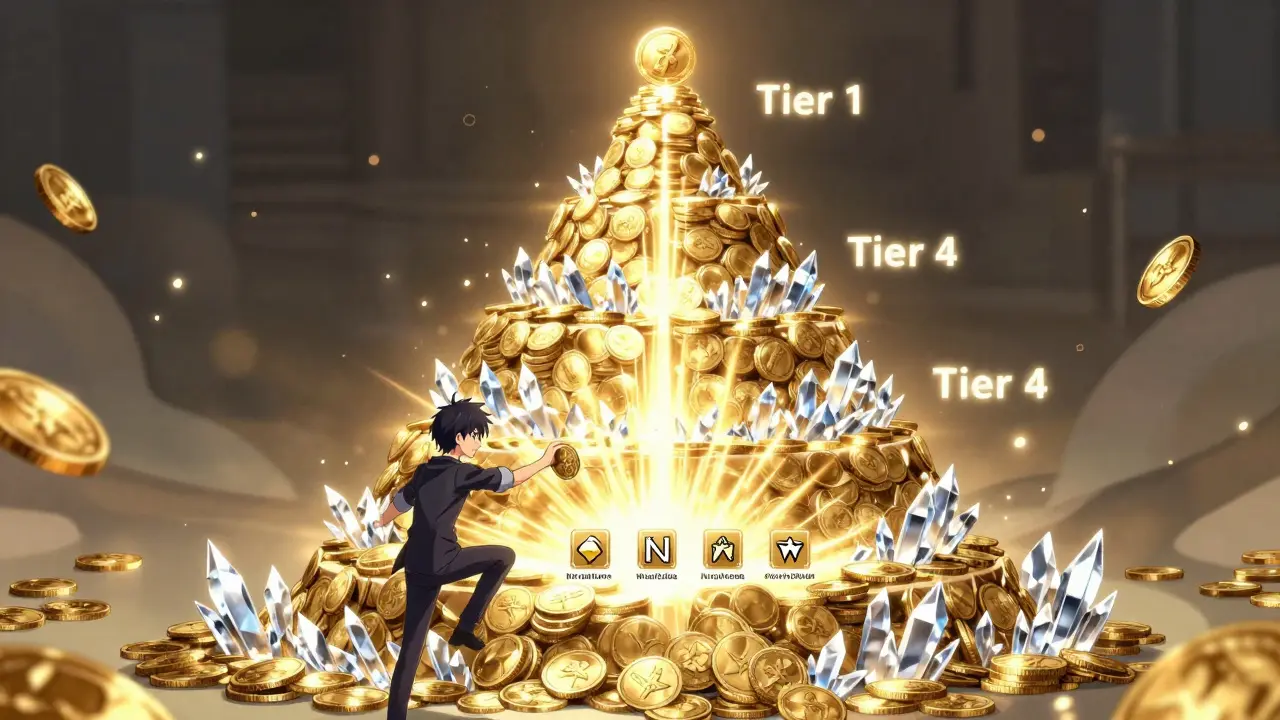
If you are waiting for an "airdrop" in the traditional sense-where you get free tokens just for clicking a link-you might be disappointed. GameZone uses a merit-based, tiered allocation system instead. This ensures that serious participants get access to new launches, rather than bots farming freebies.
The system features four distinct tiers. Your tier depends on how many GZONE tokens you stake and for how long. Here is what higher stakes unlock:
- Tier 1: Basic access to lower-cap IGOs and INOs.
- Tier 2: Increased allocation sizes and access to mid-tier projects.
- Tier 3: Priority access to high-profile launches and better pool weights.
- Tier 4: Maximum allocations, exclusive whitelist spots, and premium marketplace benefits.
This model aligns incentives. When you hold GZONE, you benefit from the success of the games launched on the platform. The more you stake, the more skin in the game you have, and the more access you get to potentially profitable early-stage investments.
Is There a Current GameZone Airdrop?
Let’s address the elephant in the room. Many users search for "GameZone airdrop 2026" hoping for free tokens. Based on current documentation and platform activity, there is no widespread, passive airdrop campaign running for GZONE itself.
However, "airdrops" in the GameFi space often come in different forms:
- Project-Specific Drops: New games launching on GameZone may offer their own token airdrops to early participants who interact with the launchpad.
- Referral Rewards: Inviting others to the platform can sometimes yield bonus GZONE or partner tokens.
- Marketplace Promotions: The GameZone Marketplace occasionally runs events where users earn rewards for trading NFTs.
Be wary of scams. If a website claims you can claim free GZONE by connecting your wallet and approving a transaction, it is likely a phishing attempt. Always verify announcements through official channels like the BlueZilla Discord or verified Twitter accounts.
GameZone vs. Other Launchpads
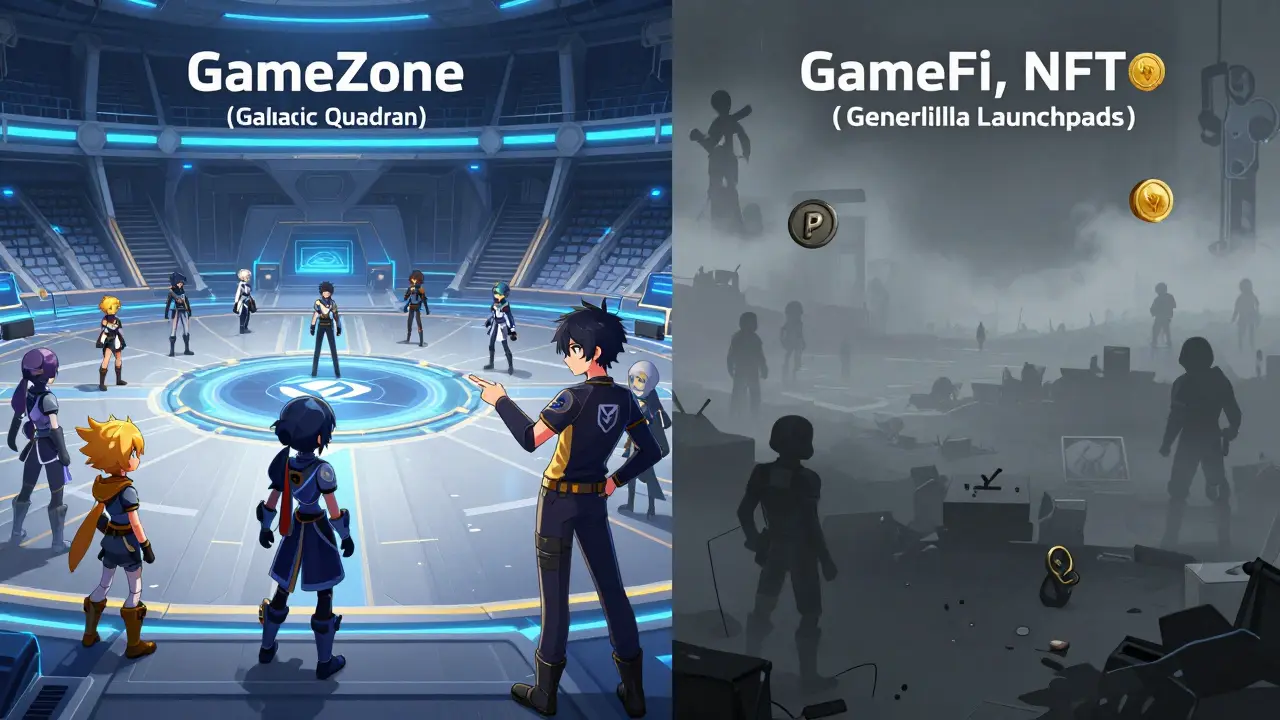
Why choose GameZone over other platforms? The key differentiator is specialization. General launchpads list everything from DeFi protocols to meme coins. GameZone focuses exclusively on GameFi and NFTs.
| Feature | GameZone | General Launchpad |
|---|---|---|
| Focus | GameFi & NFTs only | All sectors (DeFi, Meme, etc.) |
| Incubation | Full support via BlueZilla | Limited or none |
| Tokenomics | Deflationary (burn on sell) | Varies widely |
| Access Model | Tiered staking | Often random lottery or points |
This focus means the projects listed here undergo specific vetting for gaming viability. You aren't just betting on a whitepaper; you're backing a playable product with a roadmap supported by an accelerator.
Price Predictions and Market Outlook for 2026
Investing in GZONE requires patience. The token has seen significant correction from its 2021 peak. Technical indicators show a Fear & Greed Index of 26, indicating fear in the market. However, community sentiment remains strong, with 90% of voters bullish on tracking platforms.
Analysts present two views for 2026:
- Optimistic Scenario: With increased adoption of blockchain gaming and regulatory clarity, GZONE could average $2.50, potentially reaching highs of $3.70 during bull runs.
- Conservative Scenario: If broader crypto markets stagnate, GZONE might trade between $0.002 and $0.003, reflecting current consolidation.
The divergence in predictions highlights the risk. The upside is massive if the GameFi sector explodes, but the downside is limited by the deflationary burn mechanism. Keep an eye on partnerships and new game launches as catalysts for price movement.
How to Get Started with GameZone
If you want to position yourself for future launches, here is your action plan:
- Acquire GZONE: Buy GZONE on supported exchanges. Ensure you have enough for gas fees on Polygon, BSC, Solana, or Ethereum.
- Stake Your Tokens: Move your GZONE to the official staking contract. Aim for at least Tier 2 to see meaningful benefits.
- Join the Community: Enter the BlueZilla Discord. Announcements about new IGOs happen here first.
- Monitor the Marketplace: Check the GameZone Marketplace for NFT drops. These can be lucrative if you flip them correctly.
Remember, consistency beats luck. By staking consistently, you ensure you never miss a whitelist spot for a promising new game launch.
Is the GameZone airdrop still active in 2026?
There is no general passive airdrop for GZONE tokens currently. Access to new projects is determined by your staking tier. However, individual games launching on the platform may offer their own token airdrops to early participants.
What is the minimum amount to stake for GameZone?
The platform does not publish a fixed minimum dollar amount publicly, as tiers adjust based on network conditions. However, to reach higher tiers (Tier 3 or 4), you typically need a substantial number of GZONE tokens held for extended periods.
Which blockchains does GameZone support?
GameZone operates on multiple networks including Polygon, Binance Smart Chain (BSC), Solana, and Ethereum. This multi-chain approach allows for lower fees and faster transactions depending on which network you use.
What happens if I unstake my GZONE early?
Early unstaking incurs a penalty fee that can reach up to 25%. This fee is designed to discourage short-term speculation and reward long-term commitment to the ecosystem.
Who is behind the GameZone platform?
GameZone is part of the BlueZilla ecosystem. BlueZilla is a well-known incubator and accelerator in the crypto space, providing resources like legal aid, marketing, and technical development to blockchain projects.