
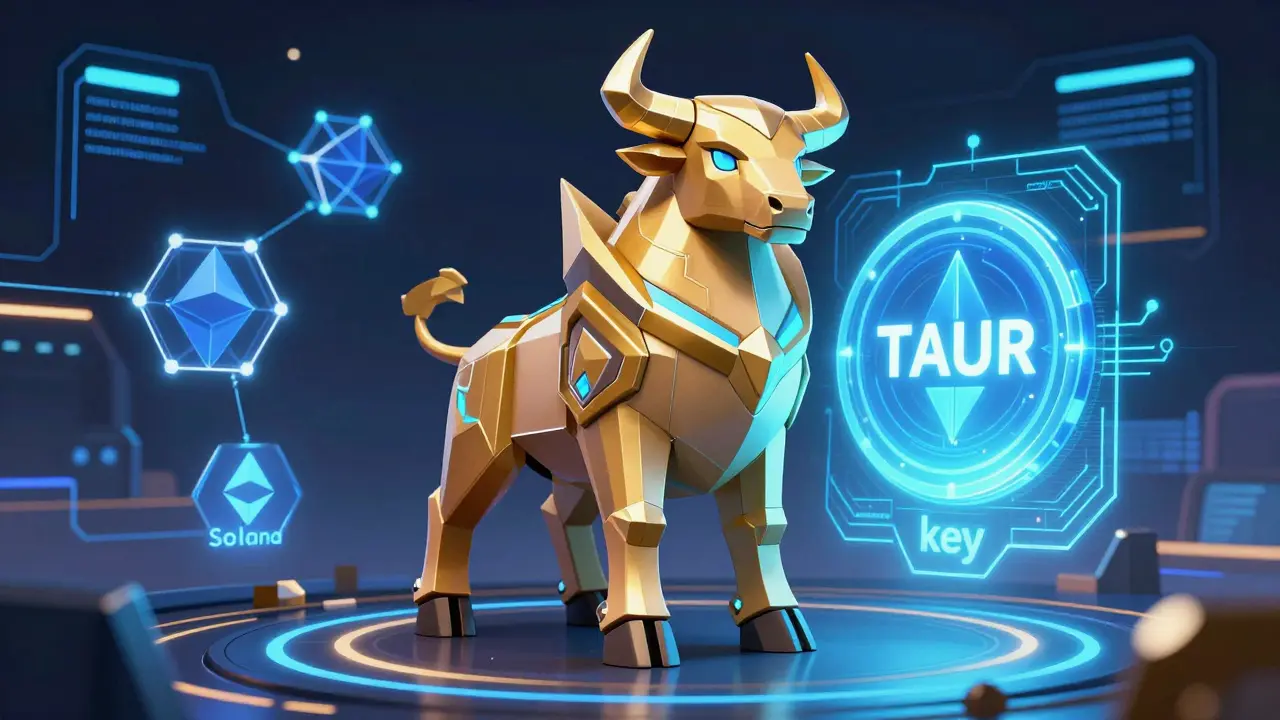
Are you holding Marnotaur NFTs and wondering if you’ve missed out on an airdrop? Or are you trying to figure out how the TAUR token fits into this new generative collection launch? The short answer is that there isn’t a traditional “free mint” or surprise drop happening right now. Instead, what looks like an airdrop is actually a structured profit-sharing campaign tied to the Marnotaur liquidity protocol. To get paid, you need two things: a specific NFT from the collection and a minimum stash of TAUR tokens. It’s not free money; it’s a utility play.
If you’re diving into this space in mid-2026, you need to understand exactly how these mechanics work before you spend any crypto. This guide breaks down the eligibility rules, the real costs involved, and whether this hybrid model of NFTs plus DeFi yields is worth your time.
What Is the Marnotaur NFT Collection?
The Marnotaur NFT Collection is a generative art series that serves as more than just digital wallpaper. In most projects, an NFT is a status symbol. Here, it acts as a key. Specifically, it unlocks access to revenue distribution from the platform’s operations. The project team rebranded from "5X" to Marnotaur during development, signaling a shift toward a more robust identity focused on their core product: a liquidity protocol for secure undercollateralized margin trading.
The public launch of this collection was scheduled for October 4th, 2025. Since we are now past that date, the initial hype cycle has settled, and the focus has shifted entirely to utility. These aren't just JPEGs; they are membership cards for a financial system. If you don’t hold one, you generally cannot participate in the profit-sharing mechanisms described below. This creates a barrier to entry that filters out casual speculators and keeps the community focused on long-term value rather than quick flips.
How the TAUR Token Fits Into the Ecosystem
You can’t talk about the NFTs without talking about TAUR, the native cryptocurrency powering the entire Marnotaur ecosystem. Think of TAUR as the fuel. The NFT is the car. You need both to drive.
TAUR is used for governance, staking, and, crucially, qualifying for those profit shares. The token trades across multiple exchanges, including Gate.io, Bybit, Kraken, and Binance. Prices vary slightly between venues due to liquidity differences, but it typically hovers in the fractional cent range. For example, recent data shows prices fluctuating around $0.0024 to $0.0026 USD. While the price might seem low, remember that volume matters. With daily trading volumes often exceeding $17,000 to $80,000 depending on the exchange pair, there is active interest.
The tokenomics were designed to prevent massive dumps. During the Token Generation Event (TGE) back in 2021, only 20% of the supply was unlocked immediately. The rest followed a vesting schedule with cliffs and monthly releases. This structure suggests the team intended for long-term stability rather than a pump-and-dump exit. However, always check the current circulating supply versus the fully diluted valuation (FDV), which sits at a theoretical maximum based on all 150 million tokens being in circulation.
| Metric | Value / Detail | Context |
|---|---|---|
| Token Symbol | TAUR | Native currency of the protocol |
| Total Supply Cap | 150 Million | Fixed maximum issuance |
| Primary Function | Liquidity & Profit Sharing | Required alongside NFT for rewards |
| Supported Chains | Ethereum, BSC, Polygon, Solana, etc. | Multi-chain architecture |
| TGE Date | October 25, 2021 | Initial distribution milestone |
The Real "Airdrop": Understanding the Profit-Sharing Campaign
Here is where most people get confused. When you see headlines about "Marnotaur airdrops," they are rarely referring to sending free tokens to random wallets. Instead, they are describing a revenue distribution mechanism. This is a performance-based reward system.
To qualify, you must meet two strict criteria:
- Hold a Marnotaur NFT: You need ownership of a piece from the generative collection. This proves you are part of the core community.
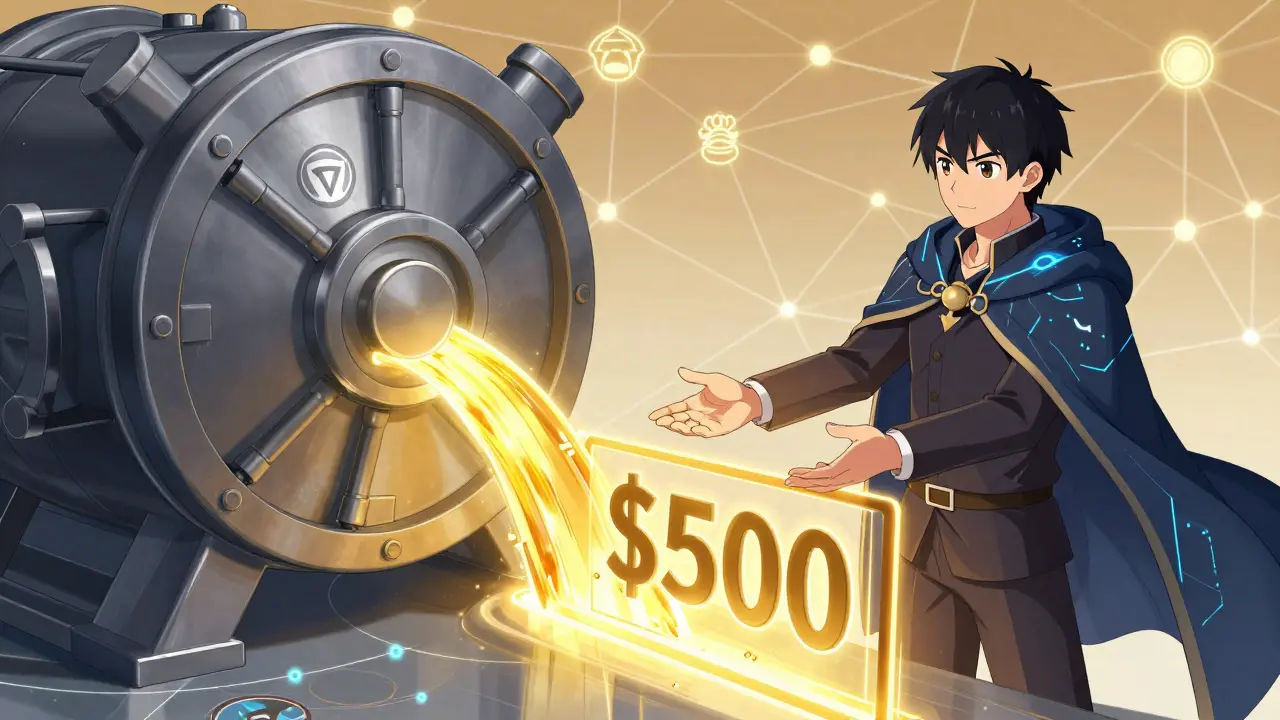
- Hold Minimum TAUR Value: You must stake or hold an equivalent of at least $500 worth of TAUR tokens. This ensures skin in the game.
If you meet these requirements, you become eligible to receive a share of the profits generated by the liquidity protocol. The protocol facilitates undercollateralized margin trading, which generates fees. Those fees are then distributed to qualified holders. This is fundamentally different from a standard airdrop because it requires ongoing capital commitment. If the TAUR price crashes, you might fall below the $500 threshold and lose your eligibility until you buy more.
This model aligns incentives. The team wants users who care about the protocol’s success, not just bots claiming freebies. For you, it means treating this as an investment portfolio, not a lottery ticket.
Is Marnotaur Safe? Analyzing the Risks
Before you move funds, let’s talk risk. Marnotaur operates in the niche of undercollateralized margin trading. In traditional DeFi, you usually overcollateralize (put up $150 to borrow $100). Undercollateralized lending is riskier because if the market moves against you, you can lose more than your initial deposit. The protocol uses smart contracts and Chainlink price feeds to manage this, but no system is immune to bugs or extreme market volatility.
Consider these factors:
- Smart Contract Risk: Like any DeFi project, if there is a vulnerability in the code, funds could be drained. Check if the contracts have been audited by reputable firms.
- Token Volatility: TAUR has seen significant swings. It traded 99.8% below its all-time high at certain points. If you are holding TAUR for the profit share, you are exposed to price risk.
- Liquidity Depth: Lower trading volumes mean higher slippage when buying or selling large amounts of TAUR. Gate.io is currently the most active venue, but liquidity can dry up quickly.
The multi-chain approach helps mitigate some risks by spreading activity across Ethereum, Binance Smart Chain, Polygon, Avalanche, HECO, and Solana. This reduces dependency on a single network’s congestion or fee spikes. However, managing assets across five different chains adds complexity. You need to ensure your wallet supports all these networks and that you have enough gas fees on each chain to interact with the contract.
Step-by-Step: How to Participate Correctly
If you decide this strategy fits your risk appetite, here is how to set yourself up properly. Don’t rush this. One wrong transaction can cost you more in gas fees than the potential reward.
- Acquire the NFT: If you don’t already own a Marnotaur NFT, you will likely need to purchase one from a secondary marketplace like OpenSea or Rarible. Verify the contract address matches the official Marnotaur site to avoid scams.
- Buy TAUR Tokens: Purchase TAUR from a major exchange like Gate.io, Bybit, or Binance. Withdraw them to a self-custody wallet that supports the specific blockchain where the Marnotaur protocol is deployed (e.g., BSC or Ethereum).
- Check the Threshold: Calculate the current USD value of your TAUR holdings. Ensure it stays above $500. Set up price alerts so you know if you are close to dropping below the limit.
- Connect to the Dashboard: Visit the official Marnotaur dashboard. Connect your wallet. The interface should recognize your NFT automatically. If it doesn’t, double-check that you are on the correct network.
- Approve Staking/Holding: Depending on the current version of the protocol, you may need to explicitly approve the contract to read your balance or stake your TAUR. Read the transaction details carefully before signing.
- Monitor Rewards: Profits are distributed periodically. Keep an eye on the dashboard for updates on payout schedules. Taxes apply to these earnings in most jurisdictions, so keep records.
Common Mistakes to Avoid
I’ve seen too many users lose money because they skipped the basics. Here is what you must avoid:
- Ignoring Gas Fees: If you are on Ethereum mainnet, gas fees can exceed the value of small transactions. Consider using Layer 2 solutions or alternative chains like Polygon if supported.
- Falling Below the $500 Limit: Crypto markets are volatile. A 10% drop in TAUR price could knock you out of eligibility. Keep a buffer. Aim for $600+ worth of TAUR to stay safe.
- Phishing Links: Never click links from DMs on Twitter or Discord claiming to offer "extra airdrops." Always type the URL manually or use bookmarks. The official team will never ask for your seed phrase.
- Assuming Passive Income is Guaranteed: Profit sharing depends on the protocol generating revenue. If trading volume drops, payouts drop. This is not a fixed yield savings account.
Future Outlook: What Comes After Launch?
The Marnotaur roadmap indicates continued expansion. We expect integration with more chains like Moonbeam, Cardano, and Near Protocol. This broadens the user base and potentially increases the fee pool for profit sharing. The transition from Public Alpha to Live phases shows a methodical approach, but maturity takes time.
For investors, the key metric to watch is Total Value Locked (TVL) in the liquidity pools. Higher TVL usually correlates with more stable returns and lower risk of insolvency. Additionally, monitor the burn rate of TAUR tokens. If the protocol burns tokens as part of its fee structure, scarcity could drive price appreciation, benefiting both NFT holders and TAUR stakeholders.
Remember, this is a hybrid model. You are betting on three things: the artistic/community value of the NFT, the utility/adoption of the DeFi protocol, and the market performance of the TAUR token. All three must perform reasonably well for you to see positive returns.
Is the Marnotaur NFT airdrop free?
No, it is not a free airdrop. To participate in the profit-sharing campaign, you must purchase a Marnotaur NFT and hold at least $500 worth of TAUR tokens. There is no mechanism for receiving free tokens simply by connecting a wallet.
Which blockchain does the Marnotaur NFT live on?
The Marnotaur ecosystem is multi-chain. It operates on Ethereum, Binance Smart Chain, Polygon, Avalanche, HECO, and Solana. You need to check which specific chain your NFT is on and ensure your TAUR tokens are on the same network to qualify for rewards.
What happens if my TAUR holdings drop below $500?
If the value of your TAUR holdings falls below the $500 threshold, you will likely become ineligible for further profit distributions until you replenish your balance. You do not lose your existing NFT, but you stop earning new rewards.
Where can I buy TAUR tokens?
TAUR is traded on several centralized exchanges including Gate.io, Bybit, Kraken, and Binance. Gate.io currently reports the highest trading volume for the TAUR/USDT pair. Always verify the ticker symbol before purchasing.
Is Marnotaur a safe investment?
Like all DeFi projects, Marnotaur carries significant risk. It involves smart contract vulnerabilities, token price volatility, and the inherent risks of undercollateralized lending. Only invest funds you can afford to lose, and conduct your own research on the latest audit reports.







Hamza k
July 12, 2026 AT 10:52 AMWow, this whole setup is basically a velvet rope party where you have to buy the ticket AND bring your own champagne just to get in the door. It’s dramatic how they spin this 'profit sharing' when it’s really just high-stakes gambling with extra steps. You’re not getting free money; you’re buying a golden shovel and hoping the ground isn’t made of quicksand.
Kim Kay
July 13, 2026 AT 02:52 AMi think its pretty cool that they are trying to make nfts useful again but u need to be carefull tho. the $500 limit is kinda scary if the price drops. maybe start small? i always say try before u buy big amounts. hope everyone stays safe out there
Brad Semp
July 14, 2026 AT 19:00 PMThe notion that one must purchase an overpriced digital jpeg merely to qualify for a marginal yield on a volatile token is preposterous. This is not innovation; it is a thinly veiled scheme designed to extract liquidity from the less discerning. The vesting schedule mentioned is a quaint attempt at legitimacy, yet the fundamental mechanics reek of desperation. One should exercise extreme caution before engaging with such pedestrian financial engineering.
Korn Arrieta
July 15, 2026 AT 14:55 PMThis is garbage. Undercollateralized lending is a trap for idiots who don't understand leverage. You think Chainlink saves you from smart contract bugs? Please. The devs will rug pull the moment TVL spikes. Don't be a sheep. Sell now.
Jackie D
July 17, 2026 AT 08:32 AMso like... is this actually legit or just another scam wrapped in fancy words? i mean the multi-chain thing sounds cool but also super confusing. do i really need to hold taurs on 5 different chains?? thats crazy. feels like a lot of work for maybe pennies. anyone else feeling overwhelmed by all these rules?
Ruth Williams
July 18, 2026 AT 11:50 AMIt is quite evident that the majority of participants here lack the sophistication to grasp the nuances of this protocol. The requirement for both NFT ownership and token staking is a necessary filter to ensure only serious investors participate. Those complaining about the complexity simply do not deserve the potential returns. Read the whitepaper again.
Sophie Nakasako
July 19, 2026 AT 05:43 AMI find myself pondering the deeper implications of this hybrid model. Is it truly profit-sharing, or is it a mechanism to create artificial scarcity around the NFTs? The philosophy of 'skin in the game' is compelling, but does it align with true decentralization? I believe we must look beyond the surface metrics and consider the long-term sustainability of such a structure. It invites us to question what value really means in this new digital economy.
Kristy Morrow
July 20, 2026 AT 06:44 AMeveryone says its risky but i say its boring. why follow the herd? i bought the nft because i like the art. the profit share is just a bonus. dont listen to the fear mongers. life is short buy the dip
John Harman
July 21, 2026 AT 23:13 PMLook, I've been in crypto since 2017 and let me tell you something. This TAUR token is going to moon. The team knows what they're doing. If you're worried about the $500 threshold, you're thinking too small. Just buy more tokens. It's simple math. Stop whining and start stacking.
Antony Lopez
July 23, 2026 AT 17:59 PMAmerican innovation at its finest. We build protocols, they copy them. But seriously, the risk is real. Smart contracts can fail. I've seen projects drain millions in seconds. Don't put your rent money into this. Keep it local, keep it safe, and for god's sake, use a hardware wallet. Trust no one.
Kat Barr
July 25, 2026 AT 10:27 AMomg!! this guide is so helpful!!! 🌟 i was totally confused about the nft part but now i get it! thanks for breaking it down so nicely!! 😊 remember to stay positive and do ur research!! good luck everyone!! 💖✨
Logan Edmison
July 26, 2026 AT 09:45 AMthe existential dread of checking ur portfolio every hour is real. i mean whats the point of profit sharing if the gas fees eat it all? deep thoughts. anyway i might just hodl and forget about it. life goes on.
Michelle Walker
July 26, 2026 AT 11:14 AMPathetic. You people fall for every shiny object. The FDV is ridiculous. The volume is fake. Wake up. This is a classic pump and dump disguised as DeFi. Do your own due diligence or lose everything. Simple.
Shay Thomson
July 28, 2026 AT 10:01 AMOh my goodness, the tension in this thread is palpable! Everyone has such strong opinions! Let's all take a deep breath and remember that we're all just trying to navigate this wild crypto world together. Maybe we can learn from each other instead of attacking. Peace and love, guys!
DJ Maleko
July 30, 2026 AT 06:15 AMI see a lot of fear here which is funny because I'm making bank. The undercollateralized trading is genius. People complain about risk but that's where the alpha is. Stop crying and start earning. The dashboard is easy to use once you figure it out. DM me if you need help setting up your wallet.
Erika Pozzetto
July 31, 2026 AT 11:00 AMIn light of the aforementioned details regarding the Marnotaur ecosystem, it becomes increasingly apparent that the integration of multiple blockchain networks serves not merely as a technical redundancy but as a strategic imperative for enhancing the overall robustness and resilience of the platform against potential systemic failures or network-specific congestions thereby ensuring a more seamless and uninterrupted experience for the end user who seeks to participate in the profit-sharing mechanisms without undue friction or delay which could otherwise deter participation and undermine the collective goals of the community stakeholders involved in this innovative venture.
Russ Fincham
July 31, 2026 AT 18:24 PMHere's the deal. The formal structure looks good on paper. But in reality, it's messy. The casual approach to security is worrying. I've audited similar contracts. They have holes. Big ones. Don't trust the audit reports blindly. Check the code yourself if you can. If you can't, stay away. It's that simple.
Linda Hilliard
August 1, 2026 AT 08:47 AMThe semantic distinction between an 'airdrop' and a 'profit-sharing campaign' is critical for any sophisticated investor to comprehend. To conflate the two is to demonstrate a profound ignorance of market dynamics. The barrier to entry is intentional. It filters out the noise. Only those with capital and conviction survive. Embrace the complexity. 📈💼