

LinkedNation (NATION) isn’t another big-name crypto. It doesn’t have a team of 50 developers, a listing on Coinbase, or a whitepaper that reads like a tech manifesto. It’s a tiny, obscure token built on Solana with one clear promise: to fund education through blockchain. But here’s the problem - after more than a year, there’s almost no proof it’s doing anything at all.
Launched with a total supply of 1 billion NATION tokens, this coin was supposed to be the heartbeat of a community-driven system that gives grants, supports student entrepreneurs, and lets holders vote on funding decisions. Sounds good, right? But if you look at what’s actually happening, the story changes fast.
How NATION Actually Works (On Paper vs. In Practice)
The theory behind LinkedNation is simple: use the NATION token as a governance and funding tool. Holders vote on which educational projects get funded. The DAO (Decentralized Autonomous Organization) manages the treasury. Money comes from token sales and community donations. The idea is to cut out banks, universities, and bureaucracy - and let regular people fund real learning.
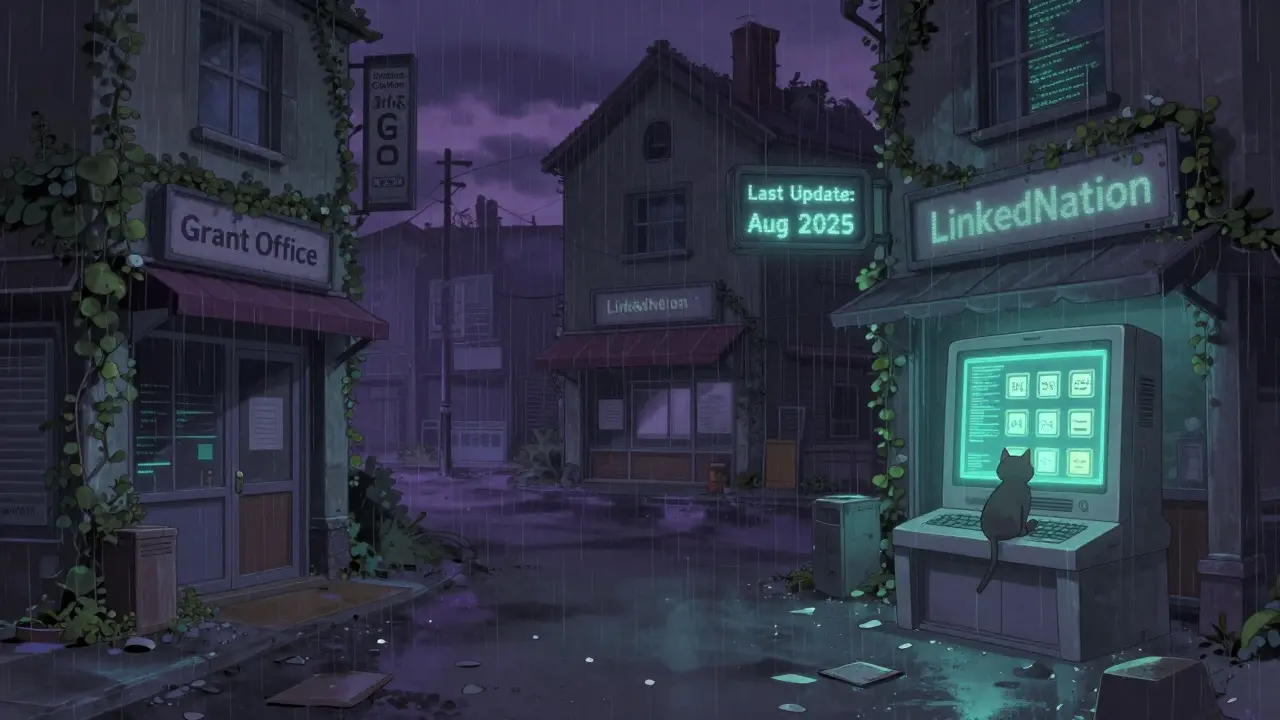
But here’s the reality check: as of January 2026, there are no public records of any grants being awarded. No scholarship winners announced. No startup incubators launched. No school partnerships published. GitHub shows only 3 commits in the last 90 days. The last major update to their website or documentation was in August 2025.
Compare that to projects like Braintrust (BTRST), which actually pays freelancers in crypto for education-related work, or The Graph (GRT), which indexes real blockchain data for developers. LinkedNation has no working product. No users. No track record. Just a token and a website.
The Numbers Don’t Lie - NATION Is a Micro-Cap Ghost
Let’s talk numbers. As of February 2026, NATION trades around $0.0011. That’s less than one-tenth of a cent. Its market cap? Barely $1 million. For context, Bitcoin’s market cap is over $1 trillion. Even small coins like Dogecoin or Shiba Inu have billions in value. NATION sits in the bottom 0.1% of all cryptocurrencies.
Here’s what else the data shows:
- Total Supply: 1,000,000,000 NATION (999,999,704 in circulation after 300 burned)
- All-Time High: $0.00593 (May 19, 2025)
- All-Time Low: $0.000739 (July 15, 2025)
- Trading Volume (24h): Between $15k and $170k - wildly inconsistent across exchanges
- Exchanges: Not listed on Binance, Coinbase, or Kraken. Only available on Raydium (Solana DEX)
- Wallet Holders: Only 1,842 unique Solana wallets own NATION
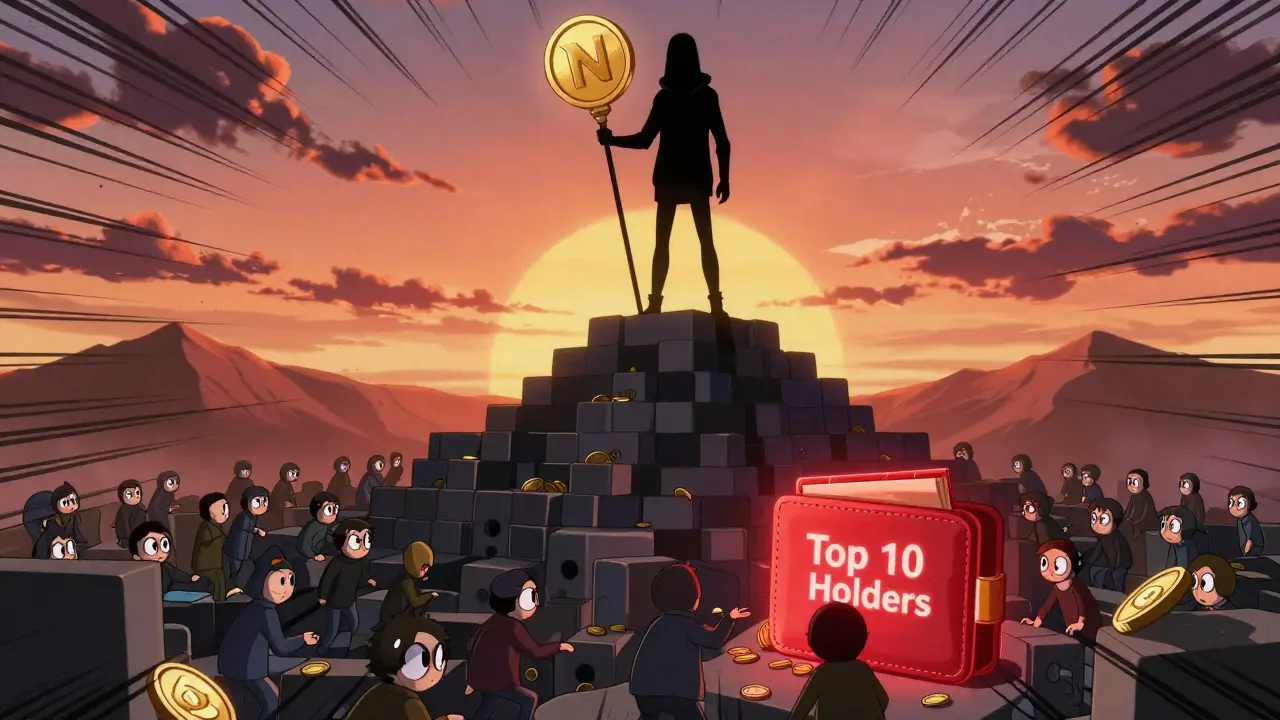
- Concentration: 67% of all tokens are held in the top 10 wallets
That last point is critical. When 67% of a token is owned by a handful of wallets, it’s not a community project - it’s a pump-and-dump waiting to happen. The price can be moved with a single large trade. And that’s exactly what’s been happening.
Who’s Buying NATION - And Why?
Most people aren’t buying NATION because they believe in education. They’re buying it because they saw a 40% pump on Telegram. Reddit threads are full of posts like:
"Bought NATION for the education mission, but 3 months in and I’ve seen zero tangible projects funded-just pump groups hyping the token." - u/EduCryptoInvestor, Reddit
And:
"Caught the +40% pump last week-good for quick flips but wouldn’t hold long term." - u/SolanaGains, Reddit
That’s the pattern. No long-term holders. No builders. No users. Just traders chasing short-term spikes. The token’s 7-day price jump of +28.3% in December 2025 wasn’t driven by adoption - it was driven by coordinated social media hype.
Trustpilot reviews tell the same story. With a 2.1/5 rating from 37 users, the most common complaints are:
- "No transparency about who’s behind the project."
- "Telegram groups are full of bots pushing fake news."
- "I can’t get support. Took 3 days just to get a reply."
That’s not a community. That’s a marketing shell.
Why Solana? And Why Does It Matter?
LinkedNation runs on Solana. That’s not a coincidence. Solana is fast, cheap, and allows tokens to be created with minimal effort. That’s why hundreds of low-quality coins pop up on Solana every month. The blockchain doesn’t care if a project is real - it just processes transactions.
But here’s the catch: Solana’s speed doesn’t fix a broken project. If the team stops building, the token becomes a digital ghost. You can send NATION tokens instantly - but you can’t send real education with them.
And getting started isn’t easy. To buy NATION, you need:
- A Solana wallet (Phantom or Solflare)
- SOL to pay for gas fees (not NATION)
- To navigate Raydium’s DEX interface
- To trust a project with no public team, no roadmap, and no active development
For most people, that’s too much friction. Especially when you could buy a well-known coin with real utility, a clear team, and a working product.
Expert Opinions: Hope vs. Hard Truth
Some people still believe in LinkedNation. Michael Chen, founder of CryptoEd Ventures, called it "innovative" in a December 2025 interview. But even he admitted it’s "yet to be proven."
Meanwhile, Dr. Elena Rodriguez from the Blockchain Research Institute was blunt: "While LinkedNation’s educational funding model shows theoretical promise, the lack of verifiable real-world implementations and minimal developer activity raises serious sustainability concerns."
And she’s not alone. CryptoSlate’s January 2026 survey found that 78% of professional analysts flagged LinkedNation for its lack of transparency and low exchange listings. The SEC even issued a warning in January 2026 about "educational token" scams - and LinkedNation’s structure fits the profile.
The Bottom Line: Is NATION Worth It?
Here’s the truth: LinkedNation (NATION) is not a cryptocurrency you invest in because you believe in its mission. It’s a gamble - a high-risk, low-reward bet on a project that may never deliver.
If you’re looking to support education, there are better ways. Donate directly. Use platforms like Gitcoin or Kiva. Fund a student. Join a real crypto project with working code, real users, and a public team.
If you’re looking to flip a token? Maybe NATION gives you a 20% gain next week. But next month? It could drop 80%. And when it does, no one will be there to help you. No customer service. No roadmap. No backup plan.
LinkedNation has the name of a movement. But right now, it’s just a token with no mission, no progress, and no future - unless something changes fast.
What is the current price of NATION (LinkedNation)?
As of February 2026, NATION is trading around $0.0011. Prices fluctuate heavily due to low liquidity and market manipulation. It hit an all-time high of $0.00593 in May 2025 and a low of $0.000739 in July 2025.
Where can I buy NATION (LinkedNation) crypto?
NATION is only available on decentralized exchanges (DEXs) on the Solana blockchain, primarily Raydium. It is not listed on any major centralized exchanges like Binance, Coinbase, or Kraken. To buy it, you need a Solana wallet (like Phantom) and SOL to pay for transaction fees.
Is LinkedNation a scam?
It’s not officially labeled a scam, but it has all the red flags: no real-world results, minimal development activity, aggressive social media hype, and extreme token concentration. The SEC has warned about similar "educational token" schemes. Most experts consider it high-risk and likely unsustainable.
Does LinkedNation actually fund education?
There is no public evidence that LinkedNation has funded any educational projects, scholarships, or startups. Despite claims of a DAO-led funding model, no grants have been announced, no recipients have been named, and no financial reports have been published since launch.
Why is NATION’s trading volume so inconsistent?
The inconsistency comes from low liquidity and trading only on one major DEX (Raydium). Volume spikes happen during Telegram pump events, but quickly drop off. Different exchanges report different numbers because most don’t list NATION - and those that do have minimal trading activity.
Should I invest in NATION (LinkedNation)?
Only if you’re okay with losing your entire investment. NATION has no proven use case, no active development, and a high risk of becoming worthless. It’s not a long-term investment - it’s a speculative gamble. If you’re looking to support education, there are far more reliable ways to do it.




Nadia Shalaby
February 27, 2026 AT 16:39 PMI’ve been watching NATION for months. Honestly? It’s not dead yet, but it’s on life support. No grants. No updates. Just a ghost town with a token. I’m not mad, just… disappointed. Could’ve been something cool.
Fiona Monroe
March 1, 2026 AT 13:29 PMThe structural deficiencies of this project are unequivocally alarming. The absence of verifiable grant disbursements, coupled with a token concentration of 67% in the top ten wallets, constitutes a textbook case of governance failure. This is not decentralization-it is centralized manipulation disguised as altruism.
Daisy Boliaan
March 3, 2026 AT 08:34 AMOkay but like… who even *cares*? I bought NATION because my cousin said it was gonna 100x. Then I saw the website and thought, 'this looks like my ex's Tumblr.' No one's building. No one's talking. It's just a meme with a blockchain sticker on it. I'm out. Bye.
Nicki Casey
March 4, 2026 AT 13:21 PMThis isn’t a crypto project-it’s a psyop. The Solana chain is being weaponized by globalist elites to create invisible financial instruments that bypass U.S. monetary oversight. NATION? A Trojan horse. The SEC warning? A distraction. They want you to think it’s a scam so you ignore the real agenda: replacing the dollar with a decentralized, untraceable education token that ties your children’s future to blockchain surveillance. Wake up.
maya keta
March 5, 2026 AT 21:58 PMY’all are overthinking this. NATION’s just a meme coin with a woke mission statement. DAO? More like Dumb As Overhyped. 1.8k wallets? That’s not a community-that’s a Discord server with 12 active members. The only thing this token funds is someone’s Lamborghini. Look at the whale addresses. You think they’re donating to STEM programs? Nah. They’re buying beachfront property in Bali.
Curtis Dunnett-Jones
March 7, 2026 AT 02:29 AMI understand the skepticism. But dismissing an entire concept because of poor execution is shortsighted. The vision-decentralized education funding-is noble. The problem isn’t the idea. It’s the lack of leadership. If someone with real technical chops and transparency took over, this could pivot. It’s not dead. It’s dormant.
bella gonzales
March 8, 2026 AT 18:56 PMi just... i don't have the energy to care anymore. like. i read the whole post. i get it. it's bad. it's a ghost. i'm just... tired. can we move on?
Paul Reinhart
March 9, 2026 AT 13:38 PMThere’s something haunting about projects like this. Not because they fail-but because they *almost* didn’t. Imagine if the first grant had been awarded. If one student had gotten funded. If the website had been updated once. That tiny spark might’ve ignited something real. But silence? Silence kills. And NATION? It’s been dead for a year. We just haven’t buried it yet.
Samantha Stultz
March 10, 2026 AT 05:17 AMLet’s cut through the noise. This isn’t about education. It’s about tokenomics. A 1B supply with 999M circulating? That’s a giveaway. A 67% whale concentration? That’s a rug. No listings on major exchanges? That’s a death sentence. The whole thing is a liquidity mining scheme disguised as a nonprofit. Stop romanticizing it. It’s finance, not philosophy.
Robert Conmy
March 11, 2026 AT 00:57 AMPeople who still believe in this are either naive or complicit. You think donating to a blockchain token is helping students? That’s not charity-that’s delusion. Real education doesn’t need a wallet. It needs teachers, books, and Wi-Fi. This is just crypto bros pretending to be woke while they pump and dump. Shameful.
Lilly Markou
March 11, 2026 AT 04:50 AMI used to believe in blockchain for good. Now I just feel hollow. This is what happens when idealism meets capitalism without boundaries. NATION isn’t a failure-it’s a symptom. A quiet, digital mourning for all the noble ideas that got sold to the highest bidder.
McKenna Becker
March 12, 2026 AT 03:06 AMIf a tree falls in a forest and no one hears it, does it make a sound? If a token funds no education, is it still a mission? Or just a ledger entry with a pretty name?
precious Ncube
March 12, 2026 AT 23:59 PMYou’re all missing the point. NATION isn’t for you. It’s for the *unseen*. The kid in rural Kansas with no internet. The girl in Detroit with no college funds. You think it’s dead? You’re just not looking hard enough. The real movement isn’t on Twitter. It’s in the quiet wallets. The ones that don’t post.
Amita Pandey
March 13, 2026 AT 19:30 PMThe fundamental flaw lies in the conflation of technological infrastructure with social utility. A blockchain cannot, by itself, confer educational equity. Without institutional partnerships, transparent auditing, and measurable outcomes, NATION remains a symbolic artifact-beautiful, but functionally inert.
Tracy Peterson
March 14, 2026 AT 14:27 PMI know people say it’s dead. But I’ve seen what happens when people give up too soon. Look at Ethereum Classic. Look at Dogecoin. The market forgets. Then remembers. NATION’s price is low because no one’s talking. But if one person-just one-starts building again? It could wake up. I’m still holding. Not because I’m dumb. Because I’m patient.
George Suggs
March 15, 2026 AT 01:03 AMIt’s not a scam. It’s a ghost. And ghosts don’t need to do anything to be real.
Dianna Bethea
March 15, 2026 AT 14:32 PMI’ve been helping newbies on Solana for years. If you want to support real education, go to Gitcoin. Or Kiva. Or even just buy a kid a laptop. NATION? It’s like handing someone a $100 bill and saying ‘here, build a school.’ Then you vanish. Don’t confuse hope with action.
KingDesigners &Co
March 16, 2026 AT 10:03 AMlol. this coin is a meme. but like... a meme with a whitepaper. the devs are probably sipping margaritas in costa rica. i bought 50k NATION at $0.0008. if it hits $0.002, i’m buying a bike. if not? i’ll just laugh. crypto’s a game. and this? this is the joke.