Have you ever stumbled upon a cryptocurrency with a tiny market cap and wondered if it’s a hidden gem or a total dead end? That’s exactly where Orbitau Taureum, also known as TAUM, sits right now. It’s not the next Bitcoin, and it’s certainly not competing with Ethereum for dominance. Instead, it’s a niche utility token tied to a very specific type of online game. If you’re looking at TAUM, you’re probably asking: does this thing actually work, or is it just another abandoned project from the 2021 bull run?
To understand TAUM, you have to look past the charts. The price action tells a story of extreme volatility and low liquidity, but the real picture lies in its ecosystem. TAUM is the lifeblood of the Orbitau blockchain project, specifically designed as a governance and utility token for a gaming-focused ecosystem that integrates decentralized finance elements. It powers a game called "Orbitau - Seven Deadly Sins," which mixes Norse mythology with turn-based strategy. But before you buy any tokens, let’s break down what TAUM actually is, how it works, and whether it has any legs left in 2026.
The Core Concept: Gaming Meets DeFi
At its heart, Orbitau Taureum isn’t an investment vehicle; it’s an in-game currency with extra steps. Most gamers are used to spending real money on skins or loot boxes. In the Orbitau world, you use TAUM tokens for similar purposes, but with a twist: you can earn them back through gameplay. This is the classic play-to-earn model that exploded in popularity around 2021 and has since cooled off significantly.
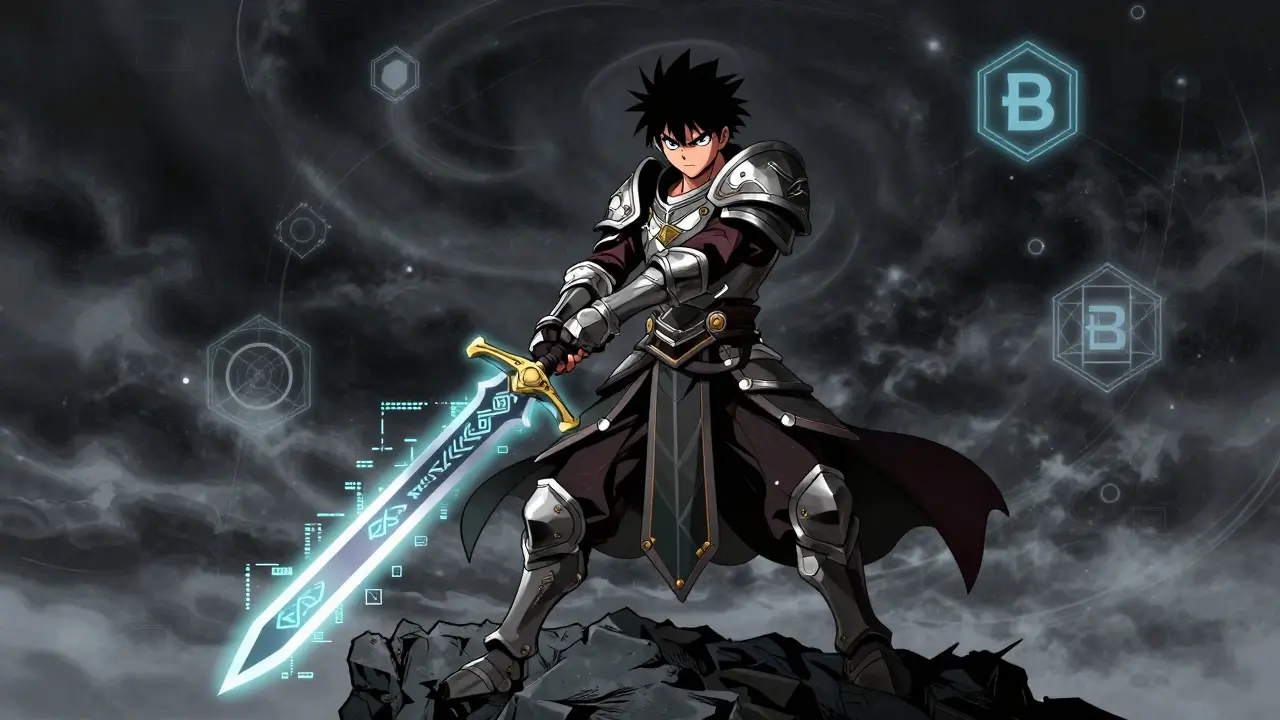
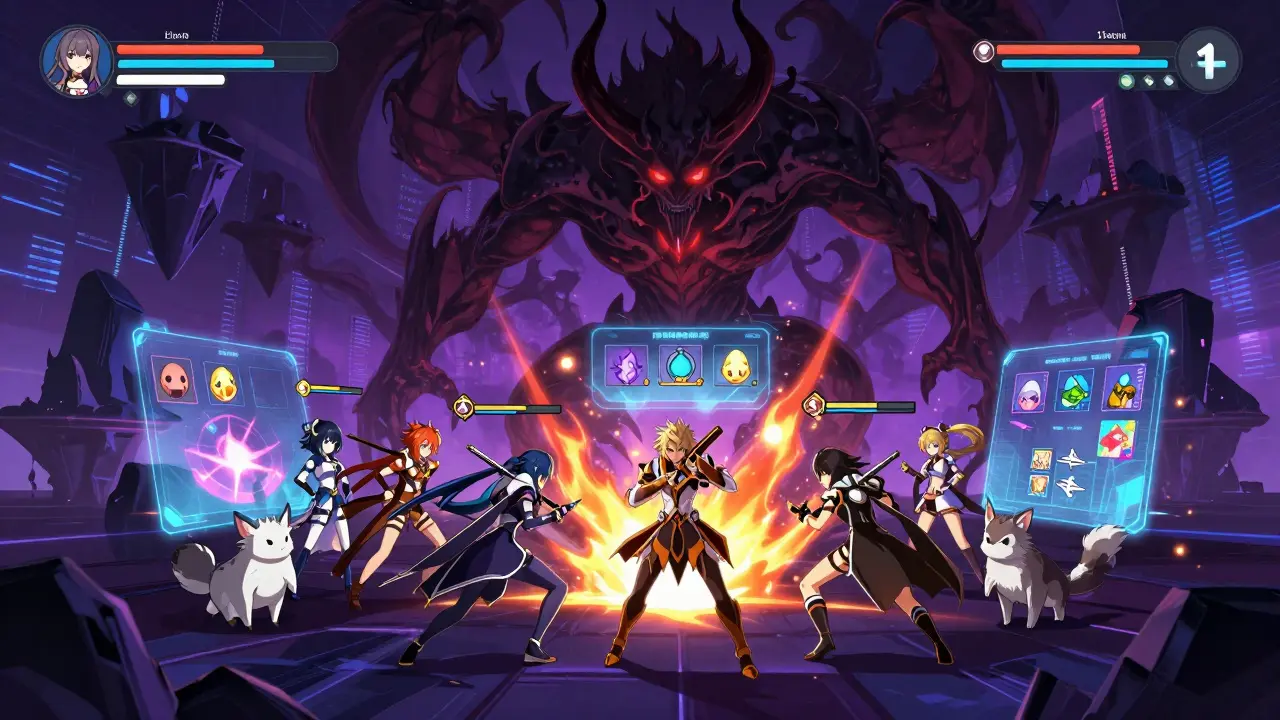
The project was launched by a team calling themselves F6 Galaxy, who claim over a decade of experience in tech and business development. While we don’t have names of famous industry leaders attached to the project, the idea is straightforward. They built a universe where players fight Demon-Gods using heroes, pets, and lands-all represented as NFTs. TAUM is the fuel for this engine. You need it to stake your assets, vote on future game updates, and trade items on their marketplace.
Think of it like this: if Axie Infinity was a digital pet battle arena, Orbitau is a darker, mythological RPG. The theme revolves around the Seven Deadly Sins, giving it a distinct flavor compared to the cartoonish aesthetics of many other blockchain games. However, a great theme doesn’t guarantee success. The real question is whether enough people want to play this specific game to keep the token economy alive.
Technical Specs: Built on BNB Smart Chain
Let’s get into the nuts and bolts. TAUM operates on the BNB Smart Chain (formerly Binance Smart Chain), using the BEP20 standard. Why does this matter? Because BSC is known for fast transactions and low fees. For a gaming token, this is crucial. Imagine trying to buy a sword in a game and waiting 10 minutes for the transaction to confirm while paying $5 in gas fees. That kills the fun instantly. BSC avoids that problem.
| Attribute | Value |
|---|---|
| Blockchain Network | BNB Smart Chain (BSC) |
| Token Standard | BEP20 |
| Total Supply | 1 Billion TAUM |
| Game Engine | Unity |
| Contract Address | 0x02e22Eb7F6e73EF313DD71248cD164b1Bdc5aAdd |
The game itself is built on the Unity engine, which is good news for accessibility. Unity allows the game to run smoothly on both mobile devices and desktops, lowering the barrier to entry for new players. You don’t need a high-end PC to jump into the action. The contract address listed above is your verification point-always double-check this when connecting your wallet to ensure you’re interacting with the legitimate token and not a scam copycat.
How TAUM Works: Utility and Governance
A token without utility is just paper. TAUM tries hard to justify its existence through three main pillars: commerce, staking, and governance.
- In-Game Purchases: You use TAUM to buy Eggs, Heroes, Pets, Lands, and Rare Items. These aren’t just cosmetic; they affect your ability to win battles. Better heroes mean more rewards.
- Staking Mechanisms: This is where the DeFi element kicks in. By locking up your TAUM tokens or NFTs, you can earn additional rewards. It’s a way for passive holders to benefit from the ecosystem’s growth, assuming the ecosystem actually grows.
- Governance Rights: Holders can vote on project developments. This sounds democratic, but in practice, it often means voting on minor aesthetic changes or roadmap priorities unless the community is highly organized and active.
The play-to-earn aspect is driven by quests and leaderboards. If you’re skilled at the turn-based combat mechanics, you can climb the ranks and earn more TAUM than casual players. This creates a meritocratic layer to the economy, which is appealing to hardcore gamers who dislike pay-to-win models. However, the balance between skill and spending is delicate. If whales can simply buy their way to the top, the earning potential for average players dries up quickly.
The Elephant in the Room: Liquidity and Market Reality
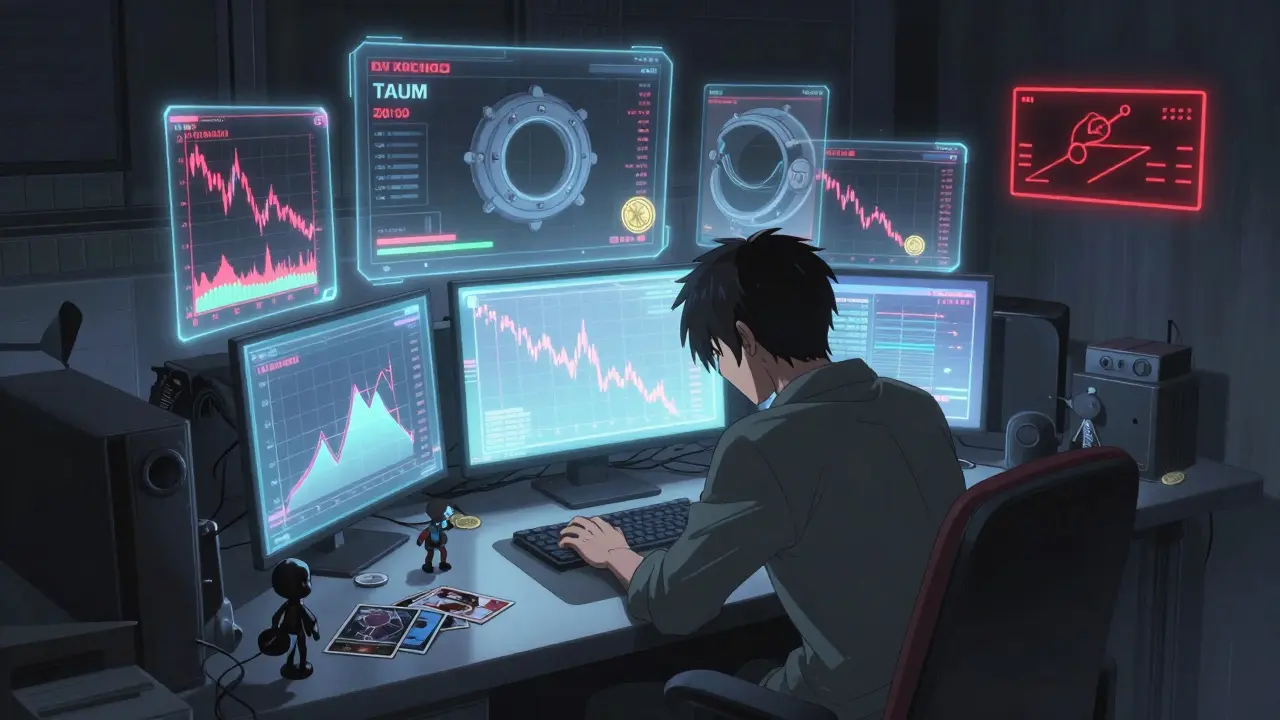
Here’s where things get tricky. While the technical setup looks sound, the market data paints a concerning picture. As of mid-2026, TAUM trades at a fraction of a cent, hovering around $0.00003. More importantly, the trading volume is effectively zero on many major trackers. CoinMarketCap has reported $0 USD in 24-hour volume at various points, which is a massive red flag.
What does zero volume mean for you? It means illiquidity. If you decide to buy TAUM, you might find yourself unable to sell it later because there are no buyers waiting on the order books. Or worse, you might be forced to sell at a steep discount to exit your position. This is common among micro-cap gaming tokens that failed to capture significant user attention during the peak hype cycles.
Compare TAUM to giants like Axie Infinity (AXS) or The Sandbox (SAND). At their peaks, these projects had market caps in the billions and vibrant communities. TAUM’s market cap sits around $19,000 to $20,000. That’s not a typo. It’s a rounding error in the grand scheme of crypto. This indicates that TAUM is not a mainstream asset. It’s a speculative bet on a niche game finding a cult following.
Risks and Red Flags
If you’re considering putting even a small amount of money into TAUM, you need to be aware of the risks. First, there’s the issue of transparency. While F6 Galaxy claims experience, there are no prominent named experts or venture capital firms backing the project publicly. This anonymity is common in smaller projects but adds risk.
Second, the price trajectory has been downward. A 56% decline over a year suggests losing interest rather than temporary correction. In the crypto world, attention is currency. When the hype dies, the price follows. Without regular updates, new features, or marketing pushes, TAUM risks becoming a "ghost chain"-technically functional but devoid of users.
Third, consider the opportunity cost. The time and money you spend learning about and playing Orbitau could potentially yield better returns elsewhere. Is the Norse mythology theme compelling enough to keep you engaged long-term? For most casual investors, the answer is likely no. This token is best suited for those who genuinely enjoy the game itself, not just the financial speculation.
Who Should Care About TAUM?
Not everyone needs to know about Orbitau Taureum. Here’s a quick breakdown of who might care and who should stay away.
- Niche Gamers: If you love turn-based RPGs, Norse lore, and idle combat mechanics, TAUM offers a unique experience. The integration of crypto adds a layer of ownership to your progress.
- High-Risk Speculators: Those willing to gamble small amounts on micro-caps hoping for a 100x return might look here. But remember, the chance of going to zero is higher than the chance of mooning.
- DeFi Purists: Skip it. TAUM lacks the deep liquidity pools, yield farming opportunities, and institutional interest that define serious DeFi protocols.
- Casual Investors: Stay far away. The lack of liquidity makes it too risky for anyone who needs reliable access to their funds.
The project’s future hinges entirely on user acquisition. Can they bring in thousands of new players who will actively trade TAUM and NFTs? If yes, the token gains value. If no, it remains a stagnant asset. There are hints of upcoming features, including improved staking options, but without concrete timelines, these remain promises rather than plans.
Is Orbitau Taureum (TAUM) a good investment in 2026?
TAUM is an extremely high-risk speculative asset with near-zero liquidity and a declining market cap. It is not suitable for conservative investors or those seeking stable returns. Only consider it if you are passionate about the specific game mechanics and willing to lose your entire investment.
Where can I buy TAUM tokens?
TAUM is listed on exchanges like HTX and historically Binance, but trading volume is often negligible. You may need to use decentralized exchanges on the BNB Smart Chain, such as PancakeSwap, by swapping BNB for TAUM using the official contract address. Always verify the contract address to avoid scams.
What is the maximum supply of TAUM?
The total supply of Orbitau Taureum is fixed at 1 billion tokens. This deflationary pressure could theoretically increase value if demand rises, but currently, the low circulation activity limits this effect.
How do I earn TAUM through gameplay?
Players earn TAUM by completing quests, achieving high rankings on leaderboards, and participating in staking mechanisms within the "Orbitau - Seven Deadly Sins" game. Success depends on mastering the turn-based combat and managing your NFT assets effectively.
Why is the trading volume of TAUM so low?
Low trading volume indicates limited interest and adoption. With a market cap under $20,000, TAUM lacks the user base required to sustain active trading. This is common for niche gaming tokens that failed to scale beyond early adopters.