
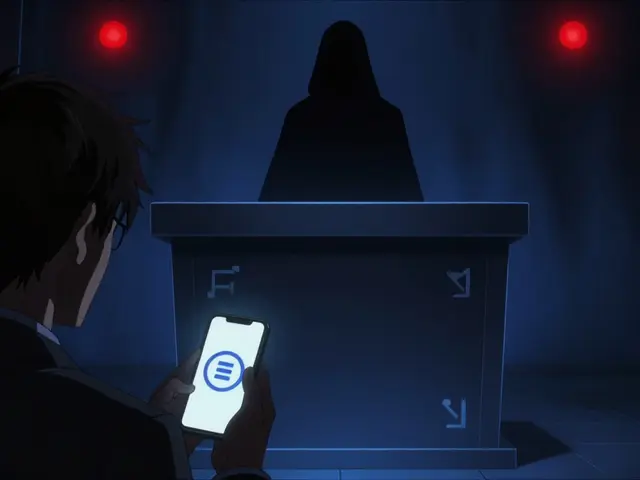
Imagine sending money where not a single person-not even a high-tech forensics firm-can see who sent it, who received it, or how much was moved. That is the core promise of privacy coins. While Bitcoin is often called "anonymous," it is actually pseudonymous. Every single transaction is etched into a public ledger for the world to see. If someone links your identity to your wallet address once, your entire financial history becomes an open book. Privacy coins change the game by using advanced math to hide the trail entirely.
Quick Summary of Top Privacy Options
- Monero (XMR): The gold standard. Privacy is mandatory and automatic.
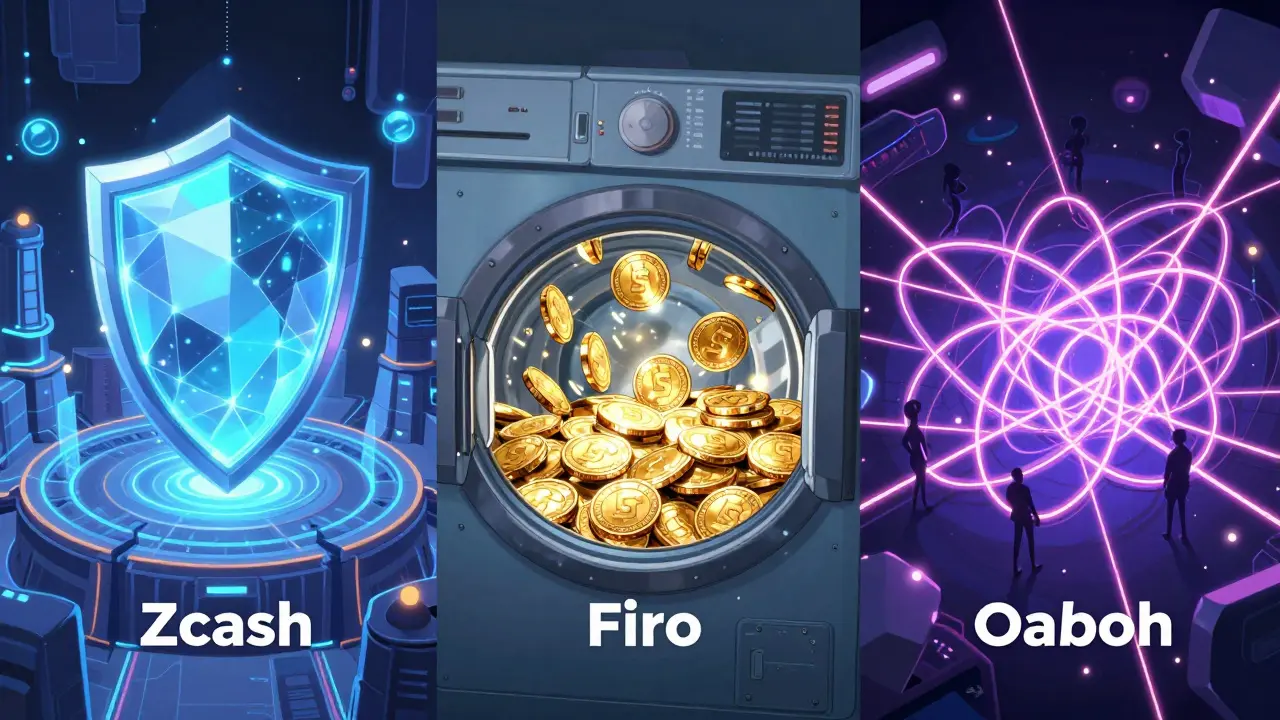
- Zcash (ZEC): Flexible. You choose between public and "shielded" private transactions.
- Firo (FIRO): Technical innovator. Uses a "burn and redeem" system to wipe history.
- Dash (DASH): Fast payments with optional privacy via CoinJoin.
- Horizen (ZEN): A scalable platform for private decentralized apps.
The Heavyweight Champion: Monero (XMR)
If you want a coin where you don't have to flip a switch to be private, Monero is an open-source cryptocurrency that mandates anonymity for every single transaction by default. Launched in 2014, it doesn't give you a choice between public and private; everything is private. This prevents "leakage," where a user accidentally sends a public transaction and ruins their anonymity.
Monero achieves this through a three-pronged attack on transparency. First, it uses ring signatures, which mix your transaction with several decoy ones, making it impossible to tell who the actual sender is. Second, it employs stealth addresses, which create a random one-time address for every recipient, so the actual destination is never revealed on the blockchain. Finally, RingCT (Ring Confidential Transactions) hides the amount of money being sent.
One of the best parts about Monero is its accessibility. You don't need a massive warehouse of expensive mining rigs. Because it is designed to be mineable with standard CPUs or even mobile devices, the network stays decentralized and resistant to takeover by big corporations.
The Flexible Choice: Zcash (ZEC)
Not everyone wants to be invisible all the time. Some might need to prove a transaction to a tax auditor or a business partner. This is where Zcash comes in. It is a Bitcoin fork that utilizes zk-SNARKs to allow users to choose their level of privacy. Essentially, Zcash offers "optional privacy."
Zcash uses a technology called zk-SNARKs (Zero-Knowledge Succinct Non-Interactive Arguments of Knowledge). This allows the network to verify that a transaction is valid without actually knowing the details of that transaction. You can choose a "transparent" address (like Bitcoin) or a "shielded" address. When you use a shielded address, the sender, receiver, and amount are all encrypted.
While this flexibility is great for regulatory compliance, it's a double-edged sword. If you forget to use the shielded option, your transaction is public. For those who want maximum security without thinking about it, this adds a layer of user error that Monero simply doesn't have.
Breaking the Chain: Firo and the Lelantus Spark
While most coins try to hide the path of a transaction, Firo (formerly Zcoin) takes a more aggressive approach. It uses the Lelantus Spark protocol. Think of this as a way to "wash" your coins. You effectively burn your coins and then redeem them later as new coins with a completely clean transaction history.
Firo also cares deeply about where you are sending the money from. They integrate Dandelion++, a technology that hides your IP address during the broadcast of a transaction. This prevents "network-level" spying, where someone might track the physical location of the computer that sent the coins.
Payment Speed and Privacy: Dash
Dash isn't purely a privacy coin; it's more of a digital cash system. It focuses on being fast and cheap for daily use. Its primary privacy tool is CoinJoin. This is a process where multiple users pool their transactions together. By the time the transaction hits the blockchain, it's a tangled mess, making it hard to tell which output belongs to which input.
However, there's a trade-off here. Using the privacy features in Dash usually costs more in transaction fees. It's a great tool for people who want a balance of speed and occasional anonymity, but it isn't as airtight as the mandatory privacy found in Monero.
Enterprise Privacy: Horizen
If you are looking at privacy from a developer or business perspective, Horizen is the one to watch. It started as a Zcash fork but evolved into a platform for building private decentralized apps. Using the Zendoo SDK, developers can create custom sidechains. This means a company could run its own private blockchain for supply chain management or confidential voting, while still benefiting from the main network's security.
| Coin | Privacy Level | Core Technology | User Effort | Best For |
|---|---|---|---|---|
| Monero (XMR) | Mandatory | Ring Signatures / Stealth Addresses | Zero (Automatic) | Maximum Anonymity |
| Zcash (ZEC) | Optional | zk-SNARKs | Medium (Must choose shielded) | Regulatory Flexibility |
| Firo (FIRO) | High | Lelantus Spark | Low | Breaking Transaction History |
| Dash (DASH) | Optional | CoinJoin | Medium | Fast Daily Payments |
| Horizen (ZEN) | Modular | Zendoo SDK / ZK-Proofs | High (Developer focused) | Private dApps / Enterprise |

Network-Level vs. On-Chain Privacy
It is a common mistake to think that encrypting the transaction is enough. Even if the blockchain doesn't show who you are, your internet service provider (ISP) can see that you are connecting to a cryptocurrency node. This is where Verge (XVG) differs. Verge doesn't focus on complex on-chain math as much as it does on the network layer. It integrates Tor and I2P (Invisible Internet Project) to mask your IP address.
Think of it this way: Monero hides the content of the letter and the names on the envelope. Verge hides the post office you used to send the letter. For true anonymity, you actually need both. This is why many Monero users use the Feather Wallet, which has Tor integration built-in by default.
Practical Tools for Staying Anonymous
Picking the right coin is only half the battle; you need the right wallet. For Monero, the Monero GUI Wallet is the best bet if you want to run your own full node for maximum privacy. If you are on the move, the Feather Wallet is faster and keeps your IP hidden via Tor.
What if you already have Bitcoin and want more privacy? You don't necessarily have to swap everything to a privacy coin. Sparrow Wallet has become a favorite in 2026 because it integrates Whirlpool. This allows Bitcoin users to perform CoinJoins easily, adding a layer of obfuscation to their BTC transactions without leaving the Bitcoin ecosystem.
The Regulatory Hurdle
You should be aware that privacy coins are currently in a tug-of-war with governments. Because they make it harder for agencies to track money laundering, some major exchanges have delisted coins like Monero. This doesn't mean the coins are dead; it just means the way you buy them is changing. More people are moving toward decentralized exchanges (DEXs) and peer-to-peer (P2P) trading to avoid the "Know Your Customer" (KYC) requirements of big platforms.
Is Monero actually untraceable?
Yes, for all practical purposes. By combining ring signatures, stealth addresses, and RingCT, Monero hides the sender, the receiver, and the amount. Unlike Zcash, where you can opt-out of privacy, Monero's privacy is mandatory, leaving no "transparent" trail for analysts to follow.
What is the difference between Zcash and Monero?
The biggest difference is the "default" setting. Monero is private by default; you cannot send a public transaction. Zcash offers a choice. You can use transparent addresses (like Bitcoin) or shielded addresses (using zk-SNARKs). Monero is generally considered more anonymous because it removes the risk of user error.
Can I use a privacy coin on a regular exchange?
It depends. Some exchanges still list them, but many have removed privacy coins to comply with AML (Anti-Money Laundering) laws. If your preferred exchange doesn't have them, you can use decentralized exchanges (DEXs) or P2P platforms where no central authority manages the trade.
What are zk-SNARKs?
zk-SNARKs stand for Zero-Knowledge Succinct Non-Interactive Arguments of Knowledge. In simple terms, it's a way to prove that a statement is true (e.g., "I have enough money to send this") without revealing the information that proves it (e.g., your actual balance or your identity).
Do privacy coins cost more in fees?
Not necessarily. In Monero, the privacy is built into the protocol, so fees are standard. However, in coins like Dash, using the optional "Private Send" (CoinJoin) feature can result in higher transaction fees compared to a standard public transaction.







Caiaphas Konkol
April 24, 2026 AT 05:09 AMMost people are blindly trusting these systems without realizing that the real game is played at the network layer. You can have the best encryption in the world, but if your metadata is leaking to the three-letter agencies, your "privacy coin" is just a digital leash. The sheer arrogance of thinking a simple wallet extension solves everything is staggering. Only those who truly understand the intersection of packet routing and cryptographic obfuscation realize that true anonymity is a dying art in an era of total surveillance. We are essentially building glass houses and pretending the curtains are opaque. It is a farce.
Sarah Fisher
April 25, 2026 AT 12:19 PMPrivacy is a fundamental human right, not just a tool for hiding things. When we discuss these coins, we're really discussing the autonomy of the individual against the collective gaze of the state.
Kyle Bush
April 27, 2026 AT 00:09 AMGET THE MONERO NOW!!! 🚀🇺🇸 Stop letting the banks steal your freedom! If you aren't using XMR you're basically asking to be spied on by the globalists!! 💰💪
Doc Coyle
April 27, 2026 AT 12:26 PMThe problem is that people use these to avoid taxes and it's just wrong. If you're a citizen you should pay your share without trying to be a ghost.
Gloris Young
April 27, 2026 AT 17:05 PMXMR is definitely the way to go. Keeps things simple.
jill huyo-a
April 27, 2026 AT 23:41 PMI've always wondered about the trade-off between speed and privacy. It seems like the more we obfuscate the data, the more computationally expensive it gets for the network to verify it. Does anyone know if there's a ceiling to how private a coin can be before it becomes completely unusable for daily commerce?
Robert Mosolygo
April 28, 2026 AT 16:52 PMThe technical analysis regarding Zcash is flawed because it ignores the inherent risk of the "trusted setup" phase. If the initial parameters were compromised, the entire security model collapses. Furthermore, the claim that Monero is "untraceable" is a dangerous oversimplification; heuristic analysis of the ring sizes can still yield probabilistic data. It is an exercise in futility to believe in absolute privacy within a centralized internet infrastructure. The obsession with "shielded addresses" is merely a placebo for those who fear the inevitable gaze of the state.
Clair Geary
April 30, 2026 AT 10:28 AMthis whole thing is just wild haha.. a digital magic trick for your money!
Gary Lingrel
May 1, 2026 AT 16:29 PMimagine thinking this is a revolution lol just more ways to lose money in a bubble.. who even needs a privacy coin unless they're doing something sketchy anyway :/
Jennifer Taylor
May 2, 2026 AT 01:23 AMThey are all tracked by the satellites anyway. The government knows what you buy before you even buy it. These coins are just a trap to get you to move your money into a system they can crash later.
Charlie Queen
May 3, 2026 AT 16:29 PMI love seeing these different options! It's like a buffet of privacy 🌟 I think it's great that we have tools to protect our financial boundaries while still staying connected to the world! 🌐✨
Sara Ellis
May 4, 2026 AT 14:12 PMmoney is just a vibe anyway
Sarah Ingrams
May 5, 2026 AT 20:26 PMsounds like a lot of stress just to send a payment
Ellie Drews
May 6, 2026 AT 18:48 PMIt's okay to be a beginner here, just take it slow and use a test wallet first so you don't lose your funds while learning!
Mike Word
May 7, 2026 AT 06:56 AMThe distinction between pseudonymous and anonymous is a crucial point. It's interesting how we've moved from a world of physical cash, which was naturally private, to a digital world where privacy must be intentionally engineered through complex mathematics. I'm curious about how the P2P markets are holding up as the big exchanges push these coins out.