
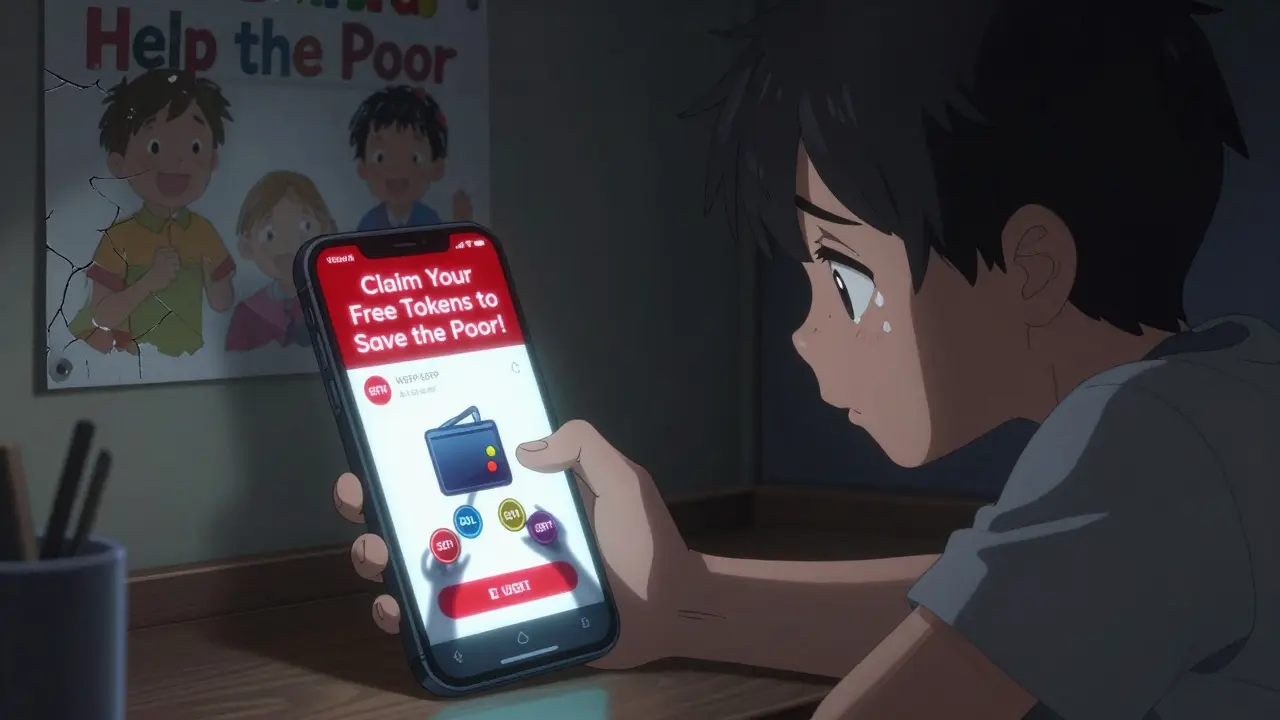
There’s a new crypto project making noise online: WSPP - Wolf Safe Poor People. It promises to end world poverty. All you have to do is claim a free airdrop. Sounds too good to be true? That’s because it is.
On the surface, WSPP looks like a noble idea. A cryptocurrency built to help the poor. No middlemen. No banks. Just blockchain magic. But dig deeper, and you’ll find a project built on lies, inflated numbers, and traps designed to steal your money.
What Is WSPP Really?
WSPP claims to be the first crypto currency with a program to reduce global poverty. It says it runs on decentralized networks, uses smart contracts to send aid, and even hosts data on Swarm - a peer-to-peer storage system. Sounds impressive? It’s not.
Here’s the cold truth: WSPP has no real-world impact. No verified donations. No partnerships with charities. No reports showing how much money reached anyone in need. Instead, it’s a token with a circulating supply of 13.5 quadrillion units. That’s 13,500,000,000,000,000 tokens. To put that in perspective, if you had one WSPP token, it would be worth about $0.00000000007 - less than one ten-billionth of a cent.
Why does that matter? Because real projects don’t create tokens with zero value. They build utility. WSPP has none. It’s just a number on a blockchain.
The Airdrop Trap
You see ads everywhere: "Claim your free WSPP airdrop! Help the poor while you earn!" The promise is simple: connect your wallet, follow a few steps, and get tokens for free. No cost. No risk.
But here’s what actually happens:
- You’re asked to connect your MetaMask or Trust Wallet to a fake website.
- You approve a transaction that gives the scammer access to your wallet.
- Within seconds, every coin in your wallet - ETH, SOL, USDT - gets drained.
There’s no airdrop. No tokens. Just theft. Chainalysis reported a 41% spike in airdrop-themed scams in Q3 2025, and WSPP is one of the top offenders. People lose thousands of dollars thinking they’re doing good.
One Reddit user, u/CryptoSafetyFirst, tried to claim WSPP in July 2024. He lost 99.8% of his investment within 24 hours. No one could trade it. No one could sell. His wallet was locked in a dead market.
Why No One Trusts WSPP
Let’s look at the facts:
- Market cap: $953,266 on BSC - but only $51.67 on Polygon. That’s not a bug. It’s a sign of total market disregard.
- Trading volume: Under $10,000 per day. That’s less than what a single popular meme coin makes in an hour.
- Exchanges: Not listed on Binance, Coinbase, or Kraken. Only on tiny decentralized exchanges (DEXs) like PancakeSwap.
- Audit: Claims to be audited by Solidity Finance. But no public report. No date. No findings. Just a URL you can’t verify.
- Community: The only active channel is a Telegram group called @robowolfproject. No verified admins. No history. No transparency.
Compare this to real charity crypto projects like GiveDirectly or Binance Charity. GiveDirectly has sent over $500 million in cash to poor families - with receipts, photos, and GPS-tracked deliveries. Binance Charity has funded 120+ real-world projects across 30 countries. Both have public dashboards showing every dollar spent.
WSPP has none of that.
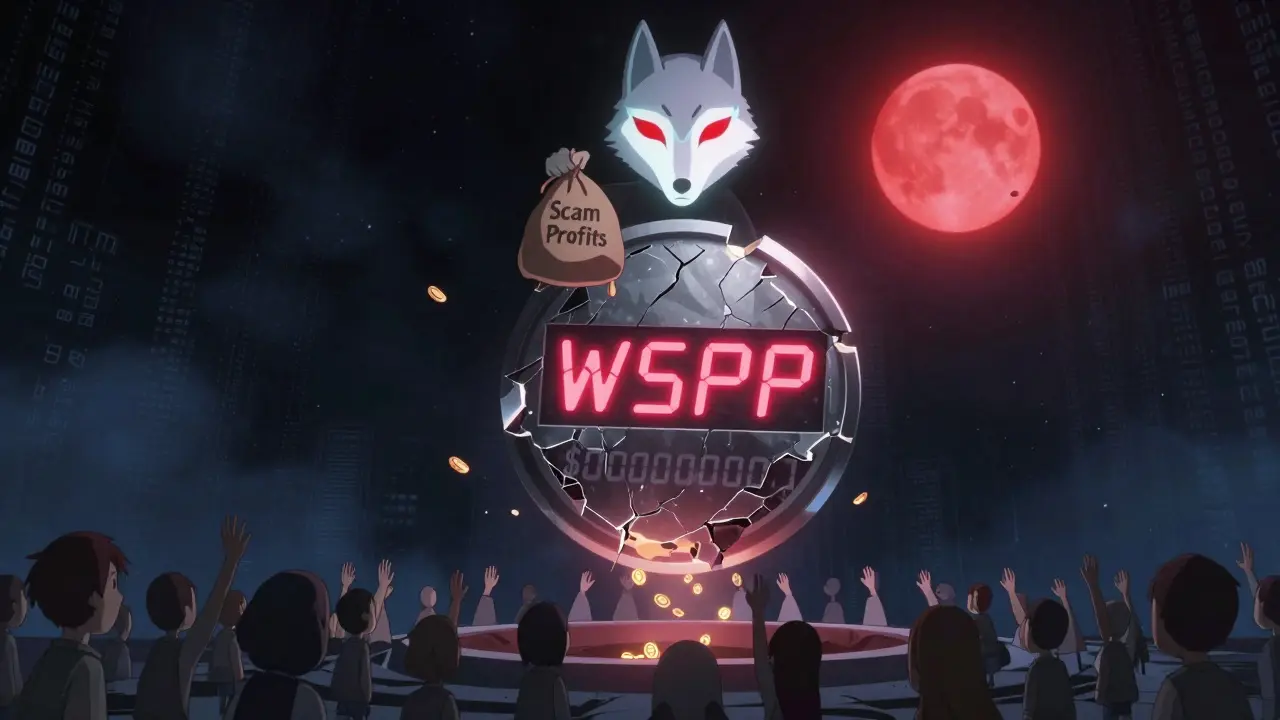
The Red Flags You Can’t Ignore
If you’re wondering whether WSPP is safe, here are the warning signs:
- Price too low to be real: Tokens worth less than a billionth of a dollar are almost always scams. Real tokens have value because they’re used. WSPP has no use.
- Quadrillion supply: This isn’t a feature - it’s a trick. It makes the price look "cheap" so people think they’re getting a bargain. It’s psychological manipulation.
- No developer activity: No GitHub repo. No code updates. No team photos. No LinkedIn profiles. Just a name and a slogan.
- High sell taxes: Verified users on Binance’s forum say sell taxes on WSPP exceed 95%. That means if you buy it, you can’t sell it. Your money is gone.
- Charity claims with zero proof: The UN’s 2024 Crypto Philanthropy Report found 63% of "help the poor" crypto projects have no verifiable impact. WSPP is one of them.
And here’s the kicker: the SEC listed "charity-themed tokens with misleading claims" as a top enforcement target in 2025. They’ve already shut down 217 similar scams.
What Happens If You Buy WSPP?
Let’s say you ignore all the warnings and buy WSPP anyway. Here’s what you’re signing up for:
- You’ll pay gas fees to buy it - money that goes to miners, not the poor.
- You’ll hold a token with no exchange, no liquidity, and no demand.
- When you try to sell, you’ll find no buyers. The market is dead.
- Your wallet gets flagged as "high risk" by security tools like CertiK.
- You become a target for more scams - because scammers know you’ve already fallen for one.
Trustpilot reviews for sites offering WSPP show a 1.2 out of 5 rating. Common complaints? "I lost my entire portfolio." "They promised poverty relief, but I lost everything." "The Telegram group disappeared after I sent funds."
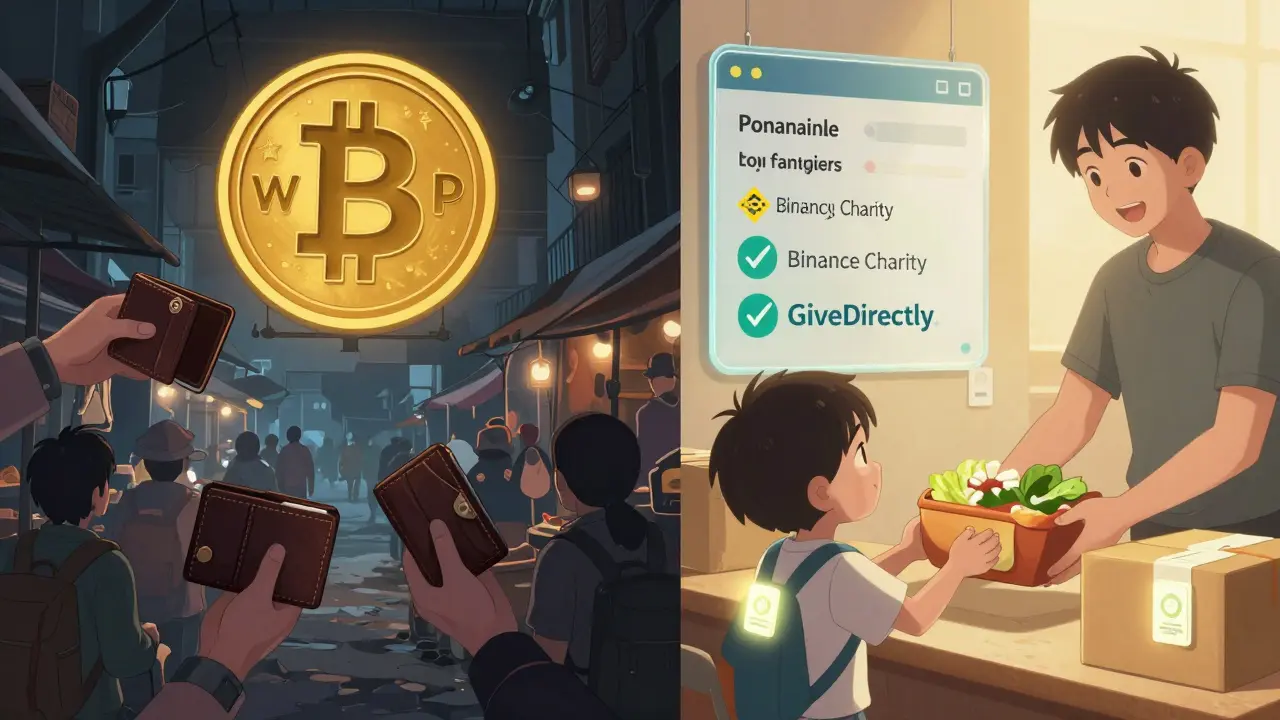
Legitimate Crypto for Good Exists - Here’s How to Find It
Not all crypto charity projects are fake. Some are real. And they’re transparent:
- AidCoin: Has distributed $24 million in verified aid. Public ledger. Real-time tracking.
- Worldcoin: Verified 20 million users globally. Uses biometrics to prevent fraud. Not perfect, but accountable.
- Binance Charity: Runs on Binance’s blockchain. Every donation is public. No hidden contracts.
These projects don’t need to promise "free tokens" to attract users. They earn trust by showing results.
Bottom Line: Don’t Fall for the Story
WSPP isn’t helping poor people. It’s helping scammers. It’s using the word "poor" to make you feel guilty - like if you don’t join, you’re part of the problem. That’s emotional manipulation.
Real change doesn’t come from a token with a quadrillion supply. It comes from transparency, accountability, and real action.
If you see "WSPP airdrop" anywhere - delete it. Block the link. Warn others. And remember: if it sounds too good to be true, it is. Especially when it’s about helping the poor.
Is the WSPP airdrop real?
No, the WSPP airdrop is not real. It’s a phishing scam designed to steal cryptocurrency from your wallet. No tokens are distributed. Instead, users who connect their wallets to the fake site lose all their funds. There is no official airdrop page or verified team behind WSPP.
Can you make money from WSPP?
No, you cannot make money from WSPP. The token’s price is less than one ten-billionth of a dollar, and there is virtually no trading volume. Even if you buy it, you won’t be able to sell it - sell taxes exceed 95%, trapping your funds. Every documented case shows users losing money, not gaining it.
Is WSPP audited?
WSPP claims to be audited by Solidity Finance, but no public audit report exists. The link provided leads to a generic page without any details about WSPP, dates, findings, or verification. Legitimate projects publish full audit reports with timestamps and security ratings - WSPP does not.
Why does WSPP have such a huge supply?
The massive supply of 13.5 quadrillion tokens is a tactic to make the price appear extremely low, tricking people into thinking they’re getting a "cheap" investment. In reality, it’s a sign of a pump-and-dump scheme. Real tokens with utility have controlled supplies and meaningful value - WSPP has neither.
Is WSPP listed on Binance?
No, WSPP is not listed on Binance. Binance’s own price tracking page explicitly states "Not listed." It only appears on unregulated decentralized exchanges (DEXs) like PancakeSwap, which have no oversight, no security standards, and no protection for users.
What should I do if I already bought WSPP?
If you already bought WSPP, do not try to sell it - the market is dead and sell taxes are over 95%. Instead, stop interacting with the contract. Avoid connecting your wallet to any site claiming to help you "claim" or "trade" it. Consider it a loss. Change your wallet passwords, enable two-factor authentication, and warn others to avoid this scam.
Are there any real crypto projects helping the poor?
Yes. Projects like GiveDirectly, Binance Charity, and AidCoin have distributed millions in verified aid using blockchain. They publish public ledgers, partner with NGOs, and allow donors to track exactly where funds go. These projects focus on real-world results, not fake tokenomics.
How do I spot a fake charity crypto project?
Look for these red flags: no public audit, no team identity, no real-world impact reports, extremely low token price, huge supply, and pressure to act fast. Legitimate projects have transparent websites, GitHub activity, verified social media, and partnerships with known organizations. If it’s all hype and no proof - walk away.





Kaitlyn Clark
February 25, 2026 AT 05:44 AMOMG I JUST LOST MY ETH TO THIS THING 😭 I THOUGHT I WAS HELPING POOR KIDS BUT NOPE. JUST GOT SCAMMED HARD. WHY DO THEY USE "HELP THE POOR" TO TRICK PEOPLE?? I’M SO MAD. 🤬
Shannon Holliday
February 25, 2026 AT 17:00 PMSame. I fell for it too. I’m from a low-income neighborhood and honestly? It made me feel guilty for not "participating." But now I realize they’re using compassion as bait. 🥲💔
Jeremy buttoncollector
February 26, 2026 AT 14:56 PMFrom a semiotic perspective, WSPP operates as a postmodern simulacrum of philanthropy - a hyperreal construct that replaces the real with the symbolic. The quadrillion-token supply isn't an error; it’s a performative absurdity designed to collapse utility into spectacle. The blockchain here functions not as infrastructure but as a ritual space for mass delusion. We are not being scammed - we are participating in a cultural meme that inverted altruism into parasitism. 🤔
Michelle Xu
February 28, 2026 AT 01:40 AMThank you for this detailed breakdown. I’ve been warning people about this for weeks. Real crypto charity projects like AidCoin and Binance Charity don’t need to promise free tokens - they show receipts. WSPP has zero transparency, zero audits, and zero ethics. If you’re even thinking about connecting your wallet? Don’t. Block it. Report it. And please, share this post. Someone’s life could depend on it.
Ryan Burk
March 1, 2026 AT 14:54 PMlol you guys are so gullible. This is just crypto. Everyone knows airdrops are sketchy. If you lost money, you deserved it. Stop crying and learn to DYOR. Also, the SEC doesn’t even care about this. They’re too busy chasing NFT monkeys. 🤷♂️
Amanda Markwick
March 3, 2026 AT 09:13 AMI’m so glad someone called this out. I’ve been in crypto for 6 years and this is one of the most manipulative scams I’ve seen. It preys on empathy - and that’s the worst kind of fraud. But here’s the good news: we can fight back. Share this. Tag your friends. Post it on Twitter. Make sure no one else falls for this. We’re stronger together 💪❤️
Arya Dev
March 4, 2026 AT 18:47 PMOH MY GOD, OH MY GOD, OH MY GOD!!! I WAS ON THE TELEGRAM GROUP FOR 3 HOURS!! THEY SAID "ONLY 12 MINUTES LEFT TO CLAIM YOUR SHARE!!" AND I BELIEVED THEM!! I LOST MY ENTIRE PORTFOLIO!!! MY MOM IS GOING TO KILL ME!!! I WAS JUST TRYING TO DO SOMETHING GOOD!!!
Andrew Hadder
March 6, 2026 AT 01:03 AMYeah, I saw this on Reddit too. The wallet connection trick is so old. But people still fall for it. I keep telling my cousins who are new to crypto: "If it sounds like a miracle, it’s a mirror."
Maggie House
March 6, 2026 AT 06:51 AMWait, so if I didn’t connect my wallet, I didn’t lose anything? Just curious because I almost did… I saw the ad on Instagram and thought "Oh cool, a charity coin!" But then I checked the token price and it was like… 0.00000000007? That’s not a coin, that’s a decimal point. I’m so glad I didn’t click. 😅
Elizabeth Smith
March 7, 2026 AT 10:40 AMPeople who fall for this are not victims they’re enablers. You want to help the poor? Donate to a real org. Don’t play with blockchain theater. This isn’t activism. It’s ego dressed up as altruism. And if you think a quadrillion token is "cheap" you don’t understand math. Or morality.
Robert Kromberg
March 8, 2026 AT 03:08 AMI get why people are drawn to this. It feels good to think you’re part of something noble. But that’s exactly why it works. Scammers know human psychology better than we know our own wallets. I don’t blame people for being fooled. I just hope they learn from it.
Daisy Boliaan
March 9, 2026 AT 22:43 PMOMG I JUST GOT A DM FROM SOMEONE SAYING "YOU’RE A COWARD IF YOU DON’T CLAIM WSPP" AND I WAS LIKE WHAT?? I BLOCKED THEM. BUT NOW I’M SCARED THEY’LL COME FOR MY WALLET NEXT. IS THIS A CULT?? DID I JUST ESCAPE A CULT??
Carl Gaard
March 10, 2026 AT 20:00 PMBro I lost $4,200 to this. I thought I was doing good. Now I feel like an idiot. But hey - at least I’m not alone. I just posted this on r/Scams and got 200 upvotes. We’re all in this together. 🤝💙
bella gonzales
March 11, 2026 AT 23:17 PMUgh. I’m so tired of this. First it was Dogecoin, then Shiba, now this? Everyone’s so desperate for a miracle. But there’s no magic. Just bad code and worse intentions. I’m done. I’m deleting my wallet. Bye.
Samantha Stultz
March 12, 2026 AT 03:42 AMThe 13.5 quadrillion supply is a textbook pump-and-dump indicator. It’s not about value - it’s about perception. By making the price appear "affordable," they trigger the brain’s reward system: "I can buy a LOT of these!" But since liquidity is zero and sell taxes are 95%, it’s a prison. The tokenomics are designed to trap, not to trade. This isn’t crypto - it’s behavioral economics warfare.
Amita Pandey
March 13, 2026 AT 14:48 PMWhile the technical analysis of WSPP is indeed alarming, one must not overlook the broader socio-economic context. In an era where systemic poverty persists and digital financial inclusion remains uneven, such projects - however fraudulent - reflect a deep societal yearning for equitable solutions. The real failure is not the scam, but the absence of legitimate, accessible, and transparent alternatives. We must not merely condemn the fraud; we must build better systems.