
Most people still picture a smart contract as a piece of code that moves Bitcoin from one wallet to another. That image is outdated. In 2026, smart contracts are quietly running the backend of industries that have nothing to do with crypto trading. They are automating property deeds, paying out flight delay insurance instantly, and tracking organic coffee beans from farm to cup.
If you think blockchain is just for speculative assets, you’re missing the bigger picture. The technology has matured into a utility layer for trust. Smart contracts remove the middleman not by being trendy, but by being cheaper, faster, and more transparent than traditional legal paperwork. Let’s look at where this technology is actually working right now.
Real Estate: Killing the Paperwork Bottleneck
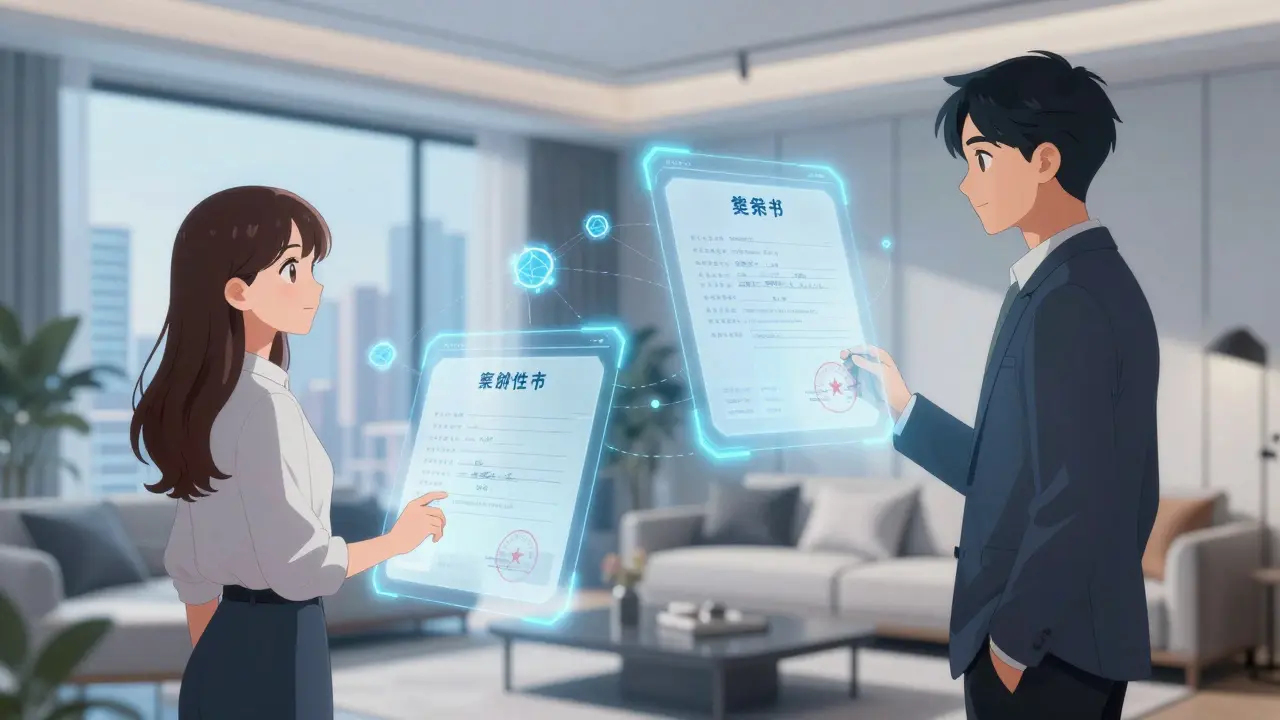
Buying a house usually feels like jumping through hoops. You need a lawyer, a title company, an escrow agent, and a mountain of forms. It takes weeks, if not months. Smart contracts change the timeline from weeks to hours.
In a smart contract-driven real estate transaction, the terms are coded directly onto the blockchain. Here is how it works in practice:
- Automated Escrow: The buyer locks funds in a digital escrow account managed by the contract. The seller cannot access the money until conditions are met.
- Title Verification: The contract checks the blockchain record of the property title. If the title is clean and verified, the process continues. If there is a lien or dispute, the contract pauses automatically.
- Instant Transfer: Once inspections pass and signatures are digitally recorded, the deed transfers ownership on the ledger, and the funds release to the seller simultaneously.
Platforms like Propy and Real have already processed thousands of transactions this way. This isn’t theoretical. Municipalities in places like Georgia and Sweden are experimenting with blockchain-based land registries because they reduce fraud and eliminate the cost of maintaining physical archives. For investors, tokenization allows fractional ownership of rental properties, meaning you can own 1% of a commercial building without needing millions in capital.
Parametric Insurance: Payouts Without Claims Forms
Traditional insurance is slow. You file a claim, wait for an adjuster, argue about the damage amount, and then wait for a check. Parametric insurance flips this model. Instead of assessing damage, the payout is triggered by a specific data point.
Imagine you are a farmer in Kenya relying on rain for your crops. With a smart contract linked to weather data, you don’t need to prove your crop failed. You just need to prove it didn’t rain.
Here is the mechanism:
- Data Input: A decentralized oracle network (like Chainlink) fetches rainfall data from a trusted source like the National Oceanic and Atmospheric Administration (NOAA).
- Condition Check: The smart contract compares the rainfall against the agreed threshold (e.g., less than 5mm per week).
- Automatic Payout: If the condition is met, the contract releases funds immediately to the farmer’s wallet.
Projects like Arbol use this exact model for crop insurance. Similarly, Etherisc offers flight delay insurance. If your flight is delayed by more than two hours, confirmed by airport data feeds, you get paid instantly. No phone calls, no claims forms, no waiting. This reduces administrative costs for insurers by nearly 90%, allowing them to offer coverage to markets previously considered too risky or expensive to serve.
Supply Chain: Proving Authenticity
Counterfeiting is a multi-billion dollar problem. From luxury handbags to pharmaceutical drugs, consumers rarely know what they are buying. Smart contracts create an immutable history for every product.
When a product enters the supply chain, a digital twin is created on the blockchain. Every time the product changes hands-from manufacturer to distributor to retailer, a new entry is added to the smart contract. This creates a transparent ledger that anyone with a QR code can verify.
For food safety, this is critical. If a batch of lettuce is contaminated, retailers can trace the source back to the specific farm in minutes rather than days. This precision limits recalls to only affected batches, saving billions in wasted food and protecting brand reputation. Companies like Walmart and IBM have piloted these systems extensively, proving that transparency drives consumer trust.

Digital Identity and Reputation
Your current digital identity is fragmented. Your credit score is with one agency, your medical records with another, and your social reputation scattered across platforms. You have no control over who sees what.
Decentralized Identity (DID) systems use smart contracts to give users sovereignty over their data. Instead of storing your personal details on a company server, you store cryptographic proofs on the blockchain.
For example, a platform like MyEarth ID allows you to verify your age or creditworthiness without revealing your birthdate or full financial history. The smart contract acts as a gatekeeper. It checks if the credential meets the requirement (e.g., "Is the user over 18?") and returns a simple yes or no. This minimizes data breach risks because sensitive information never leaves your device.
Intellectual Property and Royalties
Creators often struggle to get paid fairly. Musicians, writers, and artists lose significant revenue to intermediaries who take large cuts. Smart contracts automate royalty distribution.
When a song is streamed or a digital artwork is sold, the smart contract executes instantly. It splits the payment according to pre-defined percentages. If a band consists of four members, each gets their share immediately upon sale. There are no quarterly statements or delayed payments.
Platforms like Audius and Ascribe leverage this for music and visual art. NFTs (Non-Fungible Tokens) serve as the proof of ownership, while the underlying smart contract ensures that creators receive royalties every time the asset is resold on secondary markets. This aligns incentives between creators and collectors.
Energy Trading: Peer-to-Power
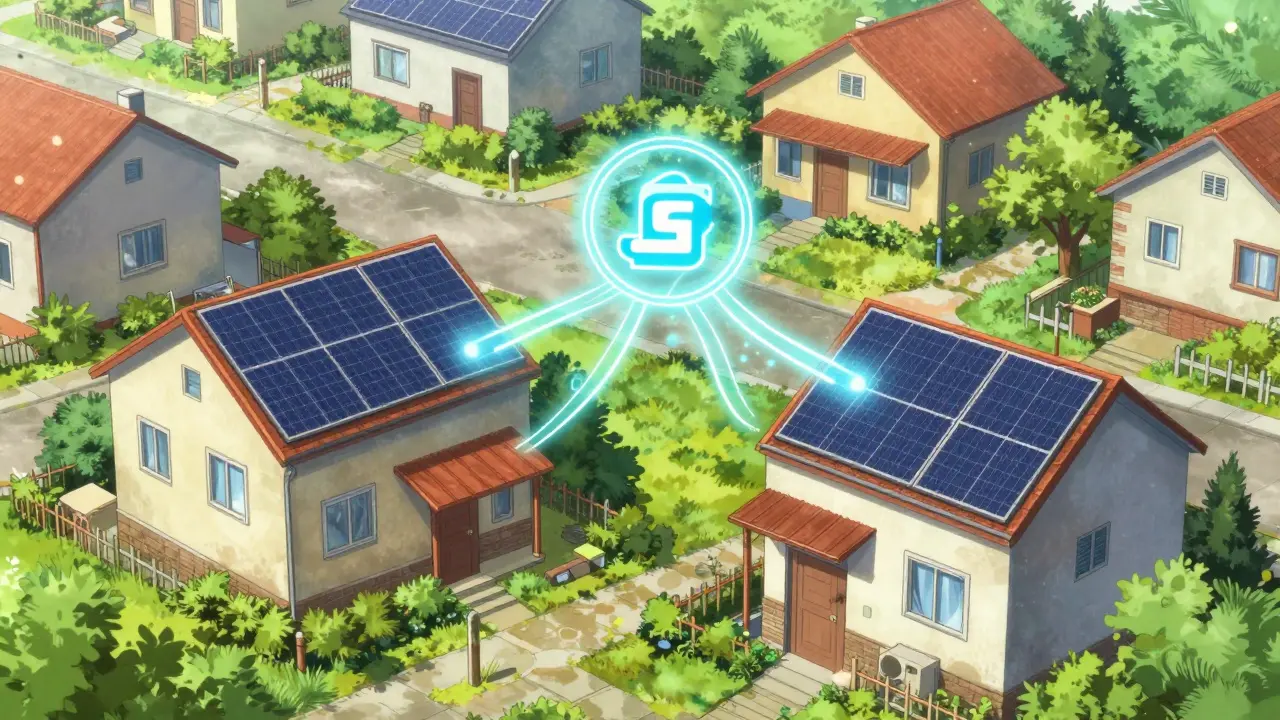
The energy grid is becoming decentralized. More households are installing solar panels. What happens to excess energy? Traditionally, it flows back to the main grid at a low rate.
Smart contracts enable peer-to-peer (P2P) energy trading. Platforms like Power Ledger allow neighbors to trade electricity directly. If your neighbor needs power and you have surplus, a smart contract facilitates the transaction automatically based on real-time pricing algorithms. This optimizes local energy use, reduces strain on the central grid, and provides income for solar owners. It turns passive infrastructure into an active market.
Challenges to Adoption
Despite the benefits, hurdles remain. The biggest issue is scalability. Public blockchains can be slow and expensive during peak times. Layer-2 solutions are improving this, but latency is still a concern for high-frequency applications.
Regulatory uncertainty also looms. Laws vary by country regarding the legal enforceability of code-based contracts. While many jurisdictions are catching up, businesses operate in a gray area. Finally, user experience is poor. Managing private keys and understanding gas fees is too complex for the average consumer. Until interfaces become invisible, mass adoption will be limited to enterprise use cases.
| Feature | Traditional Process | Smart Contract Process |
|---|---|---|
| Execution Speed | Days to Weeks | Seconds to Minutes |
| Intermediaries | Lawyers, Banks, Agents | None (Code-enforced) |
| Transparency | Private Records | Public/Auditable Ledger |
| Cost | High (Fees & Labor) | Low (Gas Fees Only) |
| Error Rate | Human Error Possible | Zero (If Code is Correct) |
Are smart contracts legally binding?
Yes, in many jurisdictions. Countries like Singapore, Switzerland, and parts of the US recognize smart contracts as valid legal agreements, provided they meet standard contract law requirements such as intent and consideration. However, enforcement mechanisms are still evolving, especially across international borders.
Can smart contracts be hacked?
The code itself can have vulnerabilities. If a bug exists in the smart contract logic, hackers can exploit it, as seen in early DeFi incidents. This is why rigorous third-party audits are essential before deployment. Once deployed, the contract cannot be easily changed, so security must be perfect from day one.
What is an oracle in smart contracts?
An oracle is a service that connects the blockchain to external data sources. Since blockchains are isolated networks, they cannot natively access real-world information like weather data, stock prices, or flight statuses. Oracles fetch this data and feed it into the smart contract to trigger actions.
Do I need coding skills to use smart contracts?
Not necessarily. While developers write the initial code, end-users interact with smart contracts through user-friendly interfaces (dApps). For example, buying parametric insurance looks like clicking a button on a website, similar to traditional e-commerce, even though a smart contract handles the backend.
How do smart contracts reduce costs?
They eliminate intermediaries. In traditional deals, lawyers, brokers, and banks charge fees for verification and execution. Smart contracts automate these roles using code, reducing transaction costs significantly. Additionally, automated processes save time, which translates to lower labor costs.



Craig Swanson
June 2, 2026 AT 09:30 AMListen up, because I am only going to say this once. The idea that blockchain is just for gambling on monkey pictures is pathetic. Real estate tokenization is the single biggest disruption in property law since the invention of the deed. You think lawyers want to lose their fees? They are fighting tooth and nail against Propy and similar platforms because they know it kills their business model. Stop sleeping on this technology.
Barclay Chantel
June 4, 2026 AT 01:44 AMAbsolutely fascinating piece. It is rather quaint how we still cling to the notion of paper deeds when digital ledgers offer such superior efficiency. One must appreciate the elegance of code-enforced contracts over the messy, subjective nature of human interpretation. Truly a step forward for civilization.
kamal ifrani
June 5, 2026 AT 02:33 AMYou people are all so naive thinking this will actually work in the real world without total chaos. The 'oracles' mentioned here are just central points of failure wrapped in crypto jargon. If Chainlink goes down or gets hacked, your farmer in Kenya doesn't get paid and your house sale freezes. It's not magic, it's just moving the bottleneck from a lawyer's desk to a server farm that can be DDoSed. Typical tech bro fantasy ignoring basic infrastructure fragility.
Hadleigh Edwards
June 6, 2026 AT 01:28 AMI have to say that I find the potential applications described in this article to be incredibly promising and I really do believe that as we move further into the future the integration of these smart contracts into our daily lives will become not just a possibility but an absolute necessity for efficient global commerce and interaction which is why I am so excited about the prospects of peer-to-peer energy trading specifically because it empowers individuals to take control of their own resources rather than relying on monopolistic utility companies that have historically treated consumers with disdain and neglect.
Diana Morris
June 7, 2026 AT 20:29 PMfinally someone talking sense no more waiting weeks for escrow just click buy and done love it
saradee dee
June 8, 2026 AT 04:14 AMOh my goodness, this is absolutely wonderful news! I was so worried about the paperwork involved in buying my first home last year, it felt like drowning in red tape forever. To think that in the near future we could just have everything handled automatically by code is just dreamy! It makes me feel so hopeful that technology can actually bring peace and ease to such stressful life events. We really should embrace this change together instead of fearing it, don't you think?
Crystal Davis
June 9, 2026 AT 11:42 AMThe author conveniently omits the fact that 'code is law' often means 'bugs are losses.' Smart contracts are immutable, yes, but that also means if there is a logic error, your funds are gone forever. There is no customer service line to call. No chargeback option. The security audits mentioned are often rushed and superficial. This isn't a utopia; it's a high-stakes environment where the average user is prey for sophisticated exploiters who understand Solidity better than the auditors do.
mark valmart
June 9, 2026 AT 12:43 PMI guess I'm just old school but I prefer shaking hands with a person rather than trusting some invisible algorithm. Seems cold to me. What happens when the internet goes out for a week? Do we just stop living?
Dana Rapoport
June 9, 2026 AT 18:44 PMThe philosophical implications of decentralized identity are profound. We are shifting from a model of surveillance capitalism, where data is extracted and sold, to one of sovereignty, where individuals hold the keys to their own existence. This is not merely a technical upgrade; it is a reclamation of self. However, we must remain cautious about the complexity barrier. If the system is too difficult to use, it becomes a tool for the elite, reinforcing existing inequalities rather than dismantling them.
Eric Grosso
June 10, 2026 AT 15:38 PMi mean its cool and all but i cant even remember my password for my email let alone a private key for a blockchain wallet. seems like a headache waiting to happen for normal ppl
Joshua Alcover
June 12, 2026 AT 01:43 AMIt is imperative that we recognize the sovereign implications of these technologies. The current regulatory framework is woefully inadequate to address the cross-border nature of blockchain transactions. We must establish clear jurisdictional boundaries to prevent foreign entities from exploiting loopholes within our domestic legal systems. The concept of 'global' code ignores the reality of national security interests. We need robust legislative frameworks that assert our dominance over digital assets originating within our borders, ensuring that economic activity remains under strict governmental oversight and control.
Dianne Wright
June 13, 2026 AT 08:09 AMi tried etherisc once and it was a nightmare trying to connect my wallet the gas fees were insane and then it said my flight wasnt delayed enough even though i sat on the tarmac for 4 hours so dont trust these guys they just want your money
lorna erni
June 13, 2026 AT 19:29 PMCan we talk about the supply chain stuff?! I bought a bag last month and had no idea if it was fake until I checked online. If I could just scan a QR code and know for sure it’s authentic, that would be amazing! Let’s make this happen now!
trisya hazriyana
June 17, 2026 AT 06:46 AMoh look another article pretending decentralization is a thing lol its just centralized servers with extra steps and higher fees enjoy your gas costs while the devs cash out
Debbie Lewis
June 18, 2026 AT 07:44 AMI see the benefits, especially for insurance. But until the interface is as simple as Venmo, most people won't touch it. Right now, it feels like learning a new language just to buy something.
Edith Mair
June 18, 2026 AT 17:26 PMThe section on intellectual property is spot on. Artists deserve fair compensation. If smart contracts can ensure royalties are paid instantly upon every sale, that changes the entire economics of creative industries. We need to push for adoption in music and art streaming platforms immediately.
Miss Masquer
June 19, 2026 AT 03:58 AMI have been following the developments in decentralized identity quite closely and I find the concept of zero-knowledge proofs to be particularly intriguing because it allows for verification of credentials without exposing the underlying data which is a fantastic solution for privacy concerns in an era where data breaches are becoming increasingly common and I wonder if we might see widespread adoption of these systems in healthcare sectors where patient confidentiality is paramount and currently managed through cumbersome and often insecure legacy systems that are prone to human error and malicious attacks.
Christina Pearce
June 20, 2026 AT 02:06 AMThis is interesting. I’d love to see more examples of how small businesses can use this without needing a team of developers. Is there any platform that makes this accessible for non-tech founders?
Joe Clements
June 20, 2026 AT 06:30 AMHey everyone, great discussion here. I think the key takeaway is that while the tech is powerful, the human element-trust, usability, regulation-is what will determine its success. Let's keep an open mind but stay critical of the hype.