
There’s a lot of noise around cryptocurrency airdrops these days. People hear "free tokens," click a link, and end up losing money instead. If you’re asking about the CAKEBANK airdrop, you’re not alone. But here’s the truth: as of February 2026, there’s no clear, verified, or official information about a CAKEBANK airdrop from Cake Bank.
The token exists - barely. On major exchanges, CAKEBANK trades at $0.00000207 USD. That’s two-millionths of a dollar. It’s down over 5% in the last week. That’s not a sign of a thriving project. It’s a sign of something with little demand, little liquidity, and almost no community backing. If this were a real, well-funded airdrop like Binance’s Megadrop or PancakeSwap’s ongoing CAKE distributions, you’d see millions in trading volume, active Telegram groups, and official announcements from the team. You don’t.
What Is CAKEBANK, Really?
CAKEBANK is a cryptocurrency token, likely built on the BNB Chain or a similar Ethereum-compatible network. Its name suggests a connection to PancakeSwap’s CAKE token, but there’s no official link. PancakeSwap (CAKE) is a major DeFi platform with millions of users. CAKEBANK? It’s not listed on Binance, Coinbase, or Kraken. It’s only found on small, obscure decentralized exchanges (DEXs) with low trading volumes.
There’s no whitepaper. No GitHub repo. No team members named. No roadmap. No Twitter account with more than 200 followers. That’s not how legitimate projects launch. Even micro-cap tokens with real traction have at least a basic website and a Discord channel. CAKEBANK has none of that.
Why No One Talks About a CAKEBANK Airdrop
Airdrops don’t happen in a vacuum. They’re marketing tools. Projects give away tokens to build a user base, create liquidity, and drive attention. To do that, they need to tell people how to qualify, when to claim, and where to go.
Compare that to what happened with KernelDAO last year. Binance announced the airdrop weeks in advance. They listed exact eligibility rules: "You must have traded at least $50 on Binance Spot in the last 30 days." They posted countdowns. They sent emails. They had a dedicated page. CAKEBANK? Zero official announcements. Zero public records. Zero press coverage from CoinDesk, CoinTelegraph, or The Block.
If a CAKEBANK airdrop ever existed, it’s likely over. Or worse - it never existed at all. Many low-value tokens use the word "airdrop" as bait. They create fake websites, copy-paste press releases from other projects, and lure people into connecting wallets. Once you do, they drain your funds. This isn’t speculation. It’s happened dozens of times in 2025.
How Real Airdrops Work (So You Know What to Look For)
Let’s cut through the noise. Here’s what a real airdrop looks like in 2026:
- Official announcement on the project’s website - not a Telegram bot or a Reddit post.
- Clear eligibility rules - like holding a specific token for 30 days, or completing 5 tasks in their app.
- Transparent timeline - "Claims open April 15, 2026. Deadline: June 30, 2026."
- Verified social media - Twitter and Discord accounts with blue checks, thousands of followers, and active team responses.
- Third-party audit - a report from a firm like CertiK or Hacken confirming the smart contract is safe.
CAKEBANK checks none of these boxes.
What You Should Do Right Now
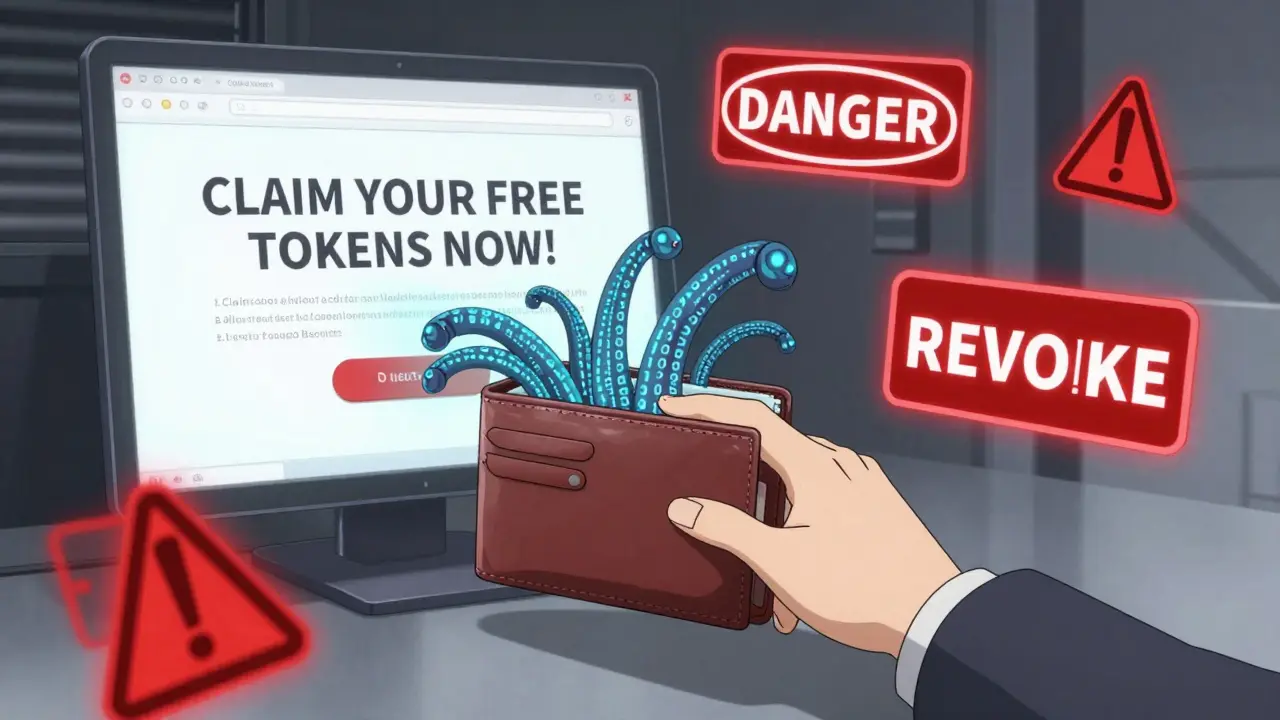
If you’ve heard about a CAKEBANK airdrop from a friend, a YouTube video, or a Discord group - pause. Do not connect your wallet. Do not click any links. Do not send any crypto.
Here’s what to do instead:
- Go to coinmarketcap.com or coingecko.com and search for "CAKEBANK".
- Check the "Official Website" link. Does it load? Is it professional? Or does it look like a 2018 WordPress theme with misspelled words?
- Search "CAKEBANK airdrop official" on Google. If the first page is full of forum posts and scammy blogs, walk away.
- Check if any major exchange lists CAKEBANK. If not, it’s not real.
- Look at the token’s contract address. Paste it into bscscan.com (if it’s on BNB Chain). If the contract has no transactions, no liquidity pools, and no verified code - it’s a ghost.
If you’ve already interacted with a CAKEBANK site, check your wallet for any unknown token approvals. Go to revoke.cash, connect your wallet, and revoke access to anything labeled "CAKEBANK" or "Cake Bank". Then monitor your balance for 72 hours.
Why This Matters: The Bigger Picture
Airdrops aren’t just free money. They’re a test of trust. Projects that can’t even write a clear announcement about their token distribution aren’t worth your time. The crypto space is full of legitimate airdrops - from Monad to Abstract to Pump.fun. Each one has detailed documentation, public audits, and community support.
CAKEBANK doesn’t. And that’s not an oversight. It’s a red flag.
The fact that this token trades at $0.00000207 isn’t an accident. It’s the market’s way of saying: "This isn’t real." You don’t need to be a blockchain expert to see that. You just need to look.
What to Watch Instead
If you’re looking for real airdrop opportunities in 2026, here are a few legitimate projects to track:
- Monad - Their mainnet launch is expected in Q2 2026. They’ve hinted at a user-based airdrop for early testers.
- Pump.fun - Already running a point-based rewards system. Users earn tokens for creating and trading meme coins.
- Hyperliquid - Has a history of rewarding active traders. Their next airdrop is rumored for April.
- Binance Megadrop - The most reliable airdrop program in crypto. They’ve distributed over $200 million since 2024.
These projects have websites, teams, audits, and public roadmaps. They don’t hide behind vague promises. They show their work.
Final Warning: Don’t Fall for the "Free Token" Trap
There’s no such thing as free money in crypto - not really. Every airdrop has a hidden cost: your attention, your data, or your wallet. CAKEBANK is a classic example. It’s not a project. It’s a trap.
If you want to earn crypto through airdrops, stick to platforms with a track record. Use tools like AirdropAlert or TokenUnlocks to find verified opportunities. Never trust a link sent in a DM. Never connect your wallet to a site you can’t verify. And never, ever send crypto to claim a "free" token.
Is there an official CAKEBANK airdrop in 2026?
No, there is no verified or official CAKEBANK airdrop as of February 2026. No official announcements, website, or social media channels from Cake Bank confirm such a program. The token exists only on minor DEXs with negligible trading volume, and no reputable crypto news source has reported on an airdrop.
Can I still claim CAKEBANK tokens if I missed the airdrop?
Since there’s no confirmed airdrop, there’s nothing to claim. Any website or bot claiming to let you claim CAKEBANK tokens is likely a scam. These sites ask you to connect your wallet, then drain your funds. Treat any "claim now" button for CAKEBANK as dangerous.
Why is the CAKEBANK token price so low?
The CAKEBANK token trades at $0.00000207 USD because there is almost no demand for it. It lacks a development team, community, use case, or exchange listings. Low price doesn’t mean it’s a "hidden gem." It means the market has rejected it. Most tokens this cheap are either scams or abandoned projects.
Is CAKEBANK related to PancakeSwap’s CAKE token?
No, CAKEBANK is not related to PancakeSwap (CAKE). PancakeSwap is a major DeFi platform with billions in trading volume. CAKEBANK is a separate, obscure token with no official ties. The similar name is likely an attempt to confuse users and gain false credibility.
How can I avoid crypto airdrop scams?
Never connect your wallet to a site unless you’ve verified its official domain. Never send crypto to claim tokens. Always check for an official website, whitepaper, and social media presence. Use trusted sources like CoinMarketCap, CoinGecko, or Binance’s Megadrop page. If it sounds too good to be true - it is.









Ryan Burk
February 24, 2026 AT 17:44 PMLmao another "airdrop" scam. You guys really think people are dumb enough to fall for this? CAKEBANK? More like CAKEWALK into your wallet. Connect your MetaMask to one of these sites and boom - gone. I’ve seen it a hundred times. No whitepaper, no team, no nothing. Just a .xyz domain and a fake Discord. Don’t be the guy who lost 3 ETH because he clicked "claim now".
Michelle Xu
February 26, 2026 AT 02:42 AMI appreciate how thorough this breakdown is. The key takeaway isn’t just "don’t click links" - it’s understanding why legitimate projects don’t operate this way. Real airdrops have timelines, verifiable contracts, and public team members. CAKEBANK has none of that. If you’re even slightly unsure, assume it’s a scam. Better safe than sorry when your private keys are on the line.
Sriharsha Majety
February 26, 2026 AT 23:27 PMi read this whole thing and i just wanna say thank you. i almost connected my wallet after seeing a youtube video that said "free cakebank tokens". i didnt know what to believe but this cleared it up. no team no website no nothing. i just uninstalled that app and blocked the number. thanks again
Tabitha Davis
February 27, 2026 AT 01:23 AMOh please. You’re all acting like this is some groundbreaking exposé. Every week there’s a new "this token is a scam" post. Meanwhile, real projects like Monad and Pump.fun are building. But sure, let’s keep crying about CAKEBANK like it’s the first rug pull ever. Wake up. The market’s not stupid - it’s just full of amateurs who need hand-holding.
Amanda Markwick
February 28, 2026 AT 03:01 AMI love how you laid this out. It’s not just about avoiding scams - it’s about learning how to spot real innovation. Most people don’t know what to look for, so they just chase "free money." But when you understand the patterns - verified contracts, active communities, transparent roadmaps - you start seeing the difference. CAKEBANK isn’t just low-value. It’s invisible. And that’s the reddest flag of all.
John Fuller
February 28, 2026 AT 19:25 PMScam.
Dee Resin
March 1, 2026 AT 11:21 AMWow. A whole essay on a token worth less than a penny. You spent 20 minutes writing this... and I spent 20 seconds laughing. The fact that this even exists is the real joke. Someone out there is probably still waiting for their 0.00000207 CAKEBANK to "moon." 🤡
Jeremy buttoncollector
March 2, 2026 AT 19:50 PMThe real tragedy here isn’t the scam - it’s the cognitive dissonance. People *want* to believe. They’re not dumb. They’re just emotionally invested in the myth of the next 1000x. CAKEBANK is a mirror. It reflects the collective fantasy of crypto: that free tokens = wealth. But wealth doesn’t emerge from empty contracts. It emerges from utility, from trust, from transparency. This token? It’s a ghost. And ghosts don’t airdrop. They haunt.
Tanvi Atal
March 3, 2026 AT 03:32 AMWhy do people still fall for this? It’s 2026. We have CoinMarketCap. We have BscScan. We have Google. You don’t need to be a genius to check if a token has a website. Or a team. Or transactions. This isn’t a scam. It’s a test. And everyone who clicks "claim" fails. Hard.
Maggie House
March 4, 2026 AT 21:27 PMI’m so glad someone wrote this. I’m new to crypto and I was so excited about this "airdrop". I thought I found my lucky break. Now I’m just embarrassed. But hey - I learned. I checked CoinGecko. I looked at the contract. No liquidity. No dev activity. Zero. I’m gonna follow your list of real projects to watch. Monad looks cool. Thanks for saving me from a disaster!
Michael Teague
March 6, 2026 AT 00:58 AMI’ve been in this space since 2017. I’ve lost money. I’ve gained money. But I’ve never lost *trust* - until now. People are getting lazier. They don’t check. They don’t research. They just see "airdrop" and go. CAKEBANK is the result. It’s not a project. It’s a symptom.
Cory Derby
March 7, 2026 AT 20:26 PMThank you for this comprehensive guide. It’s rare to see a post that doesn’t just say "don’t do it," but explains *why* and *how* to evaluate legitimacy. The checklist you provided - official website, audit reports, exchange listings - is exactly what beginners need. I’ve shared this with my crypto study group. Knowledge is the best defense.
Colin Lethem
March 9, 2026 AT 16:58 PMBro I just got a DM on Discord with a link to "claim CAKEBANK". I pasted the contract into BscScan. 0 transactions. 0 liquidity. 0 anything. I screenshot it and posted it in the group. 3 people just unlinked their wallets. Thanks for the heads up. This is why we need more posts like this - not just warnings, but tools.
Sony Sebastian
March 11, 2026 AT 05:41 AMYou think this is bad? Wait till you see the next one. They’re already prepping "CAKEBANK 2.0" with a fake Binance partnership. They’ll use AI-generated press releases. They’ll have a fake CEO with a LinkedIn profile. They’ll even pay influencers to post. This isn’t the beginning - it’s the evolution. And you’re all still playing catch-up.
kati simpson
March 12, 2026 AT 09:05 AMI just want to say I really appreciate how calm and clear this is. I’ve been so overwhelmed by all the conflicting info out there. Some people say it’s a scam. Others say it’s a hidden gem. I didn’t know who to trust. This post gave me the tools to decide for myself. I didn’t even know about revoke.cash. That’s going on my bookmarks. Thank you.
Cheryl Fenner Brown
March 12, 2026 AT 19:22 PMI’m so mad I didn’t read this sooner 😭 I connected my wallet yesterday and now I’m panicking. I checked revoke.cash and there were 3 approvals for CAKEBANK. I revoked them. My ETH is still there. Thank god. But I’m never clicking another "free token" link again. I’m gonna stick to Binance Megadrop from now on. 🙏
Robert Kromberg
March 13, 2026 AT 18:24 PMI don’t think CAKEBANK is malicious. I think it’s just… forgotten. Like a startup that ran out of funding and the devs moved on. Maybe someone started it, got bored, and left. It’s not a scam - it’s a ghost. But yeah, if you’re trying to claim tokens from it? You’re chasing a shadow. Best to let it rest.
Vishakha Singh
March 15, 2026 AT 16:02 PMThis is such an important reminder. In emerging markets like India, many people see crypto as a way out of financial hardship. They’re eager, hopeful, and sometimes desperate. That’s why scams like this thrive. We need more clear, compassionate guides like this one. Not just to warn - but to empower. Thank you for taking the time to write this. You’ve helped more people than you know.