
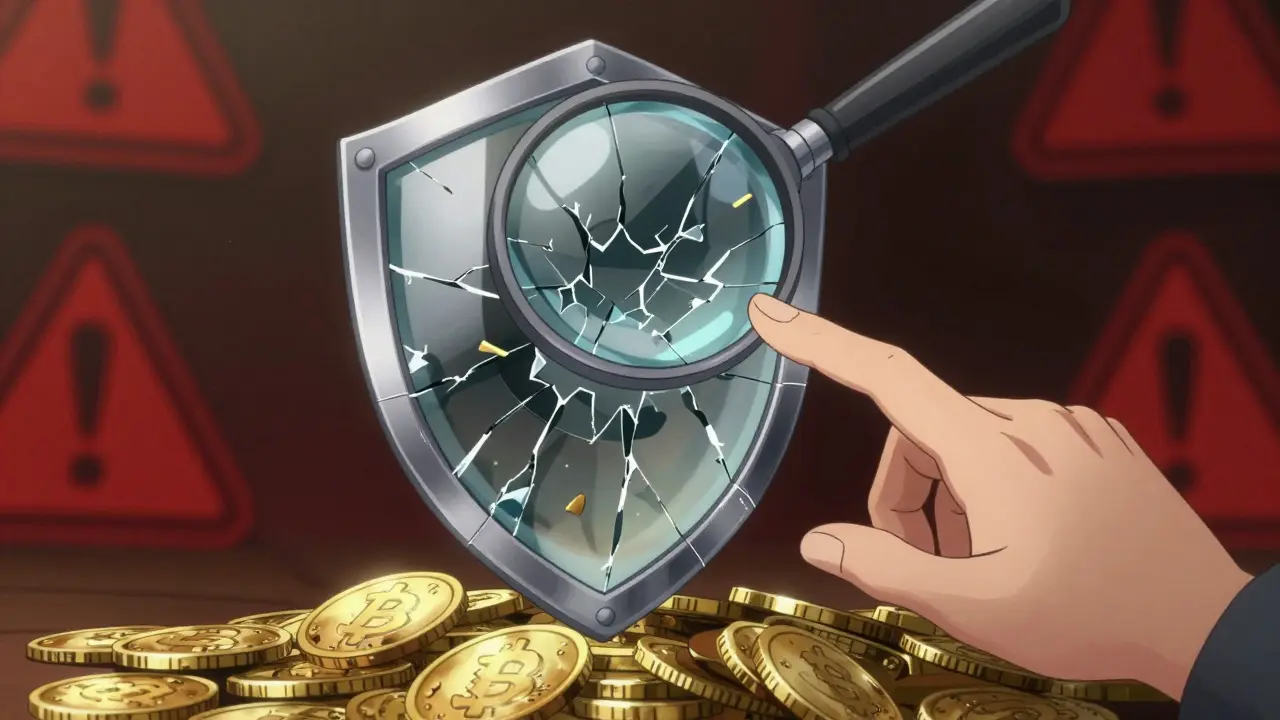
Imagine depositing your hard-earned savings into a platform that promises low fees and easy trading, only to find out later that no one can verify if the money is actually there. That is the reality facing anyone considering Exonium, a centralized cryptocurrency exchange launched in June 2019 and registered in Tallinn, Estonia. While it holds an official license number (FVR000835), its operational status raises serious red flags for any investor who values transparency. If you are searching for this platform, you likely want to know if it is worth your time or if you should stick to established giants like Binance or Coinbase. The short answer? Proceed with extreme caution, because the data simply isn't there to support confidence in this venue.
The Regulatory Reality: Licensed But Invisible
On paper, Exonium looks legitimate. It is registered in Harju Maakond, Estonia, a jurisdiction known for being friendly to blockchain businesses. However, having a license is not the same as operating transparently. Major tracking platforms like CoinMarketCap classify Exonium as an "Untracked Listing." This specific designation means the exchange fails to meet basic standards for volume verification. In simple terms, you cannot trust the trading numbers displayed on their site because they haven't been audited by third parties.
This matters because untracked status often correlates with wash trading, where bots buy and sell assets against themselves to fake high activity. For context, established players like Kraken and Bitstamp have maintained transparent reporting since 2011. Exonium, despite being active since 2019, lacks this history of verifiable data. As of late 2023, major aggregators showed "No data available" for its market pairs. If a platform cannot prove its liquidity, how can you trust it to hold your funds safely?
Technical Gaps and Missing Documentation
When evaluating a crypto exchange, technical reliability is just as important as security. Most reputable exchanges publish API documentation, system architecture details, and security protocols. Exonium has none of these publicly available. It does not appear in major API registries maintained by industry leaders like CryptoCompare or CoinGecko, which monitor hundreds of other platforms.
Furthermore, there are no independent security audits from well-known firms such as CertiK or Hacken. These audits act as a health check for your digital wallet infrastructure. Without them, you are essentially flying blind. To make matters more confusing, Exonium claims to offer a peer-to-peer (P2P) trading platform and Initial Exchange Offerings (IEOs). Yet, there is no verifiable list of past IEO projects or user testimonials on platforms like Trustpilot or Reddit. Compare this to Binance Launchpad, which has raised over $2.1 billion across dozens of verified projects. The gap in credibility is significant.
User Sentiment: A Silence That Speaks Volumes
In the crypto world, community feedback is gold. If an exchange works well, users talk about it. If it fails, they complain loudly. With Exonium, you hear nothing. Trustpilot shows zero verified reviews. Reddit has no dedicated discussion threads. Telegram groups associated with the name have fewer than 15 members. This silence is unusual. Even problematic exchanges usually generate some noise-complaints about slow withdrawals or customer service issues.
The absence of complaints might seem positive at first glance, but in this case, it suggests minimal operational activity. If hardly anyone is using the platform, why would you be the first to take the risk? Established emerging exchanges like EXMO maintain thousands of reviews and large subscriber bases, providing a social proof layer that Exonium completely lacks.

Comparative Analysis: How Exonium Stacks Up
To understand where Exonium fits in the landscape, we need to compare it against the industry standard. The table below highlights key differences between Exonium and top-tier competitors.
| Feature | Exonium | Binance | Kraken |
|---|---|---|---|
| Launch Year | 2019 | 2017 | 2011 |
| Regulatory Status | Estonian License (FVR000835) | Multiple Global Licenses | 13 Global Licenses |
| Volume Verification | Untracked / Unverified | Verified ($40B+ Daily) | Third-Party Audited |
| Proof of Reserves | None Published | Monthly Attestations | Regular Audits |
| User Base | Unknown / Minimal | 100M+ Users | 10M+ Users |
Notice the lack of Proof of Reserves for Exonium. Since the collapse of FTX in 2022, proof-of-reserves has become the new baseline for trust. Platforms like Gemini publish monthly merkle tree proofs to show they actually have the coins they claim to hold. Exonium offers no such guarantee. This is a critical omission for anyone storing significant capital.
Risks You Should Know Before Depositing
If you decide to look closer at Exonium, keep these specific risks in mind:
- Liquidity Risk: With untracked volume, you may struggle to sell large positions quickly without moving the price against yourself.
- Regulatory Uncertainty: The EU's MiCA framework requires full operational transparency starting in 2024. Exchanges that cannot provide this data face exclusion from major markets.
- Customer Support Void: There is no functional knowledge base, help center, or responsive support channel documented. If something goes wrong, finding help will be difficult.
- Withdrawal Delays: Without clear fee structures or withdrawal limits published, you could face unexpected costs or frozen funds during peak times.
The regulatory environment is tightening. Estonia’s Financial Intelligence Unit noted that only 27 of 153 registered exchanges maintained active licenses as of Q3 2023 due to stricter Anti-Money Laundering (AML) enforcement. Exonium’s untracked status puts it in a precarious position within this shrinking pool of compliant entities.
Is Exonium Worth Your Attention?
For most traders, the answer is no. The benefits of using a lesser-known exchange-such as lower fees or unique token listings-are rarely worth the risk of opaque operations. Unless you have a specific reason to trade a token listed exclusively on Exonium, you are better off using a platform with verified volumes, published audits, and a strong user community.
If you must use smaller exchanges, look for those with visible Proof of Reserves and active third-party monitoring. Check if they appear on CoinGecko or CoinMarketCap with tracked data. Avoid platforms where the only information available is a registration number and a website that hasn't been updated in years. Your capital deserves a higher standard of care than what Exonium currently provides.
Frequently Asked Questions
Is Exonium a scam?
It is not definitively labeled a scam by regulators, but it carries high risk. The term "untracked listing" on major platforms indicates a lack of transparency rather than proven fraud. However, the absence of user reviews, security audits, and verifiable volume makes it unsafe for long-term holding compared to regulated alternatives.
Where is Exonium based?
Exonium is registered in Tallinn, Estonia, under license number FVR000835. Its physical address is listed as Roosikrantsi, TN-2, Kesklinna Linnaosa, Tallinn. While Estonia is a reputable jurisdiction for fintech, the local license alone does not guarantee global regulatory compliance or safety.
Does Exonium have a mobile app?
As of recent checks, Exonium does not appear in the Apple App Store or Google Play Store. This suggests that users must rely on the web interface, which may limit accessibility and convenience compared to major competitors that offer robust native applications.
What is the difference between tracked and untracked exchanges?
Tracked exchanges provide data that can be independently verified by aggregators like CoinMarketCap or CoinGecko. Untracked exchanges do not meet these verification standards, meaning their reported trading volumes may be inaccurate or manipulated. Tracked status is a key indicator of reliability.
Are there safer alternatives to Exonium?
Yes. Established exchanges like Binance, Coinbase, Kraken, and Bybit offer verified volumes, regular security audits, and large user communities. For European users seeking regulation, Bitstamp and Kraken provide strong compliance frameworks. Always choose platforms with published Proof of Reserves for maximum safety.









Sam Ariafar
August 27, 2026 AT 16:05 PMIt is truly a moral failing of our financial system that we allow such opacity to persist. The license number FVR000835 is merely a piece of paper, not a guarantee of integrity. We must demand better from the entities that hold our capital.
Bill Patterson
August 29, 2026 AT 11:14 AMmeh just stick to binance or kraken its all the same in the end
Emmanuel Ogbomo
August 30, 2026 AT 13:53 PMOne wonders if the silence is due to lack of users or perhaps a deliberate strategy to avoid scrutiny. In the grand scheme of blockchain adoption, these micro-exchanges often serve as testing grounds for new protocols before they scale up. It is fascinating how the absence of data can be interpreted in so many ways by different observers. Perhaps it is simply too early to judge their long-term viability based on current metrics alone. The journey of any platform is rarely linear and often involves periods of dormancy before growth. We should remain open to the possibility that this entity may evolve significantly in the coming years. For now, observation remains the safest course of action for most investors. The market will eventually reveal the true nature of such ventures through user adoption rates. Until then, speculation is all we have to go on. Let us keep an eye on their regulatory compliance efforts under MiCA. Transparency is key to unlocking trust in any digital asset ecosystem. Time will tell if Exonium becomes a relevant player or fades into obscurity. Patience is a virtue when analyzing emerging market participants. The narrative is still being written and we are merely watching the first few pages. Stay tuned for further developments in this quiet corner of the crypto world.
Melanie Armijo
August 31, 2026 AT 02:57 AMIsn't it interesting how we project our own fears onto these platforms? I think the real issue is our collective inability to trust anything that isn't backed by a massive marketing budget. It's a bit like judging a book by its cover without even opening it. Maybe there is something special about them that we are missing because we are too busy looking at the big guys. But hey, who knows right?
Laine Van Sickle
August 31, 2026 AT 12:34 PMi dont get why everyone is so scared i mean sure its risky but isnt everything in crypto risky anyway? like you could lose it all on bitcoin too right? so whats the diff? also the fact that no one talks about it makes me want to try it more lol
Ashwin Bhandurge
September 2, 2026 AT 07:18 AMGreat point! This really highlights the importance of due diligence in our ever-evolving digital landscape. Let's stay proactive and informed!
Nadia Christian
September 2, 2026 AT 22:17 PMWe need to protect American investors from these foreign entities! Estonia might be nice for tourists, but it is not the same as US regulation. We should demand stricter oversight from our own government. These offshore licenses do not mean much here. We need to keep our money safe at home. That is the only way to ensure security. Do not let these international loopholes fool you. Support domestic standards above all else. Our economy depends on strong local controls. Be vigilant and stay informed. Trust your instincts on this one. It is about national financial sovereignty. Keep America First in mind. Do not gamble with your future. Stay strong and stay local.
jeffry jones
September 4, 2026 AT 08:59 AMLiquidity depth is key here. Untracked volume implies low order book density. Slippage risk is high. Avoid large position sizing. Use limit orders only. Monitor spread dynamics closely. DEXs might offer better execution. CEXs have counterparty risk. Diversify across venues. Hedge delta exposure. Track funding rates. Watch out for basis risk. Optimize entry points. Minimize transaction costs. Prioritize exit strategies. Stay liquid. Manage drawdowns effectively. Focus on risk-adjusted returns. Keep fees in check. Execute with precision.
Aaliyah Simpson
September 4, 2026 AT 23:19 PMYou know what this looks like? It looks like a shell company waiting to dump some garbage token on unsuspecting retail. They probably don't even have a real office, just a virtual address in Tallinn. The whole 'untracked' thing is just code for 'we are hiding something'. Bet the founders are already sipping champagne somewhere while we wait for withdrawals. Typical playbook. Don't fall for it.
Paul Needham
September 6, 2026 AT 04:25 AMOh look, another dead horse beating. Did anyone actually use this thing or are we just reviewing a ghost? If there are no reviews, maybe there are no users. Or maybe the users are too smart to talk about it. Either way, this post is a waste of bandwidth. Next topic please.