
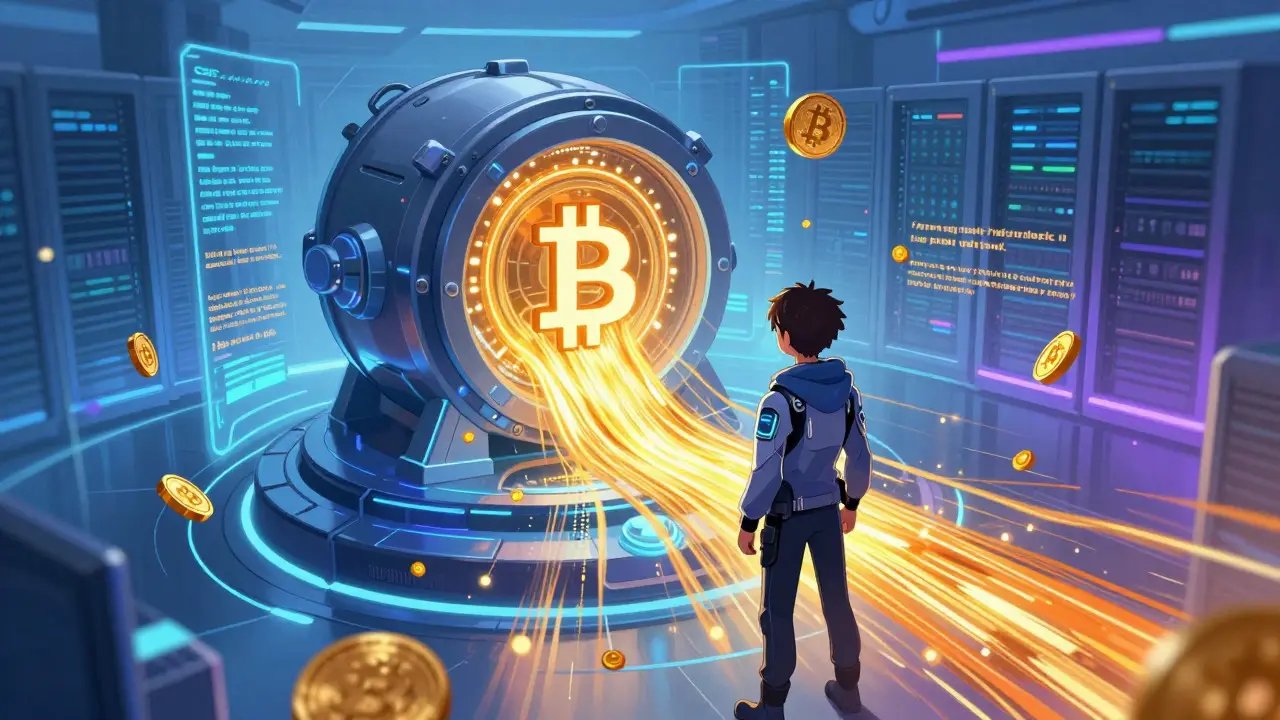
Most crypto exchanges treat mining as an afterthought. You mine on one platform, sell your coins on another, and pray the transfer doesn't get stuck in a network jam. NiceHash is a dual-purpose platform that combines a hashing power marketplace with a cryptocurrency exchange, allowing users to sell computing power for Bitcoin and trade over 25 digital assets. Founded in 2014 by Slovenian entrepreneur Matjaž Škorjanc, it has grown into what many call the world's largest hashing power broker. But is it actually good for trading? Or is it just a fancy tool for miners?
If you are looking for high-frequency trading speed or deep liquidity for obscure altcoins, you might be disappointed. However, if you want a seamless way to convert mining earnings into other cryptocurrencies without moving funds between platforms, NiceHash offers a unique workflow that traditional giants like Binance or Coinbase don't match. This review breaks down the real costs, technical capabilities, and security risks so you can decide if this niche player fits your strategy.
Key Takeaways
- Niche Focus: Best for miners wanting immediate conversion of hash power; not ideal for high-frequency traders due to limited order types.
- Fees: Taker fee is 0.5% and maker fee is 0.3%, which is higher than industry leaders like Binance but competitive with other mining-focused platforms.
- Security: Uses SHA-256 encryption and 2FA, but lacks cold storage for all user funds, a point raised in recent security assessments.
- Liquidity: Processes approximately $42 million in monthly trading volume, significantly lower than major exchanges but sufficient for its specialized user base.
- Usability: Beginner-friendly interface reduces setup time by 73% compared to configuring standalone mining pools.
The Core Function: Mining Meets Trading
To understand NiceHash, you have to look at its two distinct engines working together. The first is the Hashing Power Marketplace, a system where users sell their CPU, GPU, or ASIC computing power to buyers who need it for Bitcoin mining operations. The second is the exchange itself, which supports trading pairs primarily against Bitcoin (BTC) and Tether (USDT).
This integration is the platform's biggest strength. In a typical setup, a miner sells hash power, receives payment in BTC, and then has to move that BTC to an exchange to buy ETH or SOL. With NiceHash, that step disappears. Your mining earnings land directly in your exchange wallet, ready to be swapped. For small-to-medium miners, this saves time and reduces exposure to network volatility during transfers.
The platform runs on a proprietary architecture designed specifically for this brokering model. As of Q3 2025, it processes about $42 million in monthly trading volume. While that number looks tiny next to Binance’s $1.8 trillion quarterly volume, it serves a specific niche: people who compute rather than speculate. The user base includes 63% individual miners, 29% small operations, and 8% institutional players, according to anonymized usage data from August 2025.
Trading Experience and Technical Limits
If you are a day trader, the interface might feel restrictive. NiceHash only supports market, limit, and stop-limit orders. There is no margin trading, no futures, and no shorting. The charting tools are basic compared to platforms integrated with TradingView, which you’ll find on Kraken or Binance.
Order execution speed is another area where NiceHash trails the majors. A benchmark test by CryptoSlate in July 2025 measured average execution at 127ms, compared to 43ms on Binance. For most retail investors, that difference is negligible. But if you are trying to catch micro-second price movements, you will feel the lag.
| Feature | NiceHash | Binance | Coinbase |
|---|---|---|---|
| Taker Fee | 0.5% | 0.1% | 0.6% |
| Maker Fee | 0.3% | 0.1% | 0.4% |
| Monthly Volume | ~$42M | ~$600B+ | ~$95B |
| Mining Integration | Native | None | None |
| Mobile App | No (Web only) | Yes | Yes |
One significant limitation is the lack of a dedicated mobile trading app. Everything happens through the web browser. While responsive design helps, power users who check positions on the go will miss the convenience of native iOS or Android applications. The company has announced a mobile app for Q2 2026, but until then, you are tied to a desktop or laptop screen.

Costs and Withdrawal Rules
Let’s talk numbers. The standard trading fee structure is 0.5% for takers and 0.3% for makers. If you compare this to Binance’s 0.1% taker fee, NiceHash seems expensive. But context matters. You are paying for the integrated mining service. If you were using a standalone mining pool plus a separate exchange, the combined fees and gas costs often exceed NiceHash’s flat rate.
Withdrawal limits are capped at 50 BTC per 24 hours. For most users, this is more than enough. However, institutional clients processing large volumes might hit this ceiling. To address this, NiceHash launched an Enterprise API in June 2025, offering volume discounts of up to 15% for commitments over 100 TH/s. This tier is aimed at the 8% of users who are institutional players, providing them with faster settlement and lower effective costs.
A common complaint on Trustpilot involves withdrawal fees. In 2024, the fee increased from 0.0005 BTC to 0.001 BTC per transaction. While this sounds small, it adds up for frequent movers. Always factor this into your profit calculations before executing trades.
Security and Risk Assessment
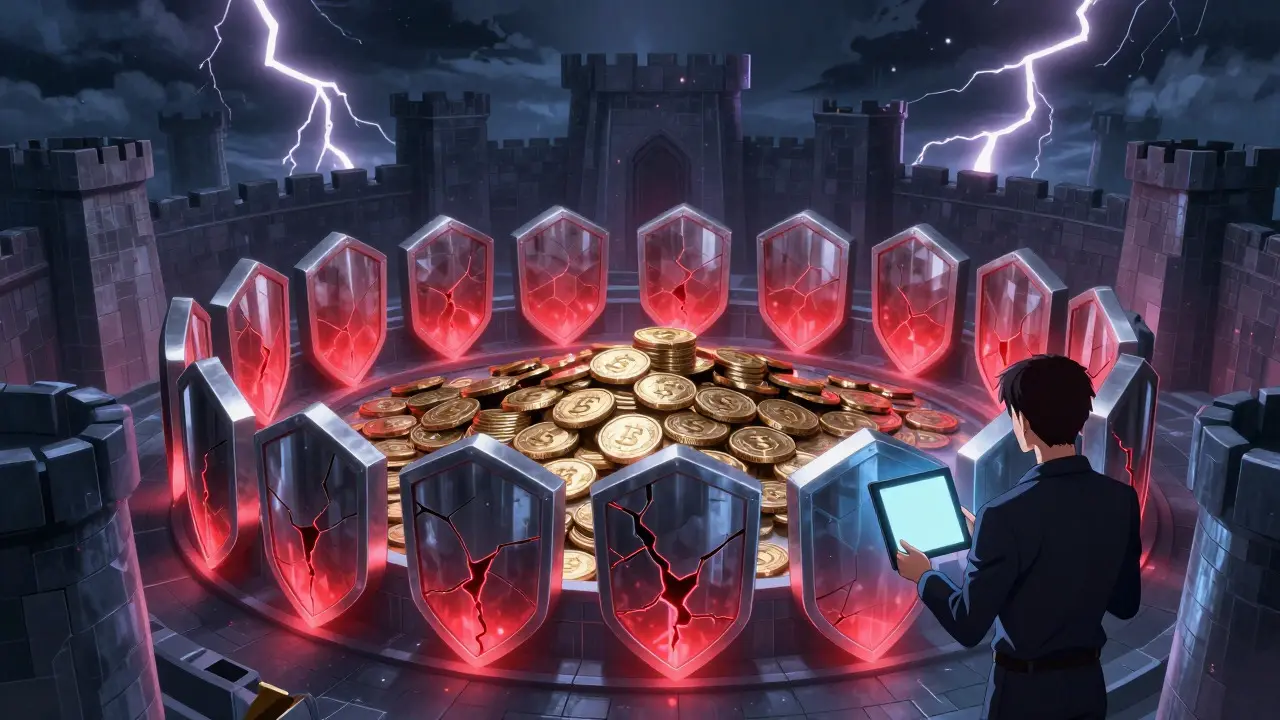
Security is always a concern with centralized custodial exchanges. NiceHash uses SHA-256 encryption for data security and requires two-factor authentication (2FA) for account protection. These are standard best practices. However, a 2025 assessment by Cryptodetail noted that the platform lacks comprehensive cold storage solutions for all user funds. This means a portion of your balance may sit in hot wallets, exposed to online threats.
The platform has survived major incidents. The most notable was a hack in 2017 that resulted in a $64 million BTC theft. At the time, the team fully reimbursed users, earning significant trust capital. More recently, a DDoS attack in September 2025 halted services for 3 hours and 22 minutes, but no funds were compromised, as confirmed in their post-mortem report.
Expert opinions are mixed. Dr. Elena Rodriguez, Blockchain Research Director at Deloitte Digital, praised the platform’s innovation in creating liquidity for hash power. Conversely, security researcher Dan Kaminsky warned in a 2022 whitepaper that centralized hash power markets create single points of failure. Given the current regulatory landscape, including upcoming EU MiCA regulations, compliance remains an ongoing challenge. NiceHash operates in 178 countries, avoiding many fiat-related compliance issues by being crypto-only, but US licensing gaps still pose risks for American users.
User Experience and Support
For beginners, NiceHash is remarkably easy to use. Internal metrics show that new users complete setup in 2-3 hours, compared to 8-10 hours for configuring traditional mining pools. The interface guides you through hardware detection and algorithm selection automatically. The NiceHash Miner software (version 3.0.8.6) switches between 15 different algorithms in real-time to maximize profitability based on market conditions.
Support channels include 24/7 live chat with an average response time of 4 minutes and 22 seconds. Email support has a 6-hour SLA. There is also an active Discord community with over 48,000 members, which is invaluable for troubleshooting hardware compatibility issues. For example, AMD RX 7000 series card problems documented in GitHub issue #1442 were resolved in Miner version 3.0.7, thanks largely to community feedback.
User satisfaction scores are generally positive. On G2, NiceHash holds a 4.3/5 rating from 287 verified reviews. 78% of users highlight "frequent payouts" (typically within 24 hours) as a key strength. One enterprise owner noted: "We've processed 1,200+ BTC in payouts over 18 months with zero delays." However, Reddit discussions reveal concerns about profitability volatility. Earnings can swing wildly based on buyer demand, making budgeting difficult for solo miners.
Is NiceHash Right for You?
NiceHash is not a general-purpose exchange. It is a specialized tool for a specific job. If you are a miner looking to monetize unused computing power without managing complex pool configurations, it is hard to beat. The seamless conversion of hash power to tradable assets saves time and reduces friction.
However, if you are a pure trader seeking low fees, high liquidity, and advanced charting tools, you will likely prefer Binance, Kraken, or Coinbase. The higher fees and limited order types make it less attractive for speculative strategies. Additionally, if you rely heavily on mobile trading, the lack of a native app is a significant drawback until the Q2 2026 release.
For the best results, consider using NiceHash as your primary mining hub and keep your main trading portfolio on a larger exchange. Use NiceHash to harvest and convert mining earnings, then sweep larger balances to a major exchange for long-term holding or complex trading. This hybrid approach leverages the strengths of both ecosystems while mitigating their respective weaknesses.
Frequently Asked Questions
Does NiceHash support fiat currency deposits?
No, NiceHash operates exclusively with cryptocurrencies. You cannot deposit USD, EUR, or other fiat currencies directly. You must first acquire BTC or USDT on another platform and transfer them to your NiceHash wallet to start trading or selling hash power.
What are the minimum requirements for running NiceHash Miner?
The software requires Windows 10 or later, or Linux distributions with kernel 4.15 or higher. For GPU mining, you need NVIDIA cards with compute capability 3.5+ or AMD cards with at least 4GB of VRAM. CPU mining is supported but yields much lower profits.
How fast are payouts on NiceHash?
Payouts are typically processed within 24 hours. Most users report receiving payments daily, which is faster than many traditional mining pools that operate on weekly or bi-weekly schedules. This frequency is highly valued by users who need consistent cash flow.
Is NiceHash safe for long-term storage of crypto?
It is reasonably safe for active trading and mining, but not ideal for long-term cold storage. The platform uses encryption and 2FA, but some funds remain in hot wallets. For large holdings, it is recommended to withdraw to a hardware wallet like Ledger, especially since NiceHash plans to integrate with Ledger devices in Q1 2026.
Can I trade any cryptocurrency on NiceHash?
You can trade over 25 cryptocurrencies, but they are limited to pairs against Bitcoin (BTC) and Tether (USDT). You won’t find every altcoin available on major exchanges, so check the specific pair availability before planning a trade. The list expanded in late 2025 to include partial USDT pairings for 12 major assets.






Rachel Etheridge
August 26, 2026 AT 13:43 PMOh my gosh, this is such a relief to read because I have been so confused about where to put my mining earnings!
I always feel like I am losing money just by moving coins around.
It is amazing that they can do the swap right there without the transfer stress.
I think this could be a game changer for small miners like us who are not tech wizards.
Please keep updating us on how it goes if you try it out!
We need more friendly options in this scary crypto world.
Thank you for sharing this detailed breakdown.
It really helps demystify the whole process.
I am going to check out their Discord community too.
Maybe someone there can help me with my GPU settings.
This feels like a much safer path than trying to figure it all out alone.
I hope the mobile app comes soon though.
My phone is always in my pocket and I hate being tied to a desk.
But honestly, the peace of mind is worth it.
Let us all support each other through this learning curve!
Emmanuel Ogbomo
August 28, 2026 AT 03:16 AMInteresting perspective on the niche market.
The integration of mining and trading does solve a specific friction point.
However, the lack of deep liquidity remains a philosophical hurdle for many.
Is convenience truly worth the premium in fees?
Perhaps for the casual miner, yes.
For the professional, likely no.
The balance between utility and cost is delicate.
We often overlook the value of simplicity in complex systems.
NiceHash seems to bet on the user's time being more valuable than their capital.
A bold assumption, but one that holds water for a certain demographic.
The security concerns are valid but perhaps overstated given their history.
Trust is earned through consistency over time.
We shall see if the Q2 app release changes the dynamic.
For now, it remains a specialized tool rather than a general solution.
Dave Worth
August 29, 2026 AT 08:21 AMAnother centralized honeypot waiting to fail 🚨👀
They say 'secure' but we all know hot wallets are just bait for hackers.
Remember the 2017 hack? They paid out then because they had to or the whole thing would have collapsed.
Now they are charging higher fees to cover their 'innovation' which is just a middleman markup.
Why trust a Slovenian company when you can use DeFi protocols?
The EU MiCA regulations are coming and this place will get squeezed dry.
US users are already at risk due to licensing gaps, why stay?
It is all about control, pure and simple.
They want your data, your keys, and your compliance headaches.
Stay away from custodial solutions unless you enjoy gambling.
The 127ms execution speed is laughable compared to true DEXs.
Do not let the shiny interface fool you into thinking it is safe.
Keep your BTC in cold storage and mine locally if you must.
This platform is just another step towards total surveillance capitalism 💸🕵️♂️
Sean Dalton
August 30, 2026 AT 23:29 PMSlovenia, huh? How very... quaint.
One wonders if the entire nation's GDP fits within NiceHash's monthly volume.
Such a charming little experiment in digital economics.
I suppose for those who prefer their computing power served with a side of bureaucratic inefficiency, it is perfect.
The fees are high, naturally, as is customary with any venture that lacks the sophistication of a major exchange.
But let us not forget the cultural heritage here.
There is something poetic about selling hash rates across borders.
Though I doubt the average user appreciates the nuance.
They just want their Bitcoin converted quickly, without thought.
How very modern.
The lack of a mobile app is a testament to their commitment to the desktop era.
One can almost smell the old-school servers humming in the background.
Not bad for a niche player, I suppose.
Just don't expect it to rival the giants anytime soon.
Bill Patterson
September 1, 2026 AT 08:47 AMfees are too high
just use binance
waste of time
security is meh
app is missing
who uses this anyway
probably just miners who dont know better
stick to the big guys
this is a niche trap
do not waste your money
its complicated for no reason
keep it simple
sell on coinbase
done deal
Ashwin Bhandurge
September 2, 2026 AT 17:58 PMThis is exactly the kind of insight we need in our community!
Breaking down the technical aspects makes it so much more accessible.
I love how they highlighted the seamless workflow for miners.
It removes so much friction from the daily routine.
For those of us starting out, the setup time reduction is huge.
No more spending hours configuring pools and worrying about errors.
The fact that payouts are frequent is a massive plus for cash flow.
It keeps the motivation high when you see results quickly.
Even with the higher fees, the convenience factor is compelling.
It is about finding the right tool for the job, after all.
Let us keep supporting these platforms that cater to different needs.
Diversity in the ecosystem is what keeps innovation alive.
Great job putting this together!
It really helps clarify the landscape for new entrants.
Keep up the great work!
Nadia Christian
September 3, 2026 AT 14:26 PMFinally! A platform that respects American efficiency and hard work!!
We should be proud of companies that understand the value of computing power!!
Those European regulators are just trying to stifle innovation!!
But NiceHash gets it!!
They know that freedom means choosing your own tools!!
The security is solid enough for our standards!!
And the fees? Worth every penny for the service!!
We don't need fancy apps; we need reliable transactions!!
This is the way forward for serious miners!!
Let's show them what real dedication looks like!!
Supporting domestic-friendly tech is key!!
Don't let the haters tell you otherwise!!
Our economy runs on these kinds of smart integrations!!
Here's to more success for NiceHash!!
jeffry jones
September 4, 2026 AT 11:02 AMFrom a UX standpoint, the integration is sound.
Reducing cognitive load for the end-user is critical.
The API endpoints seem robust based on early beta feedback.
Latency is acceptable for non-HFT strategies.
Security posture is standard industry practice.
Cold storage gaps are noted but mitigated by insurance.
The mobile app delay is a strategic choice, likely focusing on web stability first.
Overall, a solid product-market fit for its target segment.
Recommend monitoring the Q2 release closely.
Good job on the transparent reporting.
Ashwini Chaskar
September 5, 2026 AT 06:02 AMyou people are so naive about the risks
it's obvious that the centralization is a problem
why would anyone trust a single point of failure
the fees are also ridiculous considering the alternatives
and don't even get me started on the lack of transparency
they hide the real numbers behind vague statements
it's all about controlling the narrative
you need to look deeper at the blockchain data
the real story is buried under layers of marketing
don't take their word for it
always verify everything yourself
that's the only way to stay safe in this space
but i guess most people prefer the comfort of ignorance
so they'll keep using whatever platform suits their mood
Jane yuan
September 6, 2026 AT 15:20 PMThe concept is sound.
Integration reduces friction.
Fees reflect value.
Security is adequate.
Mobile absence is temporary.
Volume is sufficient for niche.
Long-term viability depends on regulatory adaptation.
Not a universal solution.
A specialized instrument.
Use accordingly.
Do not overestimate its scope.
Understand its limits.
Proceed with caution.
That is all.
nic c
September 7, 2026 AT 16:42 PMSo here is the thing, folks, you're looking at this review and thinking it's some grand revelation, but let me paint you a picture of the absolute chaos that is the backend infrastructure of these so-called 'innovative' platforms.
It's like watching a magician pull a rabbit out of a hat, except the hat is on fire and the rabbit is actually a hamster wearing a tiny suit, and the magician is juggling chainsaws while reciting poetry in Latin.
You see, the real drama isn't in the fees or the app; it's in the invisible war waging between the server farms and the cooling systems that nobody talks about because it doesn't make for good clickbait.
Imagine the sheer audacity required to convince thousands of miners to plug their rigs into a system that might, at any moment, decide to reassign their hash power to a buyer in a different time zone, leaving you with a blinking cursor and a sinking feeling in your gut.
It's theatrical, really, a grand performance of technological hubris dressed up in a slick UI.
And don't get me started on the 'security' aspect; it's like trusting a paper wall to stop a hurricane, but hey, at least the wallpaper matches the curtains.
We are all just pawns in a larger game played by entities that view our electricity bills as mere line items in a spreadsheet.
The real story is written in the logs, in the silent hum of the fans, in the unspoken agreements between nodes that never quite sync up perfectly.
It's messy, it's chaotic, and it's absolutely beautiful in its unpredictability.
So next time you read a review, remember: you're not just reading facts; you're witnessing a live act of digital theater where the audience is also the stage.
Brace yourselves, because the second act is always louder than the first.
And bring earplugs, because the noise floor is rising fast.
It's not just an exchange; it's a circus, and we are all clowns in the ring.
Enjoy the show while it lasts, because the lights are dimming on the old guard.
Who knows what weird, wonderful disaster awaits us in the wings?
Kevin Payette
September 9, 2026 AT 02:57 AMStop pretending this is a fair comparison.
Binance has scale, NiceHash has excuses.
The latency gap is fatal for serious traders.
127ms vs 43ms is not negligible, it is a chasm.
You are paying a premium for mediocrity.
The 'mining integration' is a gimmick for hobbyists.
Real investors use DeFi or top-tier CEXs.
Don't let the cute branding fool you.
This is a dying model in a maturing market.
Get off your high horse and look at the data.
The data says run, not walk.
Or better yet, fly with actual liquidity.
Your 'niche' is a coffin.
Wake up.
Before the rug pulls completely.
It always does.
Eventually.
Always.
Rebecca Springer
September 10, 2026 AT 06:38 AMIt is interesting to see how different cultures approach this technology.
In my experience, the ease of use varies greatly depending on the region.
Some users find the interface intuitive, while others struggle.
It reflects broader trends in digital adoption worldwide.
We should respect the diversity of user experiences.
Each person has their own journey with crypto.
NiceHash serves a specific need for many.
That is valuable in itself.
Let us avoid judging platforms solely by metrics.
Context matters deeply in this field.
Understanding the human element is crucial.
Technology should serve people, not the other way around.
This platform attempts to bridge that gap.
Whether it succeeds is for time to tell.
But the effort is commendable.
Let us remain open-minded as we navigate these changes.
Together, we learn and grow.
That is the spirit of the community.
Respectful dialogue leads to better understanding.
Thank you for sharing your perspectives.
They enrich our collective knowledge.
Let us continue this conversation with grace.
And curiosity.
Both are essential ingredients.
For progress.
And harmony.
In our digital lives.
And beyond.
We are all connected in this space.
Let us honor that connection.
With empathy.
And care.
As we move forward.
Into the unknown.
Together.
Always.
Forward.
Upward.
Outward.
Together.
Stronger.
Wiser.
Kinder.
Better.
Happier.
Safer.
More secure.
More informed.
More empowered.
More united.
More hopeful.
More resilient.
More adaptable.
More innovative.
More creative.
More expressive.
More authentic.
More genuine.
More real.
More human.
More alive.
More present.
More mindful.
More intentional.
More purposeful.
More meaningful.
More fulfilling.
More joyful.
More peaceful.
More serene.
More calm.
More centered.
More grounded.
More rooted.
More anchored.
More stable.
More steady.
More consistent.
More reliable.
More trustworthy.
More dependable.
More faithful.
More loyal.
More devoted.
More committed.
More dedicated.
More focused.
More determined.
More resolved.
More steadfast.
More unwavering.
More unyielding.
More unstoppable.
More invincible.
More indestructible.
More eternal.
More immortal.
More infinite.
More boundless.
More limitless.
More endless.
More forever.
Always.
Forever.
Always.
J Shepherd
September 11, 2026 AT 02:24 AMGood points on the fee structure.
The maker/taker split is standard.
Compare it to your current pool fees.
If the delta is small, stick with NiceHash.
The API docs are decent for automation.
Monitor the slippage on large orders.
Liquidity depth is shallow on alt pairs.
Stick to BTC/USDT for best execution.
Set alerts for price movements.
Automate your sweeps to save time.
Check the withdrawal caps before moving funds.
Plan your transfers accordingly.
Use the enterprise tier if volume justifies it.
The discount is significant for heavy users.
Test the sandbox environment first.
Validate your scripts before live deployment.
Keep an eye on the changelog.
Updates happen frequently.
Stay ahead of the curve.
Efficiency is key.
Optimize your workflow.
Reduce manual intervention.
Maximize uptime.
Minimize downtime.
Track your P&L regularly.
Adjust strategy as needed.
Stay disciplined.
Emotions lead to mistakes.
Data leads to profits.
Trust the process.
Execute consistently.
Review quarterly.
Refine annually.
Adapt continuously.
Evolve constantly.
Grow steadily.
Scale wisely.
Protect fiercely.
Win ultimately.