
Imagine owning a slice of a Manhattan skyscraper for the price of a nice dinner. Or holding a fraction of a US Treasury bond that settles instantly, not in three days. This isn't science fiction; it's happening right now on RWA Tokenization Platforms. These digital bridges are turning trillions of dollars in physical and traditional financial assets into tradable code. But with dozens of new services popping up, which ones actually work? And more importantly, which ones keep you out of legal trouble?
The market is exploding. Boston Consulting Group projects tokenized assets could hit $16 trillion by 2030. Yet, less than 0.001% of global asset value is currently on-chain. That gap is where the opportunity-and the risk-lives. You don't need to be a coder to understand this space, but you do need to know who the players are. Let's break down the top platforms, how they differ, and what you should watch out for before putting your money down.
What Exactly Is RWA Tokenization?
At its core, Real-World Asset (RWA) tokenization converts ownership rights of physical or traditional financial assets into digital tokens on a blockchain. Think of it as a digital certificate of ownership that can be split into tiny pieces. Instead of needing $500,000 to buy a commercial building, you might only need $500. The token represents your share of the equity, the dividends, and the voting rights.
This process isn't just about splitting bills. It solves massive inefficiencies in traditional finance. Traditional settlement takes 30 to 60 days. On-chain settlement? Near-instant. Traditional markets close at 5 PM. Blockchain runs 24/7. By moving assets like real estate, private credit, and commodities onto rails like Ethereum or Polygon, we unlock liquidity in things that were previously stuck in vaults.
| Feature | Traditional Markets | RWA Tokenization |
|---|---|---|
| Settlement Time | T+2 to T+60 days | Near-instant |
| Trading Hours | Market hours only | 24/7 Global Access |
| Minimum Investment | High ($10k - $1M+) | Fractional ($10 - $100) |
| Transparency | Limited, opaque | Public ledger verification |
Top RWA Tokenization Platforms Compared
Not all platforms are created equal. Some focus on ease of use for retail investors, while others build heavy-duty compliance engines for institutions. Here are the four names you’ll hear most often in boardrooms and crypto Twitter alike.
Securitize: The Institutional Heavyweight
Securitize is arguably the most recognized name in North America. Founded in 2017, it holds roughly 37% of the institutional market share. Why? Because they integrated deeply with traditional broker-dealers. If you’re a fund manager wanting to tokenize a bond portfolio, Securitize is likely your first call. Their recent partnership with BlackRock to tokenize $100 million in Treasury bonds proved they can handle serious volume.
They excel in security token offerings (STOs). Their platform handles the messy KYC/AML checks automatically, ensuring that only verified investors can hold the tokens. However, this robustness comes with complexity. For a small startup trying to raise funds, Securitize’s fees and integration requirements might feel like using a sledgehammer to crack a nut.
MANTRA Chain: The Regulatory Specialist
If Securitize is the American giant, MANTRA Chain is the European regulator’s best friend. Established in 2019, MANTRA built its entire architecture around regulatory-first design. They dominate the EMEA region with about 28% adoption.
What makes MANTRA different? They embed KYC and AML protocols directly into their token standards. This means the compliance rules travel with the token. If I sell my token to you, the smart contract checks if you’re eligible to own it before allowing the transfer. In March 2024, they launched their own Layer 1 blockchain specifically for RWAs, offering institutional-grade privacy features. For users who care about legal enforceability across borders, MANTRA offers peace of mind that generic Ethereum dApps simply cannot match.
Mintology: The Real Estate Specialist
Mintology, launched in 2021, carved out a niche in commercial real estate. Unlike generalist platforms, Mintology focuses on seamless integration with existing property management systems. If you’re a landlord managing ten buildings, you don’t want to learn a new accounting system just to issue tokens.
Mintology plugs into what you already use. This practical approach has won them fans among mid-sized property developers. However, user reviews note gaps in technical documentation compared to older rivals. If you’re a developer trying to build custom tools on top of Mintology, expect some head-scratching moments.
S-PRO: The End-to-End Service Provider
S-PRO, founded in 2016, takes a service-heavy approach. They don’t just provide software; they offer end-to-end tokenization services. From legal structuring to secondary trading, they handle the workflow. This is ideal for companies without an in-house blockchain team.
Their strength lies in European regulatory compliance frameworks. For businesses navigating the EU’s complex MiCA regulations, S-PRO acts as both tech provider and legal guide. The trade-off? Higher costs. You’re paying for convenience and expertise, which pushes implementation budgets toward the higher end of the spectrum.
How These Platforms Actually Work
You might wonder, “Where does the actual building go?” The token doesn’t magically contain bricks and mortar. It relies on a legal wrapper, usually a Special Purpose Vehicle (SPV). The SPV owns the asset. The token represents shares in the SPV. This structure ensures that if the blockchain fails, your legal claim to the asset remains intact under traditional law.
The technical flow involves three main phases:
- Off-Chain Standardization: Before any code is written, lawyers verify the asset. Is the title clear? Are there liens? This phase is slow and expensive, often costing $100,000 to $300,000 depending on complexity.
- On-Chain Mechanism: Developers mint tokens using standards like ERC-20 or ERC-3643. Smart contracts are deployed to manage transfers, dividends, and compliance checks. Crucially, these platforms rely on oracles like Chainlink to feed real-world data (like rent payments or commodity prices) into the blockchain. Without reliable oracles, the tokens are blind.
- Marketplace Deployment: Finally, tokens are listed for trading. Liquidity here varies wildly. While major assets like tokenized Treasuries see healthy volume, niche assets like fractional art or rare machinery often suffer from thin order books.
The Good, The Bad, and The Ugly
Let’s cut through the hype. RWA tokenization isn’t a silver bullet. It brings real benefits, but also significant headaches.
The Pros:
- Fractional Ownership: You can invest $500 in prime real estate. This democratizes access to wealth-building assets previously reserved for the ultra-rich.
- Efficiency: Automated dividend distribution saves time. One survey showed 78% of institutional users praised this feature.
- Global Reach: Investors in New Zealand can buy tokens representing US debt without opening a brokerage account in New York.
The Cons:
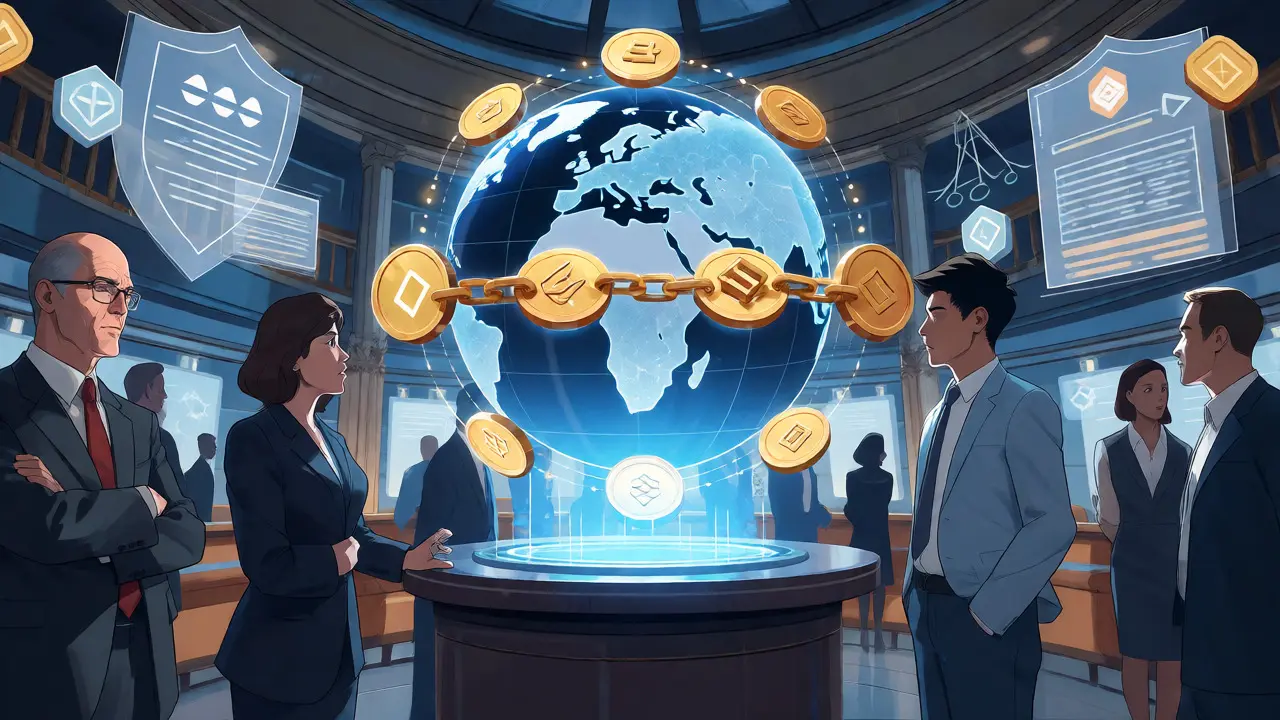
- Regulatory Fragmentation: Rules in Switzerland (DLT Act) differ vastly from those in Wyoming (SPDI charters) or Singapore (Project Guardian). A token valid in one country might be illegal in another.
- Liquidity Illusions: Just because you can sell a token doesn’t mean someone will buy it. Non-real estate assets often have bid-ask spreads of 8-12%, eating into profits.
- Custody Risks: Who holds the keys to the physical asset? If the custodian goes bankrupt, your token might represent a claim on nothing.
Implementation Reality Check
If you’re a business owner considering tokenizing your assets, prepare for a marathon, not a sprint. Most institutional deployments take 6 to 9 months. Why so long? Legal framework development alone consumes 35-40% of the timeline. You’ll need a cross-functional team: blockchain devs who know Solidity, lawyers who understand securities law, and financial engineers to model the token economics.
Costs are steep. Beyond the initial setup, ongoing compliance overhead is real. One case study noted a firm needing three full-time legal personnel just to maintain their tokenized real estate portfolio. Don’t underestimate the operational drag.

Future Outlook: Where Is This Going?
The trajectory is positive, but cautious. Deloitte gives RWA tokenization an 85% probability of becoming a $10 trillion market by 2030. But that assumes regulators get their act together. We’re seeing moves like SWIFT piloting connections between its payment network and RWA platforms. If successful, this could allow banks to settle fiat and crypto seamlessly.
Standardization is key. The International Token Standardization Association (ITSA) recently released Version 3.0 of its RWA standard, mandating 14 specific compliance fields. As these standards mature, interoperability between platforms like Securitize and MANTRA will improve, reducing friction for investors.
Is RWA tokenization safe for retail investors?
It depends on the platform and asset. Platforms like Securitize and MANTRA have strong compliance records, but risks remain. Primary concerns include smart contract bugs, custody failures, and low liquidity making it hard to exit positions quickly. Always check if the platform uses reputable oracles like Chainlink for data feeds.
What are the typical costs to launch a tokenized asset?
Initial implementation costs range from $100,000 to over $300,000. This includes legal structuring, smart contract development, and regulatory approvals. Ongoing costs include monthly support fees ($15,000-$50,000 for enterprise tiers) and gas fees for transactions.
Can I trade RWA tokens on any exchange?
No. Many RWA tokens are restricted to specific compliant exchanges or peer-to-peer marketplaces due to KYC requirements. You cannot typically trade them on unregulated decentralized exchanges like Uniswap without permissioning layers. Secondary market depth varies significantly by asset class.
Which platform is best for real estate?
Mintology and RealT are popular for residential and commercial real estate due to their specialized property management integrations. Securitize is also used for large-scale commercial deals, especially when institutional investors are involved. Choose based on whether you need retail-friendly simplicity or institutional-grade compliance.
How does regulation affect RWA tokens?
Regulation is fragmented. Switzerland’s DLT Act provides clarity, while the US relies on state-level frameworks like Wyoming’s SPDI charters. The EU’s MiCA regulation is bringing more uniformity. Cross-border enforcement remains a challenge, meaning a token legally owned in NZ might face hurdles being sold to a buyer in the US.
Final Thoughts
RWA tokenization isn't just a buzzword; it's plumbing for the next generation of finance. Platforms like Securitize, MANTRA, and Mintology are building the pipes. But remember, technology doesn't solve legal problems. It exposes them. If you're diving in, prioritize platforms with transparent legal structures and proven oracle integrations. The future is fractional, liquid, and borderless-but only if you navigate the fine print.