
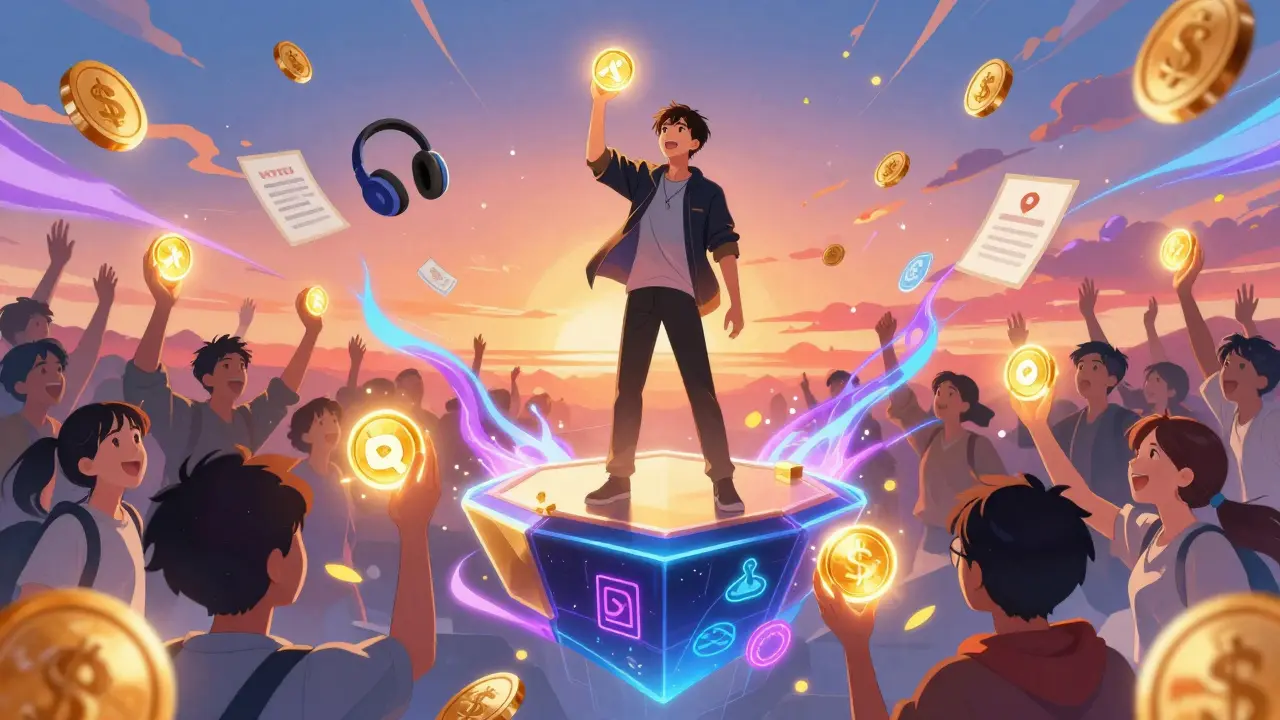
Imagine paying for a musician’s new album and, instead of just getting a download, you also get a piece of the song’s future success. That’s what social tokens do. They turn fans into stakeholders. No middlemen. No platforms taking 30% of your hard-earned money. Just you, the creator, and a blockchain that records every vote, every drop, every reward.
What Exactly Is a Social Token?
A social token is a digital asset issued by a creator - a musician, artist, YouTuber, podcaster, or even a small business owner - to build a tighter, more valuable relationship with their audience. Unlike NFTs, which are often one-of-a-kind collectibles, social tokens are usually fungible. That means each one is identical to the next, like a share in a company. You can buy 10, trade 5, hold 2, and use the rest to unlock perks.
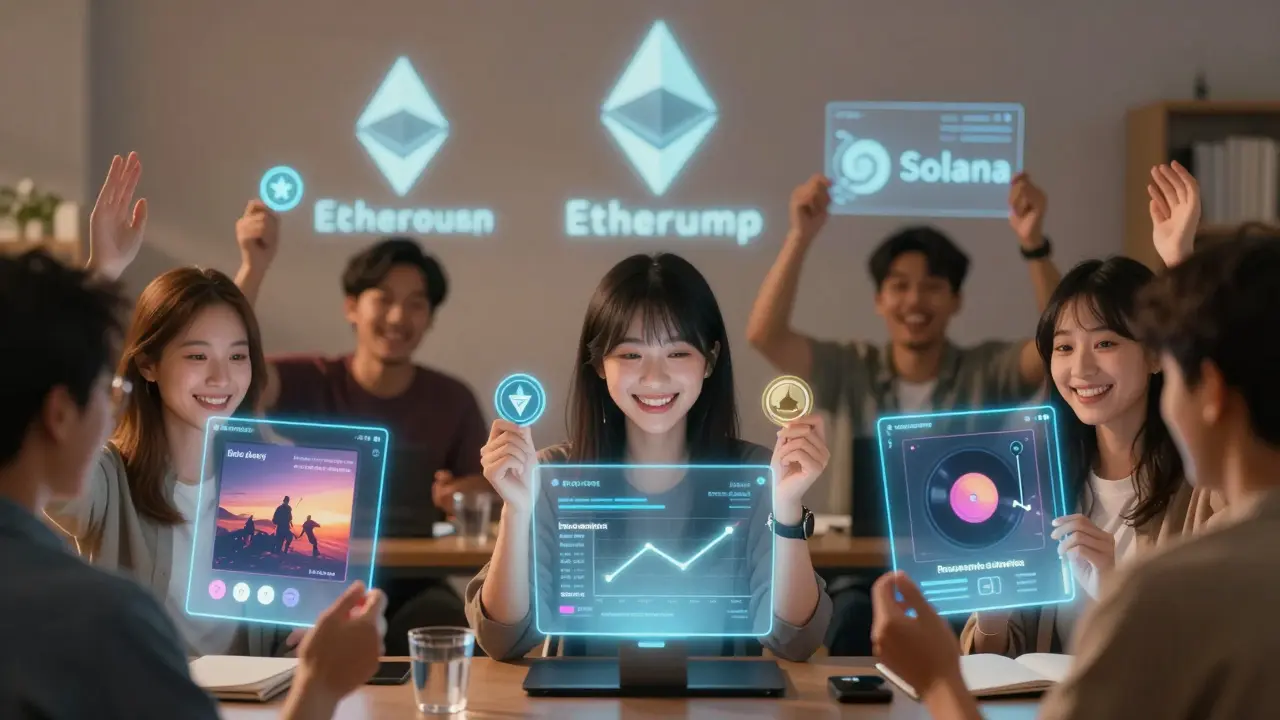
These tokens run on blockchains like Ethereum, a decentralized network that supports smart contracts and powers most social token systems, Polygon, a low-cost, high-speed blockchain often used for creator tokens to avoid high gas fees, and Solana, a fast, energy-efficient chain popular for real-time community interactions. They’re not just digital money. They’re keys - to exclusive content, voting rights, early access, and even profit shares.
Why Do They Have Value?
Value doesn’t come from hype. It comes from utility. And social tokens offer real, usable benefits:
- Exclusive access: Private Discord channels, members-only livestreams, unreleased tracks, or early sneak peeks of merchandise.
- Community voting: Decide the next song, choose the cover art, or vote on whether the creator should tour in Europe next year.
- Revenue sharing: Some creators split a percentage of sales (like merch or tickets) among token holders - not just as a bonus, but as a direct payout.
- Tradeable value: You can sell your tokens on platforms like Uniswap, a decentralized exchange where social tokens are traded without a central authority or Coinbase, a regulated exchange that lists popular creator tokens. If the creator grows, the token’s price often rises.
Take a small indie game developer who launched 10,000 tokens at $2 each. Their community used those tokens to vote on game features, and later, 20% of game sales went back to token holders. Within six months, the token price jumped to $8. Early buyers didn’t just support a game - they earned money from its success.
How Are They Different From NFTs and Subscriptions?
People mix these up. Here’s the breakdown:
| Feature | Social Tokens | NFTs | Traditional Subscriptions |
|---|---|---|---|
| Ownership | Holdable, tradeable, divisible | Unique, non-divisible, often one-of-a-kind | Access granted, no ownership |
| Utility | Access + governance + financial upside | Access + collectibility | Access only |
| Market Value | Publicly traded, fluctuates with demand | Valued by rarity and hype | No resale value |
| Creator Revenue | Perpetual royalties (5-15% on resales) | One-time sale + possible royalties | Monthly fee, platform takes cut |
| Community Role | Active participants with voting power | Collectors or owners | Passive subscribers |
Subscriptions lock you in. NFTs are for collecting. Social tokens? They turn your support into a partnership.
Who Can Launch One?
You don’t need 1 million followers. You don’t need a record label. You just need:
- A dedicated community that shows up regularly
- A clear idea of what you’ll offer in return
- A willingness to share control
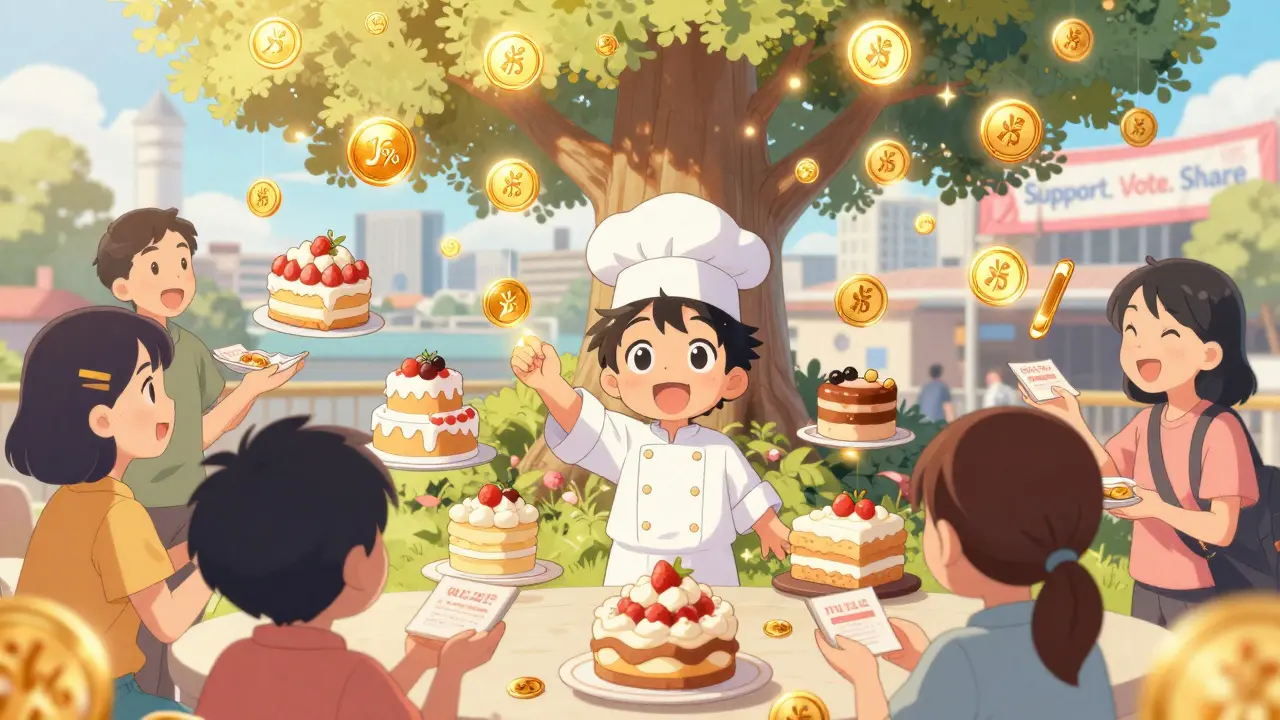
Think of a pastry chef in Wellington who bakes custom cakes for local clients. She launched 5,000 tokens at $5 each. Token holders got first dibs on holiday orders, voted on new flavors, and received 10% of all cake sales. Within three months, her monthly revenue doubled - not from new customers, but from loyal ones who now had skin in the game.
Even niche communities thrive. A group of birdwatchers in New Zealand created a token to fund a conservation project. Holders voted on where to plant trees, tracked progress on a public map, and earned rewards for reporting sightings. No corporate sponsors. Just a shared mission, backed by blockchain.
How Do You Get Started?
If you’re a creator, here’s how to launch your own:
- Define the utility: What do holders get? Don’t say “exclusive content.” Say “early access to monthly livestreams + voting rights on next EP cover.” Be specific.
- Choose a blockchain: Polygon or Solana are best for beginners - low fees, fast transactions. Avoid Ethereum unless you’re targeting high-value audiences.
- Use a platform: Tools like Roll, a no-code platform for launching social tokens with built-in community features, Mirror, a Web3 publishing tool that integrates token-gated content, or Coinbase Wallet, a mobile wallet that supports social token purchases and storage make it easy to set up without coding.
- Launch with a plan: Don’t just drop tokens. Tease them. Run a countdown. Offer bonus tokens for early buyers. Build hype.
- Deliver consistently: If you promise quarterly AMAs and then disappear, the token crashes. Utility must be ongoing.
What Are the Risks?
It’s not magic. There are real downsides:
- Price volatility: If your community shrinks, the token value drops. It’s a market - not a guarantee.
- Regulatory gray zones: In some countries, tokens may be classified as securities. Know your local laws.
- Technical barriers: Not everyone knows how to use a wallet. You’ll need to guide your audience.
- Overpromising: If you say “10% of profits” but can’t deliver, trust breaks fast.
The best creators treat social tokens like a long-term relationship - not a quick cash grab. They update their community weekly. They respond to votes. They celebrate small wins together.
The Bigger Picture: Social Tokens and the Future of Work
This isn’t just about music or art. It’s about redefining how creative work is valued. Traditional jobs pay you once. Social tokens let you earn every time your work grows. A writer can tokenize her newsletter. A teacher can tokenize her online course. A therapist can tokenize her support group.
Imagine a community of 1,000 people each holding 10 tokens of a local podcast. When the podcast hits 100,000 downloads, the creator distributes $5,000 in ETH to holders. Everyone wins. No ads. No sponsors. Just direct value flow.
That’s the power of social tokens. They don’t just monetize content. They rebuild relationships. They turn fans into co-creators. And they prove that when you align incentives, communities don’t just grow - they thrive.
Can anyone create a social token, even with no tech experience?
Yes. Platforms like Roll, Mirror, and Coinbase Wallet let you launch tokens with just a few clicks. You don’t need to code. You do need to clearly define what holders get - access, voting, rewards - and stick to it.
Are social tokens the same as cryptocurrencies like Bitcoin?
No. Bitcoin is a currency. Social tokens are tied to a specific person or project. Their value comes from the creator’s output and community, not market speculation alone. Think of them like shares in a small business you personally connect with.
Do I need a crypto wallet to buy social tokens?
Yes. You’ll need a wallet like MetaMask, Coinbase Wallet, or Phantom to store and use your tokens. Most platforms walk you through setting one up - it’s like creating an email address for your digital assets.
Can social tokens make me rich?
They can, but that’s not the point. Most people buy tokens because they love the creator and want to be part of their journey. Any profit is a bonus. If you treat it like an investment, you’re likely to lose money. If you treat it like support, you’ll gain community - and maybe a little extra too.
What happens if the creator stops making content?
The token’s value usually drops. That’s why successful creators build systems that outlive them - like community-run projects or decentralized governance. A token tied to a single person’s output is fragile. One tied to a movement? That lasts.




Aman Kulshreshtha
March 25, 2026 AT 10:12 AMHonestly, this is the most realistic take on creator economies I've seen in months. In India, we've got so many small artists and writers trying to survive without labels or platforms taking half their earnings. Social tokens? They're not magic, but they're the closest thing we've got to real ownership. I've seen a folk musician in Kerala do this-10k tokens, 15% of merch sales, and now he's got a whole community running his merch drops. No middlemen. Just him and his fans. That's the future.
Annette Gilbert
March 27, 2026 AT 03:45 AMOh great. Another 'blockchain will save art' post. Let me guess-next you'll tell me NFTs are the new stock market and my cat's selfie is worth $50k. 🙄
John Alde
March 27, 2026 AT 13:58 PMI've been watching this space for years, and honestly, the real breakthrough isn't the tech-it's the mindset shift. For too long, creators were told to 'grow your audience' and 'monetize your content.' But what if we flipped it? What if fans weren't just consumers, but co-owners? That's what social tokens enable. The utility isn't in the token itself-it's in the relationship. When people vote on your next song, design your cover art, or get a cut of your tour revenue, they're not just buying something. They're investing in you. And that changes everything.
Lorna Gornik
March 27, 2026 AT 17:33 PMI love this so much 😍 I'm a podcaster and just launched my token last week. 300 people bought in. We did a live vote on the next episode topic-won by 'Why I quit my 9-5 to chase weird dreams.' Now everyone's sharing their own stories in the Discord. It's not about money. It's about belonging. Also, I accidentally sent 50 tokens to my ex. Oops. 😅
Joshua T Berglan
March 28, 2026 AT 03:41 AMYESSSS THIS IS THE FUTURE 🚀 I’ve seen creators go from 500 followers to 10k just because they gave fans skin in the game. No more ‘like and subscribe.’ Now it’s ‘buy a token and help shape what’s next.’ The energy in these communities? Unmatched. You’re not just supporting someone-you’re building something with them. And that? That’s legacy.
Domenic Dawson
March 28, 2026 AT 22:29 PMI’ve been skeptical, but after watching a local poet in Ohio do this-token holders voted on her next chapbook, got early copies, and even got named in the acknowledgments-I get it. It’s not about speculation. It’s about dignity. People want to feel like they matter. This gives them a way to say, 'I believe in you,' and actually prove it. The tokens are just the vehicle. The real value is in the trust.
Sam Harajly
March 30, 2026 AT 00:32 AMThe structural shift here is profound. Traditional platforms extract value. Social tokens redistribute it. The economic model is inverted. Instead of platforms profiting from creator labor, creators profit from community participation. This isn't just about monetization-it's about governance. And if implemented with transparency, it could redefine how we value creative labor at scale.
Abhishek Thakur
March 31, 2026 AT 01:03 AMSocial token = blockchain + fan club. You need wallet. You need gas fee. You need to understand crypto. Most people don't. This works for tech bros. Not for grandma who makes quilts. Simple thing: pay $5/month. Get updates. No blockchain needed.
Jackie Crusenberry
April 1, 2026 AT 08:24 AMSo… we’re glorifying capitalism with a blockchain tattoo now? Cool. I’ll just keep my Spotify playlist and my $10/month Patreon. At least I don’t have to learn how to 'approve a transaction' before I can enjoy a song.
Anna Lee
April 1, 2026 AT 16:47 PMI just launched my token and I’m crying happy tears 🥹 I’m a therapist who does online group sessions. My token holders get monthly check-ins, vote on topics, and get a 5% slice of session revenue. One of them sent me a letter saying this is the first time they’ve ever felt like their support actually mattered. That’s worth more than any price chart.
Shelley Dunbrook
April 1, 2026 AT 20:07 PMInteresting. But let’s be honest: this only works if the creator is already somewhat successful. The 10k-token model requires a built-in audience. For the unknown artist? It’s just another way to get scammed by people who think 'community' means 'free marketing.'
Brijendra Kumar
April 3, 2026 AT 13:59 PMThis is pure scam. You're telling me a guy in Wellington who sells cakes should be able to issue his own 'currency'? That's not empowerment, it's regulatory chaos. What happens when the token crashes? Who protects the buyers? This isn't innovation-it's a Ponzi with a cute backstory.
Ananya Sharma
April 3, 2026 AT 22:13 PMThe pastry chef example is real. My cousin runs a tiny bakery in Jaipur. She started a token last year. 500 people bought in. They vote on flavors. They get first pick on Diwali cakes. Revenue up 70%. No one talks about crypto. They just talk about cake. That’s the point.
Florence Pardo
April 5, 2026 AT 06:28 AMI’ve been following this for a while, and honestly, the most beautiful thing isn’t the money-it’s the quiet moments. Like when a token holder who’s been unemployed for two years sends a message saying, 'I bought your token because I believe in you, and today I got my first freelance gig because you mentioned my name in a Discord AMA.' That’s the ripple effect. No one’s going to write a headline about it. But it’s happening. Every day. In quiet corners of the internet. And that’s what matters.