
Imagine casting your vote from your phone while overseas, knowing exactly how it was counted without anyone knowing who you voted for. That is the promise of blockchain voting, a system that uses distributed ledger technology to create an immutable, publicly verifiable record of every electoral activity. In 2026, this isn't just science fiction anymore. It is a tested reality that challenges the traditional, opaque methods we have used for decades. But does it actually work? And more importantly, can we trust it?
The core issue with traditional voting is simple: you have to trust a central authority. You drop a paper ballot in a box, and then you wait. You hope the machines were calibrated correctly. You hope the transport trucks weren't tampered with. You hope the counting centers followed protocol. There is no way for you, as an individual voter, to verify that your specific vote contributed to the final tally. Blockchain voting flips this model on its head. It replaces blind trust with mathematical proof.
How Transparency Works in Decentralized Systems
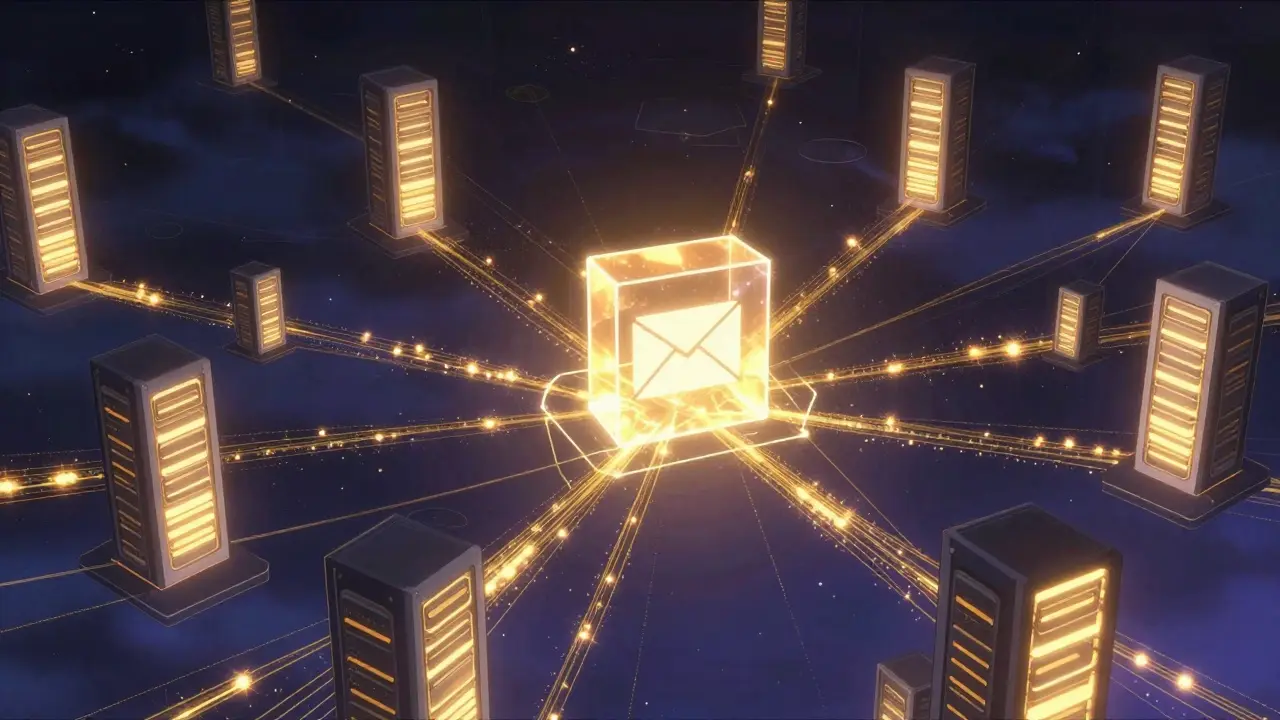
To understand why blockchain voting is different, you need to look at the architecture. Traditional systems are centralized. All data flows into one place-a server farm or a physical warehouse. If that single point fails or gets hacked, the entire election is compromised. Decentralized networks eliminate this risk by distributing the data across thousands of nodes. Every node holds a complete copy of the ledger. This means there is no single "master" file to steal or alter.
Transparency here doesn't mean everyone sees your name next to your candidate choice. That would destroy privacy. Instead, transparency means the *process* is visible. Every vote becomes a transaction on the ledger. These transactions are grouped into blocks. Each block contains a unique cryptographic hash of the previous block. Think of it like a chain of sealed envelopes. If someone tries to open and change the contents of an envelope in the middle of the chain, the seal breaks, and the hash changes. The entire network instantly detects the mismatch and rejects the altered block.
This creates a system where the integrity of the election is self-verifying. You don't need to trust the government or the software vendor. You only need to trust the mathematics of cryptography. The consensus mechanisms, such as Proof of Stake or Proof of Work, ensure that adding a new block requires agreement from the majority of the network. It is practically impossible for a bad actor to control enough nodes to rewrite history without spending astronomical amounts of energy or capital.
Auditability: Verifying Your Vote Without Breaking Privacy
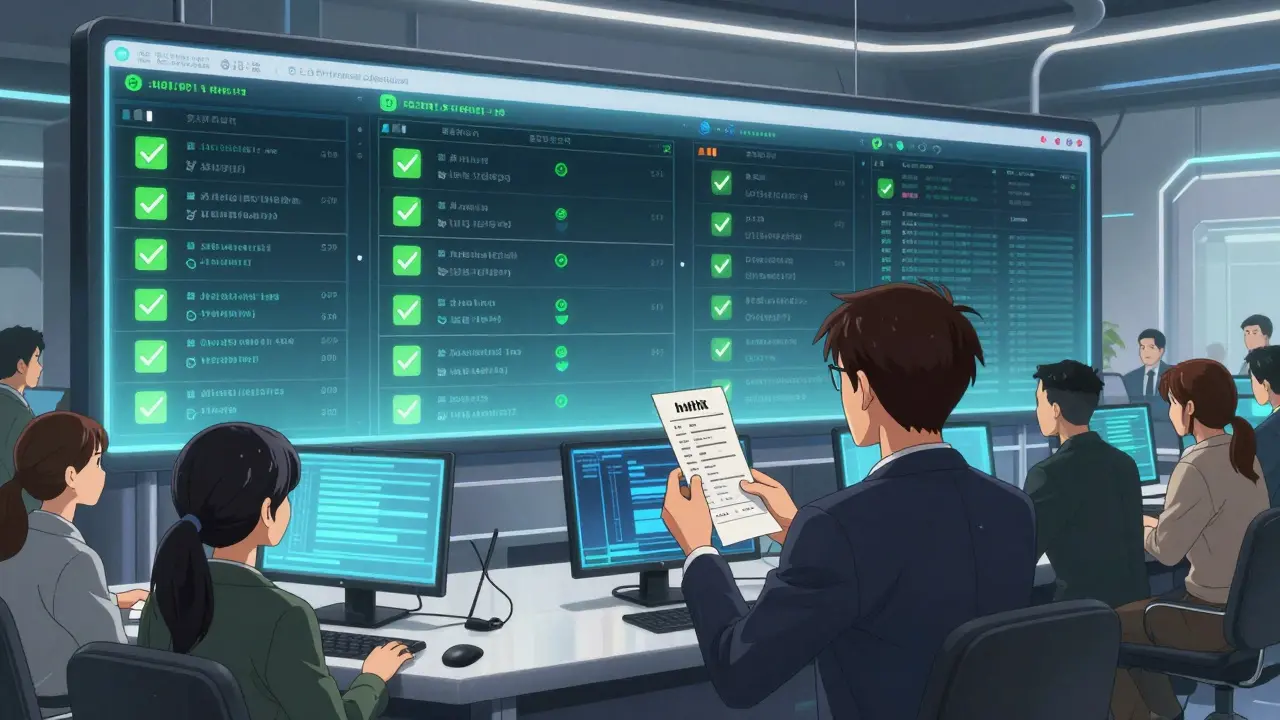
Auditing an election usually involves recounting paper ballots or checking machine logs. It is slow, expensive, and prone to human error. Blockchain voting offers real-time auditability. Because the ledger is public, anyone-candidates, media outlets, or independent auditors-can view the running tally at any moment. They can see that votes are being recorded accurately and that the smart contracts enforcing the rules are working as intended.
But how do you prove your vote was counted without revealing who you voted for? This is where pseudonymous credentials come in. When you register to vote, the system assigns you a unique, randomized ID. This ID links you to the voter roll (proving you are eligible) but hides your identity from the voting transaction. When you cast your vote, you sign it with your private key. The network verifies that the signature matches the registered ID and that the ID hasn't been used before. Then, the vote is added to the ledger.
You receive a receipt-a transaction hash-that you can check against the public ledger. You can confirm that your vote exists in the chain. However, because of the pseudonymity, no one else can link that transaction back to you. This solves the "receipt problem" in electronic voting, where voters might be coerced into proving how they voted. In a well-designed system, the receipt proves inclusion, not content, preserving both auditability and coercion resistance.
Smart Contracts: Automating Election Rules
In traditional elections, humans interpret the rules. Did this ballot count? Was the voter registered in the right district? Smart errors happen. In blockchain voting, these rules are written into code. Smart contracts are self-executing agreements that automate the voting process. They enforce eligibility checks, prevent double-voting, and tally results automatically.
For example, a smart contract can be programmed to only accept votes from addresses associated with verified citizen IDs. Once the voting period ends, the contract executes the tally function. There is no manual counting phase where mistakes or malice can occur. The result is mathematically derived from the input data. This reduces the administrative burden significantly. Election commissions spend less time on logistics and more time on voter education and security audits.
However, code is only as good as its writers. If there is a bug in the smart contract, the election could fail. This is why open-source development and rigorous third-party auditing of the code are critical. The community must be able to review the logic before deployment. Transparency extends to the code itself, not just the ledger.
Real-World Pilots: Lessons from West Virginia and Beyond
Theory is great, but practice is messy. West Virginia made headlines by becoming the first U.S. state to allow internet voting via blockchain in primary elections. They targeted military members and citizens abroad who face significant barriers to casting absentee ballots. The pilot used biometric verification, like thumbprint scans, to authenticate voters before they accessed the mobile interface.
The results were mixed but instructive. Participation was low, largely because many voters were skeptical or unaware of the option. However, those who did use it reported high satisfaction. The system proved that remote voting could be secure and convenient. It also highlighted the importance of user experience. Voters shouldn't need to understand blockchain to use it. The interface must be simple, intuitive, and accessible to people of all technical abilities.
Other pilots around the world have tested similar models. Some have focused on corporate governance, allowing shareholders to vote on board decisions. Others have experimented with local municipal elections. These tests show that scalability is still a challenge. Current blockchain networks may struggle to handle millions of transactions per second during a peak voting window. Solutions like layer-two protocols and sharding are being developed to address this, but widespread adoption awaits further optimization.
Challenges and Risks: What Could Go Wrong?
No system is perfect. Blockchain voting faces several hurdles. First, accessibility. Not everyone has a smartphone or reliable internet access. Relying solely on digital voting could disenfranchise vulnerable populations. Second, the threat of endpoint attacks. While the blockchain itself is secure, the devices voters use to cast their ballots are not. Malware on a voter's phone could capture their credentials or alter their vote before it reaches the network. Mitigating this requires robust device attestation and secure enclaves.
Third, public trust. People are wary of new technology, especially when it comes to democracy. Skepticism is healthy, but it can hinder adoption. Education campaigns are essential to explain how the system works and why it is safer than traditional methods. Finally, regulatory frameworks are lagging behind technology. Laws need to adapt to recognize digital signatures and blockchain records as legally binding votes.
| Feature | Traditional Voting | Blockchain Voting |
|---|---|---|
| Centralization | High (Single points of failure) | Low (Distributed nodes) |
| Auditability | Post-election, manual recounts | Real-time, cryptographic verification |
| Privacy | Anonymous but unverifiable | Pseudonymous and verifiable |
| Cost | High (Logistics, labor, machinery) | Moderate (Software development, maintenance) |
| Accessibility | Limited (Physical polling places) | High (Any internet-connected device) |
| Tamper Resistance | Low (Vulnerable to insider threats) | High (Cryptographic immutability) |
The Future of Democratic Integrity
As we move through 2026, blockchain voting is transitioning from experimental pilots to serious consideration for broader implementation. The benefits are clear: increased turnout, reduced costs, and enhanced trust through transparency. But success depends on careful execution. We must prioritize security, accessibility, and education. The goal is not just to digitize voting, but to democratize it-to give every citizen a voice that is heard, counted, and protected.
The journey ahead requires collaboration between technologists, policymakers, and citizens. We need to build systems that are resilient against attacks, inclusive for all voters, and transparent enough to earn public confidence. Blockchain provides the tools. Now, we must wield them wisely.
Is blockchain voting truly anonymous?
It is pseudonymous, not fully anonymous. Your identity is linked to your voter registration, but your vote is hidden behind a randomized ID. This allows the system to verify that you are eligible and haven't voted twice, while keeping your specific choice private from the public ledger.
Can hackers change the results of a blockchain election?
It is extremely difficult. To change the results, a hacker would need to control more than 51% of the network's computing power or stake, which is economically unfeasible for large-scale elections. Additionally, any attempt to alter past blocks would break the cryptographic hashes, alerting the network immediately.
What happens if my internet goes down during voting?
Most systems include offline capabilities or retries. If a connection drops, the vote is cached locally and transmitted once connectivity is restored. However, reliance on internet access remains a barrier for some voters, highlighting the need for hybrid systems that include traditional polling options.
How do I know my vote was counted?
You receive a transaction hash after voting. You can enter this hash into a public explorer to verify that your vote was recorded on the blockchain. This confirms inclusion without revealing your choice, providing personal assurance that your voice was heard.
Why aren't all countries using blockchain voting yet?
Adoption is gradual due to concerns about scalability, endpoint security (malware on voter devices), and public trust. Legal frameworks also need to catch up to recognize digital votes. Pilot programs are ongoing to address these challenges before widespread implementation.