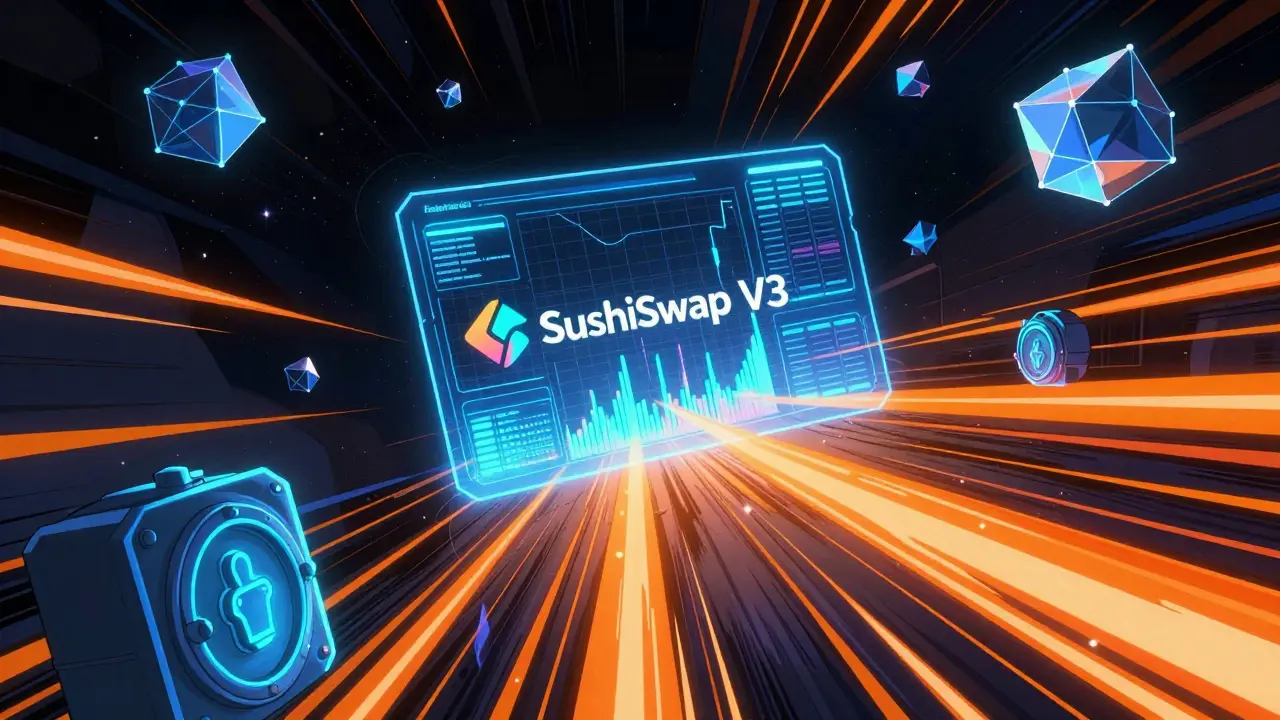
Trading on a centralized exchange like Coinbase or Binance feels safe because there’s a customer support line you can call if things go wrong. But in the world of decentralized finance (DeFi), you are your own bank. This freedom comes with power, but also with responsibility. SushiSwap V3 is a leading decentralized exchange (DEX) that allows users to trade cryptocurrencies without intermediaries by using automated market maker technology. It was originally forked from Uniswap but has since evolved into its own distinct ecosystem. As of 2026, SushiSwap V3 stands out not just for its history, but for its aggressive feature set, including concentrated liquidity and cross-chain capabilities.
If you are looking to swap tokens, provide liquidity, or earn rewards through staking, understanding how SushiSwap V3 works is critical. Unlike traditional exchanges where an orderbook matches buyers and sellers, SushiSwap uses pools of funds. This article breaks down exactly what you get when you connect your wallet, how the fees work, and whether it is still a viable option for traders in 2026.
How SushiSwap V3 Works: The Core Mechanics
To use SushiSwap, you do not create an account with an email address. Instead, you connect a cryptocurrency wallet. The platform supports six major wallets, making it accessible to most users in the Ethereum ecosystem. Once connected, you interact directly with smart contracts.
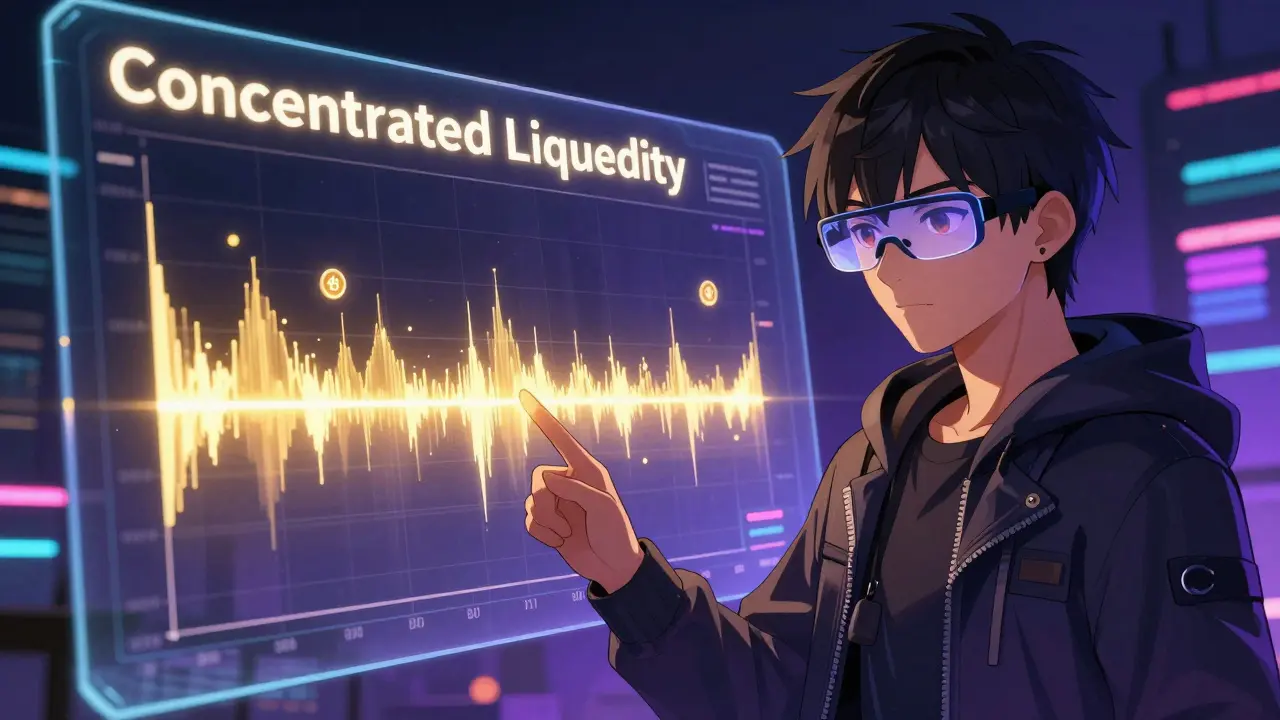
The "V3" part of the name refers to a significant upgrade in how liquidity is managed. In older versions (V2), liquidity providers had to fund their positions across the entire price range of a token pair. This meant much of your capital sat idle, waiting for trades that never happened. SushiSwap V3 introduced Concentrated Liquidity, which allows you to deploy your capital within specific price ranges. If you believe ETH will stay between $3,000 and $3,500, you only provide liquidity in that band. This increases your capital efficiency and potential returns, but it also requires active management. If the price moves outside your range, your position stops earning fees until you rebalance.
This mechanism makes SushiSwap V3 more similar to professional options trading desks than simple savings accounts. You need to track "ticks"-the smallest price increments-and understand impermanent loss, which occurs when the price of assets in your pool changes relative to each other.
Fees and Rewards: Where Does Your Money Go?
One of the biggest draws for many users is the fee structure. On centralized exchanges, you often pay a spread plus a commission. On SushiSwap, the fees are transparent and distributed immediately.
- Liquidity Providers: Receive 0.25% of the trading fees generated by the pool they support.
- xSUSHI Stakers: Receive 0.05% of the trading fees. This is a unique feature that rewards holders of the native token.
This dual-tier system creates a direct economic benefit for those who hold and stake the SUSHI Token. By converting SUSHI to xSUSHI through the SushiBar staking mechanism, you participate in the ongoing fee sharing of the protocol. As of late 2025, this model provided continuous income streams for long-term supporters, distinguishing SushiSwap from competitors like Uniswap, which typically directs all fees solely to liquidity providers.
However, keep in mind that gas fees on the Ethereum network can eat into these profits, especially for smaller transactions. During periods of high network congestion, a simple swap might cost more in gas than the fee you earn from providing liquidity. This is why SushiSwap has expanded to other chains like Polygon, where transaction costs are significantly lower.
SushiSwap V3 vs. Uniswap: A Head-to-Head Comparison
Since SushiSwap started as a fork of Uniswap, comparisons are inevitable. While they share technical DNA, their philosophies have diverged.
| Feature | SushiSwap V3 | Uniswap |
|---|---|---|
| Fee Distribution | Split between LPs (0.25%) and Stakers (0.05%) | 100% to Liquidity Providers |
| Reward Programs | Onsen Program for new listings; Continuous mining | Standard incentives; Less aggressive mining |
| Governance | Community-driven via SUSHI token | DAO-based via UNI token |
| User Experience | More complex due to advanced features | Simpler interface for basic swaps |
| Cross-Chain Support | Strong focus on multichain (Polygon, etc.) | Expanding, but primarily Ethereum-centric |
The key difference lies in incentives. SushiSwap’s Onsen Program offers enhanced rewards for users who provide liquidity to newly listed tokens. This attracts early adopters and risk-takers willing to support emerging projects. Uniswap tends to be more conservative, focusing on established pairs. If you are looking to farm yields on new, volatile tokens, SushiSwap often provides better initial incentives. If you prefer stability and simplicity, Uniswap might feel less overwhelming.
Advanced Features: Limit Orders and DCA
Historically, DEXs were limited to spot trading-you swapped at the current market price. That changed in July 2025 when SushiSwap launched Limit Orders and Dollar Cost Averaging (DCA).
Limit orders allow you to set a specific price at which you want to buy or sell. This is crucial for strategic trading, allowing you to react to market movements without staring at your screen all day. DCA lets you automate regular purchases of a token over time, smoothing out volatility. These features bridge the gap between DeFi and traditional brokerage platforms, making SushiSwap more appealing to serious traders who rely on strategy rather than impulse.

Risks and Security Considerations
Before you deposit funds, you must understand the risks. SushiSwap is unregulated. There is no insurance fund to protect you if a smart contract is hacked. While the platform has undergone multiple audits and upgrades, the DeFi space remains a target for exploits.
Additionally, the complexity of concentrated liquidity introduces operational risk. If you set your price range too narrowly and the market crashes, your position may end up entirely in the depreciating asset, leading to significant losses. This is known as impermanent loss, and it can exceed the fees you earned. Always research the underlying assets before providing liquidity.
Another concern is the lack of a demo account. New users cannot test the platform with fake money. You must connect your real wallet and execute real transactions. Start with small amounts to familiarize yourself with the interface and gas costs before committing significant capital.
Is SushiSwap V3 Right for You?
SushiSwap V3 is not a one-size-fits-all solution. It is best suited for users who:
- Understand the basics of DeFi and wallet management.
- Are comfortable managing liquidity positions and monitoring price ticks.
- Want to earn passive income through staking and liquidity provision.
- Prefer a community-driven platform with innovative reward structures.
If you are a complete beginner, you might find the learning curve steep. However, resources like Sushi Academy provide educational materials to help you get started. For experienced traders, the combination of low fees, advanced tools like limit orders, and cross-chain functionality makes SushiSwap a powerful tool in your arsenal.
Remember, the crypto market is volatile. The SUSHI token itself fluctuates in value, affecting the worth of your staked assets. Always do your own research and never invest more than you can afford to lose.
What is the minimum amount to trade on SushiSwap V3?
There is no strict minimum amount set by the protocol. However, practical limits are determined by gas fees on the Ethereum network. For small swaps under $10-$20, gas fees may exceed the transaction value, making it uneconomical. Using Layer 2 solutions like Polygon can reduce these costs significantly.
How do I avoid impermanent loss on SushiSwap?
Impermanent loss is inherent in providing liquidity. To mitigate it, choose stablecoin pairs (e.g., USDC/USDT) where prices remain correlated. Alternatively, use concentrated liquidity wisely by setting wide price ranges, though this reduces capital efficiency. Always monitor your positions and rebalance if necessary.
Can I use SushiSwap on mobile devices?
Yes, SushiSwap is fully responsive and works well on mobile browsers. You can connect mobile-compatible wallets like MetaMask Mobile or Trust Wallet to access all features, including swaps, liquidity provision, and staking.
What happens if the SUSHI token price drops?
If you hold SUSHI or xSUSHI, the value of your holdings will decrease with the token price. However, staking xSUSHI continues to generate fees from trading activity regardless of the token's price. Diversifying your portfolio and not over-concentrating in governance tokens is recommended.
Does SushiSwap require KYC verification?
No, SushiSwap is a non-custodial decentralized exchange. It does not require Know Your Customer (KYC) verification or identity checks. You only need a compatible cryptocurrency wallet to access the platform.