

You’ve probably seen the warning floating around crypto forums: "Exchanges detect 70-80% of VPN users." It sounds terrifying. It suggests that if you connect to a virtual private network to hide your location or access a restricted platform, you are almost guaranteed to get flagged, frozen, or banned. But here is the truth that most clickbait articles miss: that specific number is largely a myth, or at best, a gross oversimplification of a much more complex reality.
The real story isn't about a single percentage. It’s about an escalating arms race between privacy tools and regulatory compliance engines. In 2026, the landscape has shifted dramatically. Exchanges aren't just looking for IP addresses anymore; they are analyzing behavior, device fingerprints, and transaction patterns. If you are using a cheap, free VPN to trade Bitcoin on Binance or Coinbase, yes, you will likely be detected. But if you are using enterprise-grade infrastructure with dedicated IPs, the odds change completely.
How Exchanges Actually Detect You
To understand why you might get blocked, you have to look under the hood of what exchanges like Binance is a leading cryptocurrency exchange that implements strict Know Your Customer (KYC) protocols or Coinbase is a US-based regulated exchange with rigorous anti-money laundering requirements are doing. They don't rely on one method. They use a layered approach.
First, there is the basic IP reputation check. Every major exchange maintains massive databases of known data center IPs. When you connect through a standard VPN server, your traffic comes from an IP address owned by Amazon Web Services, DigitalOcean, or the VPN provider itself. These IPs are shared by thousands of people. To an exchange’s firewall, this looks suspicious. Why would one person log in from New York, then five minutes later from Tokyo, using an IP address hosted in a server farm in Virginia? That’s a red flag.
But the real killer is behavioral analysis. Modern platforms use machine learning algorithms to track how you move. Do you log in at unusual hours for your claimed region? Does your mouse movement pattern match automated scripts? Are you trying to deposit funds from a bank account registered in Germany while your IP says Brazil? This is where the "detection" happens. It’s not always about blocking the connection; it’s about flagging the account for manual review.
| Detection Method | What It Checks | Effectiveness Against Standard VPNs |
|---|---|---|
| IP Reputation Databases | Known data center and proxy IPs | High (95%+) |
| Geolocation Inconsistency | IP location vs. Billing/KYC address | Medium-High | >
| Behavioral Biometrics | Mouse movements, typing speed, login times | Medium |
| WebRTC/DNS Leak Tests | True IP exposure via browser protocols | Low-Medium (if configured poorly) |
| Device Fingerprinting | Hardware IDs, browser settings, OS version | High |
The Premium VPN Advantage: Why Quality Matters
If you are using a free VPN, stop. Seriously. Free services are the easiest to detect because their IP pools are small, heavily used, and often blacklisted by every major financial institution on earth. But premium providers have adapted. In 2025 and 2026, services like NordVPN is a top-tier VPN service offering dedicated IPs and RAM-only servers for enhanced privacy and ExpressVPN is a secure VPN provider with servers in 160 locations across 94 countries have introduced features specifically designed to help traders stay under the radar.
The game-changer is the Dedicated IP. With a shared IP, you are sharing your digital address with hundreds of other users. If one of them gets banned for fraud, your IP gets tainted. A dedicated IP is yours alone. It looks like a standard home internet connection to the outside world. NordVPN, for example, allows you to rent a static IP in a specific country. This means your login location remains consistent day after day, which satisfies the behavioral consistency checks that exchanges run.
Another critical feature is obfuscation technology. Some networks, particularly in restrictive regions, actively block or throttle VPN traffic. Obfuscated servers disguise VPN traffic as regular HTTPS web browsing. While this is primarily useful for bypassing censorship, it also helps avoid triggering simple deep packet inspection (DPI) systems that some smaller exchanges might use.
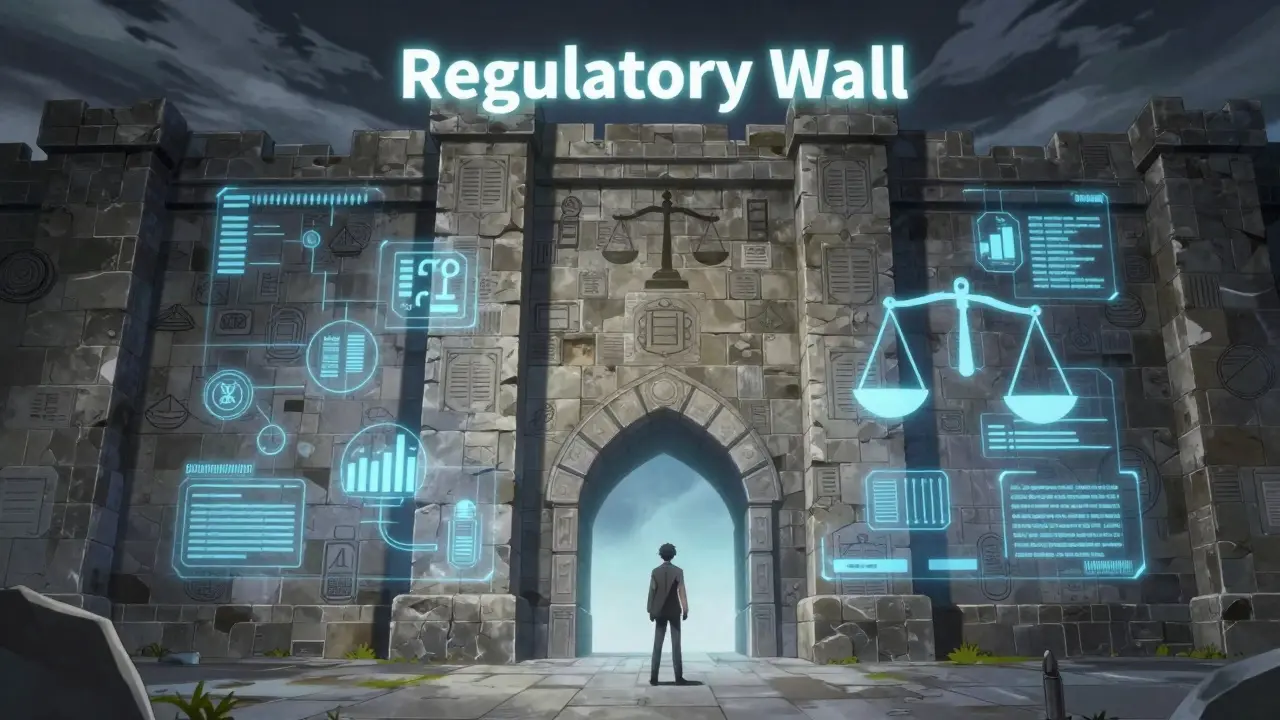
KYC, AML, and the Regulatory Wall
Let’s talk about the elephant in the room: regulations. The reason exchanges care so much about your location isn’t just paranoia; it’s law. In the United States, the European Union, and many other jurisdictions, crypto exchanges are required to follow Know Your Customer (KYC) is regulatory requirements mandating identity verification for financial accounts and Anti-Money Laundering (AML) is laws requiring institutions to prevent illegal funds from being legitimized rules.
This creates a hard ceiling for what a VPN can do. You can hide your IP address, but you cannot hide your face if you want to withdraw fiat currency. Most major exchanges require government ID verification before allowing significant deposits or withdrawals. If your KYC documents say you live in France, but your IP address consistently shows up in Russia, the system flags a mismatch. No amount of technical wizardry fixes a legal mismatch. In these cases, the exchange won’t just ban you; they may freeze your assets until you prove your identity and location align.
However, for users who are already fully verified and simply want to protect their privacy from hackers or local surveillance, a high-quality VPN with a dedicated IP in their *actual* country of residence works seamlessly. The issue arises when users try to pretend to be in a different jurisdiction to access geo-restricted features or lower fees.

Residential Proxies: The Next Level
For advanced traders who need higher anonymity, standard VPNs sometimes fall short. This is where Residential Proxies are IP addresses provided by Internet Service Providers to homeowners, making them appear as legitimate residential users come into play. Unlike VPNs that route traffic through data centers, residential proxies route your traffic through actual devices connected to ISPs like Comcast or BT.
To an exchange, a residential IP looks exactly like a normal user sitting on their couch. It is incredibly difficult to distinguish from organic traffic. However, there are downsides. Residential proxies are often slower than VPNs because the traffic depends on the host device’s connection quality. They are also more expensive. Furthermore, using residential proxies can violate the Terms of Service of many exchanges. If caught, the penalty is usually permanent account closure without recourse.
Security Risks Beyond Detection
While avoiding detection is the primary concern for many, the biggest risk of using a VPN for crypto isn’t getting banned-it’s getting hacked. Not all VPNs are created equal. Many free or low-cost VPNs operate on a "freemium" model where they monetize your data by selling browsing habits to advertisers or, worse, injecting malware into your connection.
When you are trading crypto, you are holding keys to valuable assets. Connecting through an untrusted VPN provider is like handing your house keys to a stranger. Reputable providers like NordVPN and ExpressVPN operate in privacy-friendly jurisdictions (Panama and British Virgin Islands, respectively) and adhere to strict no-logs policies. They undergo independent audits to verify that they do not store your connection metadata. Always choose a provider that accepts cryptocurrency payments to maintain financial privacy during the subscription process.
Practical Tips for Safe Trading
If you decide to use a VPN for your crypto activities, follow these guidelines to minimize risk:
- Stick to One Region: If you are based in the UK, use a UK server. Don’t hop between countries. Consistency builds trust with the exchange’s algorithms.
- Use Dedicated IPs: Rent a static IP address if your provider offers it. This prevents IP rotation issues that trigger security alerts.
- Avoid Free VPNs: They are easily detected and potentially unsafe. The cost of a premium VPN is negligible compared to the value of your crypto portfolio.
- Enable 2FA: A VPN protects your network, but Two-Factor Authentication protects your account. Use an authenticator app, not SMS, which can be intercepted.
- Check for Leaks: Before logging in, visit a site like ipleak.net to ensure your true IP isn’t leaking through DNS or WebRTC protocols.
The Future of Detection
The cat-and-mouse game continues. As exchanges invest more in AI-driven behavioral analysis, the bar for evasion rises. Chainalysis and other blockchain analytics firms are improving their ability to cluster transactions and link them to real-world identities, regardless of IP masking. The 70-80% detection rate figure may have been accurate for basic VPN usage in 2023, but today, the metric is irrelevant. What matters is whether your specific setup-provider, configuration, and behavior-passes the scrutiny of the specific exchange you are using.
For the average trader, the goal shouldn’t be to "beat" the system illegally. It should be to use privacy tools responsibly to protect against cyber threats while remaining compliant with local laws. If you are trying to access a banned exchange or evade sanctions, no tool is foolproof, and the risks far outweigh the rewards.
Can I use a VPN to access Binance or Coinbase if I am in a restricted country?
Technically, yes, you can often bypass IP blocks using a high-quality VPN with obfuscation features. However, this violates the Terms of Service of most major exchanges. If detected, your account will likely be permanently banned, and any funds held may be frozen or confiscated. Additionally, attempting to evade local financial regulations can carry legal penalties depending on your jurisdiction.
Why does my crypto exchange keep asking for more verification when I use a VPN?
Exchanges use VPN usage as a risk indicator. Because VPNs mask your true location, they make it harder for the platform to comply with Anti-Money Laundering (AML) laws. To mitigate this risk, exchanges often impose additional verification steps, such as requesting video calls, utility bills, or proof of residence, to confirm that you are not operating from a sanctioned region or engaging in fraudulent activity.
Is it safer to trade crypto without a VPN?
It depends on your threat model. If you are trading from a secure, private home network, a VPN adds a layer of encryption that protects your data from local hackers and ISP snooping. However, if you are trading from public Wi-Fi, a VPN is essential. Without it, anyone on the same network could potentially intercept your session cookies or login credentials. The key is choosing a reputable, no-logs VPN provider rather than risking exposure on open networks.
Do dedicated IPs really help avoid detection?
Yes, significantly. Shared VPN IPs are frequently blacklisted because they are associated with multiple users, some of whom may be engaged in malicious activities. A dedicated IP is unique to you and behaves like a standard residential internet connection. This consistency helps avoid triggering behavioral alarms related to rapid location changes or shared IP reputations.
What is the difference between a VPN and a residential proxy for crypto trading?
A VPN encrypts all your internet traffic and routes it through a data center or specialized server, providing broad privacy. A residential proxy assigns you an IP address from a real household ISP, making it nearly indistinguishable from a normal user. Residential proxies are harder to detect but are generally slower, more expensive, and often violate exchange Terms of Service more blatantly than standard VPNs.










Barclay Chantel
May 27, 2026 AT 00:51 AManother clickbait article trying to sell you nordvpn while pretending it's about privacy. the reality is exchanges don't care if you use a vpn they care if you are laundering money. if your ip matches your kyc address nobody cares what tunnel you use. but sure keep telling people that dedicated ips make them invisible because that sounds like something a tech bro would believe
Dianne Wright
May 28, 2026 AT 13:02 PMi tried using a free vpn once and got banned immediately so yeah maybe its true for cheap ones but why would anyone trust an exchange with their crypto anyway its all rigged from the start and these articles just distract us from the fact that we are being watched by everyone including the government who probably reads this post too
Debbie Lewis
May 29, 2026 AT 14:08 PMinteresting points about behavioral biometrics. i never thought about mouse movements being tracked. makes sense though since bots do trade on some platforms. good to know that consistency matters more than just hiding the ip
Eric Grosso
May 29, 2026 AT 16:09 PMso u saying if i buy a ded ip im safe? cause i heard binance bans ppl for no reason anyway. also does it matter if i switch servers in the same country or do i have to stick to one exact ip forever? my internet keeps dropping so i cant stay connected long enough to verify sometimes
mark valmart
May 30, 2026 AT 17:59 PMman this whole thing is stressful. i just want to trade without worrying about getting frozen. i guess i will stick to my home network and hope for the best. thanks for the tips though really helps to understand what they are looking for
Edith Mair
June 1, 2026 AT 04:01 AMthe part about residential proxies violating tos is key. people think they are smarter than the platform but the terms of service are legally binding. if you get caught using a proxy you lose everything. not worth the risk for a few extra cents in fees or access to a restricted feature
Hadleigh Edwards
June 2, 2026 AT 08:44 AMit is fascinating how the technology has evolved from simple ip blocking to complex behavioral analysis systems that track every micro movement of your cursor and typing rhythm which essentially means that privacy is becoming an illusion unless you are willing to pay a premium for dedicated infrastructure that mimics residential connections perfectly while maintaining strict no logs policies that have been independently audited by reputable third parties to ensure that your metadata is not being stored or sold to advertisers which is a common practice among free providers that operate on a freemium model where they monetize user data by selling browsing habits to highest bidder or worse injecting malware into the connection stream which compromises the security of the entire trading environment and exposes users to potential hacking attempts that could result in loss of funds
Crystal Davis
June 4, 2026 AT 10:42 AMyou are missing the point entirely. the detection rate is irrelevant because the goal of these exchanges is to capture value not to provide privacy. they use vpn detection as a pretext to delay withdrawals and force additional verification steps that generate revenue through friction. the 70-80% figure is likely fabricated to scare users into paying for premium services or staying on the platform longer while undergoing review. it is a psychological tactic disguised as technical analysis
Christina Pearce
June 5, 2026 AT 06:07 AMi found the section on webRTC leaks really useful. i had no idea my browser could expose my real ip even when i was using a vpn. i checked my settings and turned off webRTC sharing. feels safer now knowing i am not accidentally leaking my location data to every site i visit
trisya hazriyana
June 5, 2026 AT 15:34 PMlol another day another guide on how to not get banned. the jargon heavy explanation of behavioral biometrics is spot on but let us be real most traders are just gambling anyway so why bother with all this setup. just use a burner email and dont withdraw fiat ever and you will be fine. sarcastic tone aside the info is solid for those who actually care about compliance
Miss Masquer
June 6, 2026 AT 11:44 AMit is important to remember that while tools like dedicated ips can help maintain consistency they do not replace the need for proper identity verification which is required by law in most jurisdictions to prevent money laundering and terrorist financing so users should focus on ensuring their kyc documents match their actual residence rather than trying to mask their location with technical workarounds that may violate terms of service and lead to account suspension or permanent banning which defeats the purpose of using the exchange in the first place and creates unnecessary stress and financial risk for individuals who simply want to participate in the digital asset economy responsibly and within the bounds of legal frameworks established by regulatory bodies around the world
Dana Rapoport
June 8, 2026 AT 00:29 AMthe philosophical implication here is that privacy is no longer a default state but a negotiated privilege. we must actively choose and pay for our anonymity in a system designed to extract it. this shifts the power dynamic significantly towards institutions that control the infrastructure. we are not just users we are subjects of surveillance capitalism where every click and movement is data points used to predict and control behavior