
Imagine buying a coffee with Bitcoin and realizing the cup was empty. In traditional banking, you’d call your bank, file a dispute, and get your money back. In most crypto transactions? You’re out of luck. That irreversibility is a feature for traders but a bug for everyday shoppers. Enter Merchant Token, or MTO. This isn't just another meme coin chasing hype; it’s a utility token designed to bring the safety net of credit card chargebacks into the blockchain world.
Developed by the HIPS Merchant Protocol team, MTO aims to bridge the gap between rigid traditional payment systems and flexible decentralized finance. If you’ve ever hesitated to pay with crypto because you were afraid of scams or bad service, this project claims to have the solution. But does it actually work, and is it worth paying attention to in 2026? Let’s break down what MTO really is, how it functions, and whether it can survive in a market dominated by giants like Bitcoin and Ethereum.
The Core Problem: Why Crypto Needs Chargebacks
Cryptocurrency enthusiasts love the phrase "be your own bank." It sounds empowering until you lose access to your private keys or buy from a merchant who never ships the product. Traditional payment networks like Visa or Mastercard have built-in consumer protection mechanisms. If something goes wrong, you can reverse the transaction. Blockchains, by design, are immutable. Once a block is mined, that transaction is etched in stone forever.
This creates a massive adoption barrier for mainstream users. Most people aren’t comfortable sending thousands of dollars in digital assets without a guarantee they can get them back if things go south. The HIPS Merchant Protocol attempts to solve this by introducing decentralized dispute resolution. Instead of relying on a central authority like a bank, MTO uses smart contracts to hold funds in escrow during disputes. This allows consumers to reclaim their assets if a merchant fails to deliver, effectively adding a layer of trust to an otherwise trustless system.
How Merchant Token Works: The Technical Backbone
At its current stage, Merchant Token operates as an ERC-20 token on the Ethereum blockchain. This means it lives in standard wallets like MetaMask and trades on major exchanges alongside other Ethereum-based assets. However, the end goal isn’t to stay on Ethereum forever. The project is developing its own native chain, known as HIPS Merchant Blockchain (MEO).
Why build a new chain? Because Ethereum, while secure, is often too slow and expensive for small, frequent retail transactions. Paying $5 for a sandwich shouldn’t cost $10 in gas fees. The MEO blockchain is optimized specifically for real-time merchant transactions. It supports backward-compatible financial protocols like ISO8583, which is the language used by traditional EFTPOS and point-of-sale terminals. This technical detail is crucial: it means existing physical card machines could potentially process crypto payments without needing entirely new hardware. The MTO token serves as the governance and utility asset during the transition phase, eventually being swapped for native MEO tokens once the mainnet launches.
Key Features and Use Cases
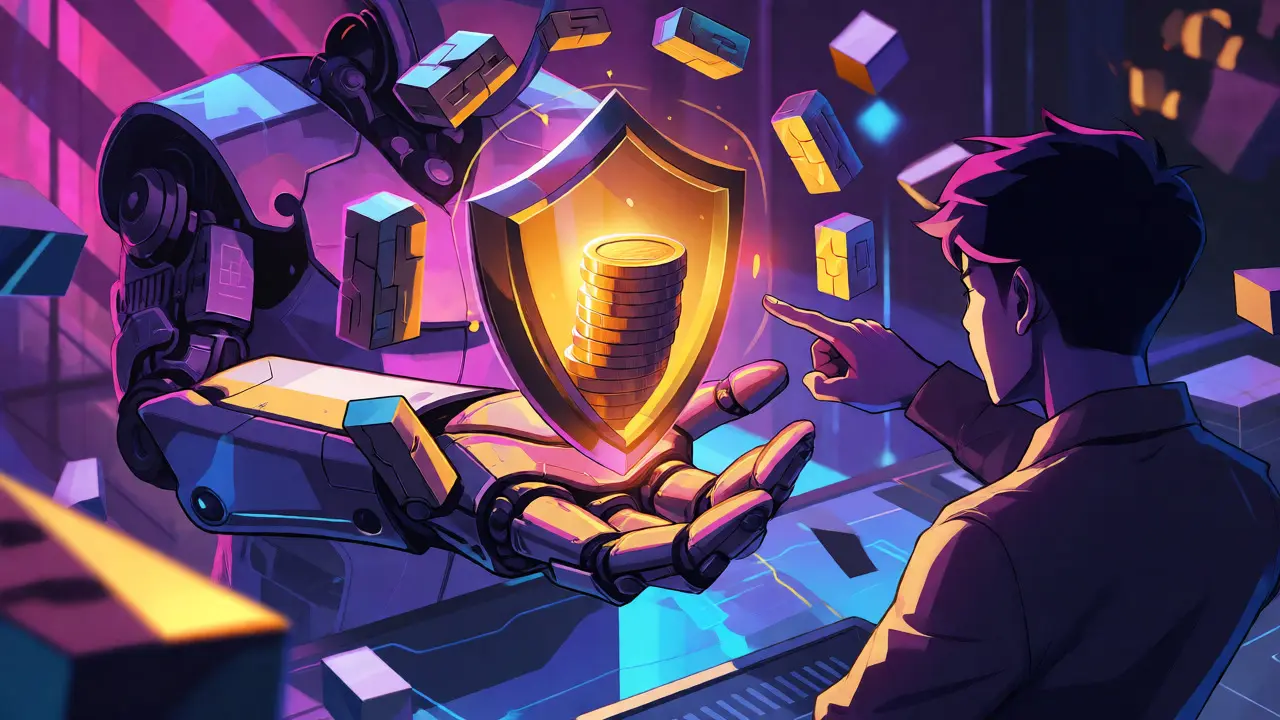
The value proposition of MTO rests on three pillars: interoperability, consumer protection, and low-cost settlement. Unlike general-purpose cryptocurrencies that try to be everything to everyone, MTO is laser-focused on the retail payment niche.
- Decentralized Disputes: Smart contracts automate the refund process when predefined conditions aren't met, removing the need for manual intervention by a third party.
- Terminal Compatibility: By supporting ISO8583 standards, the protocol allows merchants to accept crypto using infrastructure they already own.
- Instant Settlement: Transactions settle quickly, reducing the risk of price volatility for both buyers and sellers during the checkout process.
Think of it as a specialized tool for shop owners who want to accept crypto but don’t want to deal with the complexity of managing multiple wallets or worrying about fraud. For the consumer, it removes the fear factor. You get the speed of crypto with the safety of a credit card.
MTO vs. Other Payment Cryptocurrencies
To understand where MTO fits, we need to compare it against established players. While Bitcoin is the gold standard for store of value, it’s rarely used for daily purchases due to slowness. Ripple (XRP) focuses on institutional cross-border settlements, not necessarily retail consumer protection. Litecoin offers faster transactions but lacks sophisticated dispute resolution layers.
| Feature | Merchant Token (MTO) | Bitcoin (BTC) | Ripple (XRP) |
|---|---|---|---|
| Primary Focus | Retail POS & Consumer Protection | Store of Value / P2P Transfers | Institutional Cross-Border Payments |
| Consumer Protection | Yes (Smart Contract Disputes) | No (Irreversible) | Limited (Centralized Liquidity Providers) |
| Transaction Speed | High (Optimized for Retail) | Low (Minutes to Hours) | Very High (Seconds) |
| Hardware Integration | ISO8583 Compatible Terminals | Requires New Wallets/Apps | Enterprise APIs |
The table highlights MTO’s niche. It doesn’t compete directly with Bitcoin for investment dominance. Instead, it competes for the mindshare of merchants who find current crypto payment solutions too risky or complicated. The trade-off is liquidity. Bitcoin has billions in daily trading volume; MTO has significantly less, which impacts its stability and ease of exit for investors.

Market Performance and Risks
If you’re looking at MTO as an investment, you need to look at the numbers honestly. As of late 2026, the token trades around $0.04, a steep drop from its all-time high of $0.84 in November 2023. That’s a decline of over 94%. Such volatility is common in altcoins, but the low trading volume-often hovering near zero on some trackers-is a red flag. Low volume means wide bid-ask spreads and difficulty selling large positions without crashing the price.
Furthermore, the circulating supply sits at roughly 59 million tokens, with a max supply of 100 million. While the supply cap is healthy, the demand side is weak. With only about 53,000 holders compared to millions for major coins, the community is small. This lack of widespread adoption makes the token vulnerable to manipulation and sudden price swings. Investors should treat MTO as a high-risk venture capital play rather than a stable store of value.
Future Outlook: Can It Survive?
The future of Merchant Token hinges on one thing: execution. The roadmap promises a full mainnet launch for the MEO blockchain, which would finalize the migration from ERC-20. If successful, this could lower costs and increase speed, making the platform more attractive to developers and merchants. However, the crypto space moves fast. Competitors are constantly integrating Layer 2 solutions onto Ethereum, which might reduce the need for a dedicated L1 blockchain like MEO.
For MTO to succeed, it needs real-world partnerships. Seeing a few thousand merchants accept it via standard terminals would do more for the price action than any marketing campaign. Until then, it remains a speculative asset with a strong narrative but limited proof of scale.
Is Merchant Token (MTO) a good investment?
It depends on your risk tolerance. MTO is a micro-cap cryptocurrency with very low trading volume and high volatility. While the concept of crypto chargebacks is innovative, the project faces stiff competition and uncertain adoption rates. It is better suited for speculative investors who believe in the specific niche of retail crypto protection, rather than conservative investors seeking steady returns.
Can I use MTO to buy coffee today?
Not widely. While the technology supports integration with existing terminals, actual merchant acceptance is still in early stages. You likely won't find many cafes or shops accepting MTO directly yet. Most usage currently involves holding the token or trading it on exchanges while waiting for the native MEO blockchain to mature.
What is the difference between MTO and MEO?
MTO is the current ERC-20 utility token on the Ethereum network. MEO refers to the native token of the upcoming HIPS Merchant Blockchain. The plan is for MTO holders to swap their tokens for MEO once the mainnet launches, allowing the ecosystem to operate on its own optimized infrastructure rather than relying on Ethereum.
Does MTO offer true chargebacks?
It offers decentralized dispute resolution, which functions similarly to chargebacks. Instead of a bank reversing the transaction, a smart contract holds the funds in escrow. If a dispute is validated through the protocol's logic, the funds are returned to the buyer. It mimics the outcome of a chargeback but uses code instead of human bankers.
Where can I buy Merchant Token?
MTO is available on several smaller to mid-tier cryptocurrency exchanges. Due to its low market cap, it may not be listed on every major exchange like Coinbase or Binance. Always check current liquidity on platforms like CoinMarketCap or CoinGecko before attempting to purchase, as volume can fluctuate significantly.