

Imagine trying to trade Bitcoin with 100x leverage while using Ethereum as collateral. That’s the kind of specific, high-stakes environment BTSE creates for traders who feel boxed in by standard exchanges. If you’re tired of rigid margin rules or looking for a platform that bridges traditional finance infrastructure with digital asset speed, this review breaks down exactly what BTSE offers, where it stumbles, and whether it fits your trading style.
What Is BTSE?
BTSE is a digital asset exchange founded in September 2018, registered in the British Virgin Islands, with operational hubs in Taipei, Singapore, Hong Kong, and Dubai. The name stands for "Buy, Trade, Sell, Earn," but don’t let the simple acronym fool you. This isn’t a beginner-friendly app like Coinbase. It’s a derivatives-focused platform designed to serve both retail enthusiasts and institutional players who need professional-grade tools without the overhead of a private brokerage.
The core value proposition here is performance. BTSE’s trading engine handles over one million order requests per second. For day traders and algorithmic bots, latency matters more than pretty interfaces. While many mid-tier exchanges crash during volatility spikes, BTSE maintains uptime, which is why serious traders keep coming back despite its smaller brand recognition compared to giants like Binance or Kraken.
Trading Products and Leverage Options
If you are here for spot trading, BTSE supports over 300 cryptocurrencies. You can trade major assets like BTC, ETH, SOL, and XRP across more than 300 pairs. But the real meat of the platform lies in its derivatives section. Here is how the products stack up:
- Spot Trading: Standard buy/sell functionality with deep liquidity on major pairs.
- Futures Contracts: Perpetual futures allow you to go long or short on crypto prices without owning the underlying asset.
- Leverage: You can access up to 100x leverage on major pairs like BTC and ETH. Altcoins typically cap out at 20x.
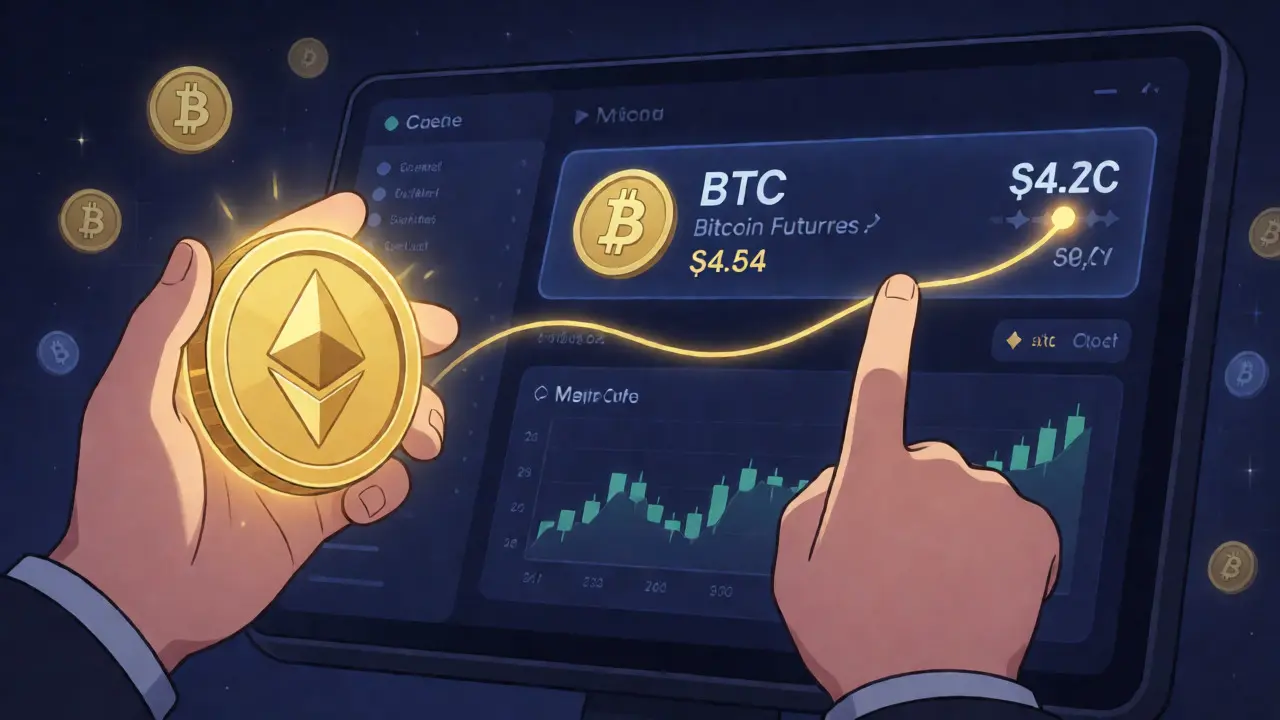
The standout feature? Multi-Asset Futures Collateral. On most exchanges, you must hold USDT or USDC to open a position. On BTSE, you can use various cryptocurrencies as collateral. This means if you hold ETH and want to bet on BTC, you don’t need to sell your ETH first. This saves transaction fees and keeps your portfolio diversified even while you speculate.
Fees and VIP Levels
Costs eat into profits, especially when you trade frequently. BTSE’s fee structure is competitive but not the cheapest on the market. Base maker and taker fees start at 0.2%. This is higher than some aggressive competitors like BTCC, but lower than premium platforms like Coinbase Pro.
You can reduce these costs through the VIP level system. As your 30-day trading volume increases, your tier goes up, and fees drop. However, be warned: the requirements for higher tiers are steep. Retail traders might find themselves stuck in the lower tiers unless they are moving significant capital regularly. Always check the current VIP table before signing up, as thresholds can shift based on market conditions.
| Feature | BTSE | Binance | Coinbase |
|---|---|---|---|
| Max Leverage | 100x (BTC/ETH) | Up to 125x | Varies by region/product |
| Collateral Type | Multi-Asset | USDT/USD/BUSD | USD/USDC |
| Base Fee (Maker/Taker) | 0.2% | 0.1% / 0.1% | Higher spread-based |
| User Experience | Professional/Dense | Comprehensive/Complex | Simple/Beginner-Friendly |
| Regulatory Status | BVI Registered | Global Licenses | US Regulated |
Security and Fund Safety
Nothing kills trust faster than a hack. BTSE claims robust security protocols, including two-factor authentication (2FA), anti-phishing codes, and encryption. Crucially, they store 99.9% of user funds in cold storage-offline wallets that hackers can’t easily reach. The remaining hot wallet portion is insured and monitored 24/7.
They also conduct regular security audits. While this doesn’t guarantee immunity from bugs, it shows a commitment to best practices. However, remember that BTSE operates under BVI registration. It does not hold licenses from major financial regulators like the SEC in the US or FCA in the UK. If you require strict regulatory compliance for tax or legal reasons, this lack of oversight might be a dealbreaker.
User Experience and Support
This is where opinions split sharply. Advanced traders love the depth of the charts and the customization options. Beginners often hate it. The interface is dense. If you’ve never used a trading terminal before, you might feel overwhelmed by the number of buttons, order types, and data points.
Customer support receives mixed reviews. Users praise the responsiveness of ticket systems for technical issues but criticize the lack of live chat or phone support. If you have an urgent withdrawal issue at 3 AM, you’re waiting for a ticket response. Some users report delays during high-volatility periods, which is frustrating when every minute counts.
Mobile app performance has also drawn criticism. During extreme market swings, some users reported lag or crashes. For a platform pitching itself to high-frequency traders, mobile reliability needs to match desktop performance.

Pros and Cons Summary
To help you decide quickly, here is a breakdown of the good and the bad based on current user feedback and technical specs.
Pros
- Innovative Collateral: Use any supported crypto as margin, increasing capital efficiency.
- High Performance: Engine capable of 1M+ orders per second with low downtime.
- Deep Liquidity: Good order book depth for major pairs, reducing slippage.
- Global Access: No withdrawal limits on 12 fiat currencies and 150+ cryptos.
Cons
- No Live Chat: Support relies on tickets, which can be slow during crises.
- Steep Learning Curve: Not suitable for absolute beginners.
- Geographic Restrictions: Unavailable in the US, Canada, Singapore, Taiwan, Russia, and Venezuela.
- Fee Structure: Higher base fees than top-tier volume leaders.
Who Should Use BTSE?
BTSE is ideal for intermediate to advanced traders who understand leverage risks. If you actively manage a portfolio and want to hedge positions without converting assets to stablecoins, the multi-collateral feature alone justifies the account. Institutional investors or those running trading bots will appreciate the API stability and execution speed.
However, if you are buying your first Bitcoin or prefer a clean, simple interface with guaranteed customer service, look elsewhere. Platforms like Kraken or Coinbase offer better hand-holding. BTSE expects you to know what you’re doing.
Is BTSE safe to use?
BTSE employs industry-standard security measures, including storing 99.9% of funds in cold storage, 2FA authentication, and regular audits. While it is generally considered secure, it lacks regulation from major authorities like the SEC or FCA, so always do your own due diligence regarding risk tolerance.
Can US residents trade on BTSE?
No, BTSE currently restricts services for users in the United States, Canada, Singapore, Taiwan, Russia, and Venezuela. These restrictions are primarily due to regulatory complexities in those jurisdictions.
What are the withdrawal limits on BTSE?
BTSE advertises no withdrawal limits for verified accounts on over 12 fiat currencies and 150 cryptocurrencies. However, large withdrawals may undergo additional manual verification steps for security purposes.
Does BTSE have a mobile app?
Yes, BTSE offers mobile apps for iOS and Android. While functional, some users report performance issues during high-volatility market events, so desktop trading is recommended for critical transactions.
How does BTSE compare to Binance in fees?
BTSE's base fees (0.2%) are slightly higher than Binance's standard rates (0.1%). However, BTSE's unique multi-asset collateral feature can save money by avoiding conversion fees, potentially offsetting the higher trading commission for certain strategies.










liam & the bees
September 2, 2026 AT 07:47 AMGreat breakdown, mate. I've been trading on BTSE for about six months now and the multi-asset collateral feature is a total game changer for me. 🇮🇪
Instead of constantly swapping my ETH into USDT just to open a BTC position, I can just use my existing holdings as margin. It saves so much in conversion fees and keeps my portfolio balanced while I speculate.
The engine speed is legit too. During the last big volatility spike, other exchanges were lagging hard, but BTSE stayed smooth. If you're in Europe or Asia and not blocked by geo-restrictions, it's definitely worth checking out.
Edward Ogunfolaju
September 3, 2026 AT 21:45 PMLISTEN UP! You need to stop sleeping on leverage efficiency!
If you are still paying 0.2% base fees without hitting VIP tiers, you are leaving money on the table every single day. That is unacceptable for serious traders.
BTSE isn't for the lazy ones who want Coinbase hand-holding. This platform demands respect and capital.
Use that multi-collateral feature aggressively. Don't let stablecoin conversions eat your edge.
Get your volume up. Climb those VIP levels. Dominate the order books.
Stop complaining about the interface being dense. Density means data. Data means power.
You want simple? Go buy index funds. You want to trade? Get to work.
Liam Grimes
September 4, 2026 AT 21:36 PMyeah its decent but the support tickets r a nightmare sometimes
i had an issue with a withdrawal last week and it took like 48hrs to get a response
not ideal when u r trying to hedge a positiion
other than that the charts are pretty solid tho
Matthew O'Neill
September 4, 2026 AT 22:29 PMThe author displays a refreshing lack of critical depth regarding regulatory arbitrage. While BTSE boasts 'robust security,' operating under BVI registration is essentially a loophole for avoiding strict fiduciary oversight comparable to SEC or FCA standards.
To claim 'security protocols' without addressing the legal recourse available to users in case of insolvency is intellectually dishonest. Cold storage mitigates hack risk, yes, but it does nothing for counterparty risk inherent in unregulated offshore entities.
Furthermore, comparing fee structures without adjusting for slippage costs on lower liquidity altcoins is misleading. A 0.2% maker fee is irrelevant if the spread widens by 0.5% during execution due to thin order books.
Traders must understand that convenience often masks systemic fragility. The 'professional-grade tools' argument is merely marketing fluff designed to distract from the lack of consumer protection frameworks.
If you value your capital, prioritize jurisdictions with clear legal standing over raw execution speed metrics that look good on a whitepaper.
This review fails to contextualize the risk-adjusted return profile adequately for institutional-grade scrutiny.
Steve Sulley
September 5, 2026 AT 13:57 PMhonestly i think everyone is missing the point here
its not about the fees or the tech stack
its about the philosophy of ownership
when u hold eth as collateral u arent really holding it anymore are u?
u are lending ur belief system to the market
the exchange becomes a mirror of our collective anxiety
so whether u pay 0.1% or 0.2% doesnt matter
what matters is if u trust the void enough to keep ur keys there
most people dont
they panic sell at the first red candle
btse is for those who stare into the abyss and blink last
or something like that lol
Kelechi Precious Nwachukwu
September 6, 2026 AT 10:17 AMI appreciate the detailed analysis provided in this post. However, I feel compelled to express a certain degree of concern regarding the user experience aspects mentioned.
The lack of live chat support is indeed a significant hurdle for many individuals navigating complex derivative instruments.
When one encounters technical difficulties during high-volatility events, the silence of ticket-based support can be profoundly distressing.
It creates a sense of isolation that is detrimental to the mental well-being of active traders.
We must acknowledge that behind every API call is a human being seeking reassurance and clarity.
While the technology may be robust, the human element of customer service remains critically underdeveloped.
I respectfully suggest that potential users weigh this emotional toll against the financial benefits offered by the platform.
Safety is paramount, but so is peace of mind during times of uncertainty.
Let us strive for platforms that care for both our wallets and our spirits.
Valentine Okpala
September 7, 2026 AT 21:22 PMOh, how delightful. Another exchange promising the moon while hiding the cracks in the foundation. 🙄
"Professional-grade tools" is just code for "we hope you know what you're doing because we won't help you." 😒
The dense interface isn't a bug; it's a filter. It weeds out the tourists who think trading is a video game. 🎮
But let's be real, the lack of live chat is a massive pain point. Waiting 24 hours for a ticket response when your position is bleeding out? Not cool. ❌
Still, the multi-collateral feature is genuinely useful for hedging strategies. It’s a clever way to avoid unnecessary fiat conversions. 💡
Just don’t expect them to hold your hand through the learning curve. They’ll leave you to figure it out or drown. 🌊
Proceed with caution, friends. And maybe keep some funds elsewhere. 🛡️
Sean Dalton
September 9, 2026 AT 11:54 AMTypical offshore nonsense dressed up in fancy UI components. We have proper regulated markets here in the EU that don't require you to jump through hoops to access basic banking rails.
These Asian-centric exchanges always pretend to be global citizens until the regulators come knocking. Then they disappear faster than a bad joke at a pub.
Don't get me started on the 'British Virgin Islands' registration. That's not a security badge; that's a tax dodge sticker.
Irish traders should stick to local compliant platforms where their rights are actually protected by law, not by some vague terms of service updated quarterly.
This whole 'high-performance engine' narrative is just noise to distract from the fact that you're playing casino games in a jurisdiction that doesn't care if you win or lose.
Save your money for something tangible. Crypto exchanges are transient; regulations are forever.
Rajni Mathur
September 9, 2026 AT 18:31 PMGreetings esteemed community members. 🙏
I have perused the aforementioned review with great interest and considerable scrutiny. The juxtaposition of technical prowess versus regulatory ambiguity presents a dichotomy worthy of deep contemplation. 🤔
While the multi-asset collateral mechanism is undoubtedly innovative, one must question the sustainability of such practices in a bear market scenario. 📉
The fee structure, although competitive, may inadvertently penalize retail investors who do not possess sufficient trading volume to ascend the VIP hierarchy. 💸
Furthermore, the absence of direct communication channels such as live chat is a regrettable omission in today’s fast-paced digital economy. 🚫💬
Nevertheless, for those with the requisite expertise and risk appetite, BTSE offers a compelling suite of tools. ✅
May your trades be profitable and your risks managed prudently. 🙏✨
Bill Patterson
September 11, 2026 AT 11:29 AMmeh
too complicated
just use binance
fees are lower
support is better
why bother with bvi stuff
skip it
Rachel Etheridge
September 11, 2026 AT 15:56 PMOMG YES!! I totally agree with the points about the interface being overwhelming!! 😱
I tried signing up last year and literally cried because I couldn't find the withdrawal button!!! 😭
It felt like they designed it specifically to confuse newbies!!! 🤯
But then again, maybe I'm just not smart enough for the pro tools??? 🤷♀️
The multi-collateral thing sounds super convenient though... if only I could figure out how to use it without panicking!!! 😅
Definitely not for beginners though, that's for sure!!! 🚫🐣
Melanie Armijo
September 13, 2026 AT 06:04 AMThere is a profound irony in seeking stability within a system defined by volatility. BTSE represents a microcosm of the broader crypto ethos: efficient, cold, and indifferent to individual struggle.
We chase yield and speed, yet we forget that true wealth is often measured in peace of mind. The friction of the interface mirrors the friction of the market itself.
Perhaps the lack of hand-holding is a feature, forcing us to confront our own competence-or lack thereof-without external validation.
In a world of noise, the silent efficiency of the engine might be the most honest thing about the platform.
Yet, we remain tethered to the need for connection, hence the frustration with support systems.
Ultimately, the exchange is just a vessel; the trader provides the meaning.
Ashwin Bhandurge
September 13, 2026 AT 14:50 PMHey everyone! Just wanted to add some positivity here! 🚀
BTSE has been amazing for my algorithmic trading setups. The API documentation is clean and the uptime is fantastic.
Yes, the learning curve is steep, but think of it as leveling up your skills! 🎮
Once you get past the initial confusion, the control you have over your positions is incredible.
Don't let the dense UI scare you off. Dive in, make small trades, learn the ropes.
The community is growing and the features are getting better every quarter.
Keep pushing forward, traders! The future belongs to those who adapt! 💪🔥
Nadia Christian
September 13, 2026 AT 22:46 PMAs an American, I am deeply skeptical of any platform that cannot legally serve my home market!!! 🇺🇸
The restrictions listed are not just inconveniences; they are glaring warnings!!! ⚠️
If they cannot navigate the SEC's requirements, what makes them trustworthy with billions in assets??? 🤨
I prefer platforms that operate fully above board, even if it means slightly higher fees!!! 💰
Offshore exchanges are fun until they aren't!!! 🚫
Stay safe out there!!! 🛡️
jeffry jones
September 15, 2026 AT 18:44 PMGood overview. The multi-asset collateral is the key differentiator here. For quant strategies, avoiding stablecoin conversion slippage is crucial. Latency looks acceptable for HFT lite. Just watch the funding rates during extreme volatility. Otherwise, solid infrastructure.
Aaliyah Simpson
September 17, 2026 AT 15:03 PMYeah right. Like these guys aren't gonna rug pull us eventually. BVI registered? Sounds sketchy as hell. Probably owned by some shell company in Dubai anyway. Don't fall for the 'pro tools' hype. It's all smoke and mirrors to hide the fact that they have no real regulation. Keep your coins in your wallet, not their cold storage. You never know who holds the private keys.
Paul Needham
September 17, 2026 AT 19:31 PMSo you're saying I can't talk to a human when my money is stuck? Great. Love that for me. /s
The interface looks like it was designed by someone who hates joy. Why so many buttons? What am I supposed to click? The 'I give up' button?
Also, why is the mobile app crashing? Is it the app or is my phone judging me? Probably the app.
Anyway, thanks for the review. Saved me from making a mistake I would have made anyway.
Jillian Pye
September 19, 2026 AT 12:14 PMI find the concept of multi-asset collateral quite fascinating from a psychological perspective. It blurs the line between holding and speculating.
However, the reliance on ticket-based support feels impersonal. In moments of crisis, humans need empathy, not automated responses.
Perhaps the density of the interface is a reflection of the complexity of the underlying assets themselves.
It requires a certain mindset to engage with such a platform.
Not for everyone, certainly.
But for those who enjoy the puzzle, it might be rewarding.
Proceed with mindfulness. 🧘♀️