
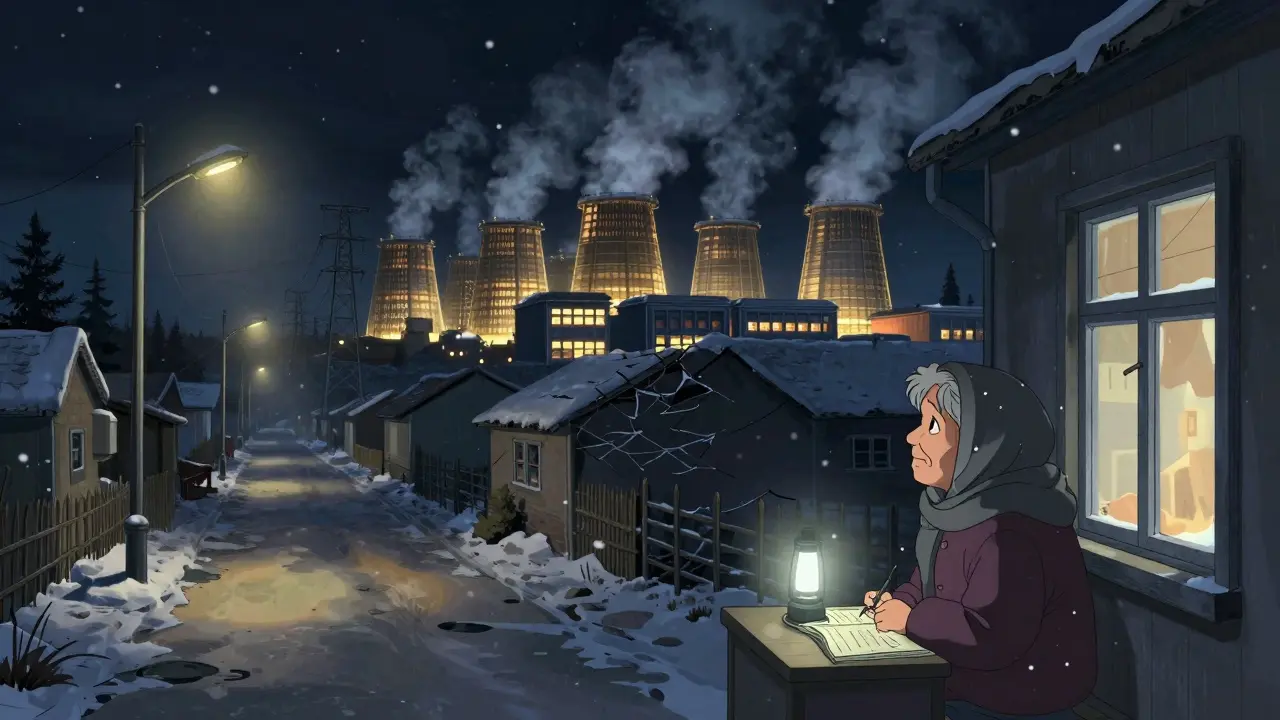
By early 2026, Kazakhstan’s power grid is on the edge. Not because of a sudden blackout, but because of years of neglect, aging infrastructure, and a surge in energy-hungry industries - including cryptocurrency mining. The country’s electricity system, once reliable enough for basic needs, now struggles to keep lights on in rural towns while data centers hum in the background, siphoning off power meant for homes and hospitals.
The Grid Is Breaking Down
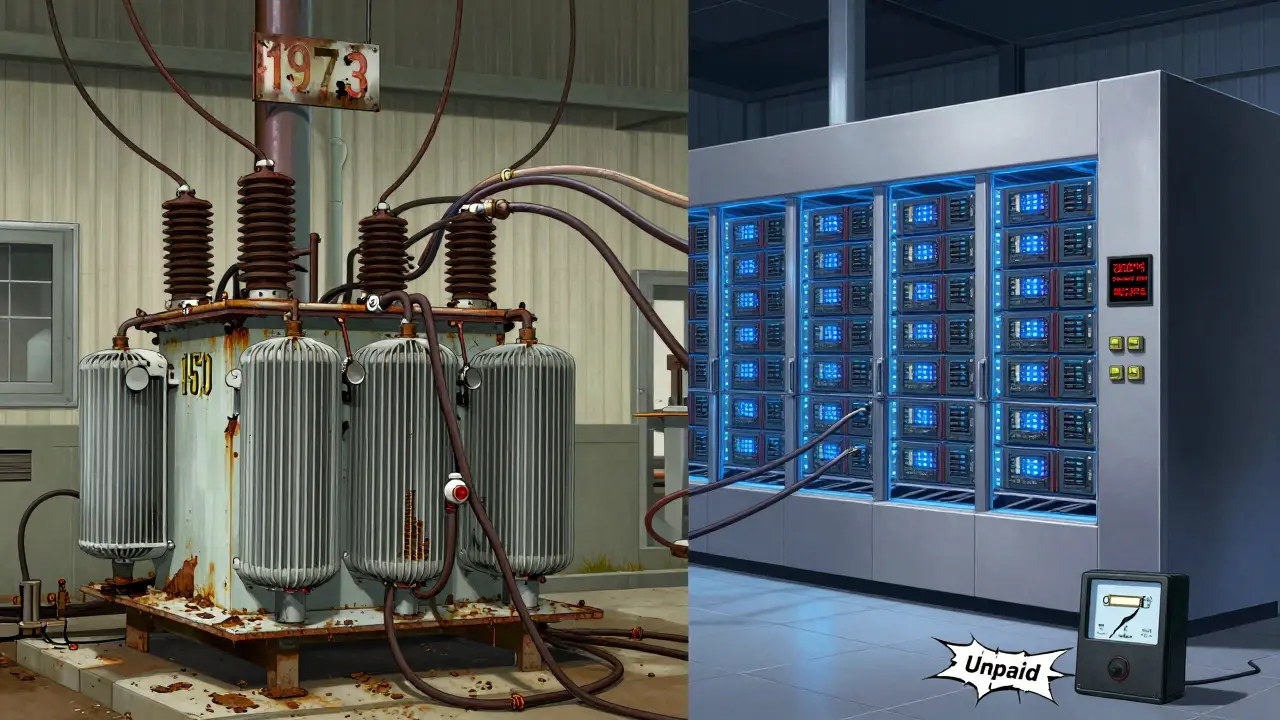
Kazakhstan’s power grid isn’t just old - it’s crumbling. As of January 2024, over one-third of the country’s 220 active power plants showed wear and tear levels between 70% and 90%. Some regional grids are worse. In places like Oral and Aktobe, transmission losses hit 18% - meaning nearly one in every five kilowatts of electricity vanishes before it reaches a home or factory. For comparison, developed countries consider anything above 10-12% unacceptable. In Kazakhstan, it’s the norm.The national grid operator, KEGOC, manages a network that spans thousands of kilometers. But the system is outdated. Transformers built in the 1970s are still running. Transmission lines are overloaded. Control systems haven’t been upgraded since the 1990s. And with winter temperatures dipping below -30°C, demand spikes every year - pushing the grid closer to failure.
Technical violations - like illegal connections, overloaded circuits, and improper maintenance - jumped from 18,609 in 2022 to over 28,000 in 2023. Even though they dropped to 18,263 in the first eight months of 2024, the underlying problem hasn’t changed: the grid can’t handle modern demands.
Renewables Are Coming - Too Slowly
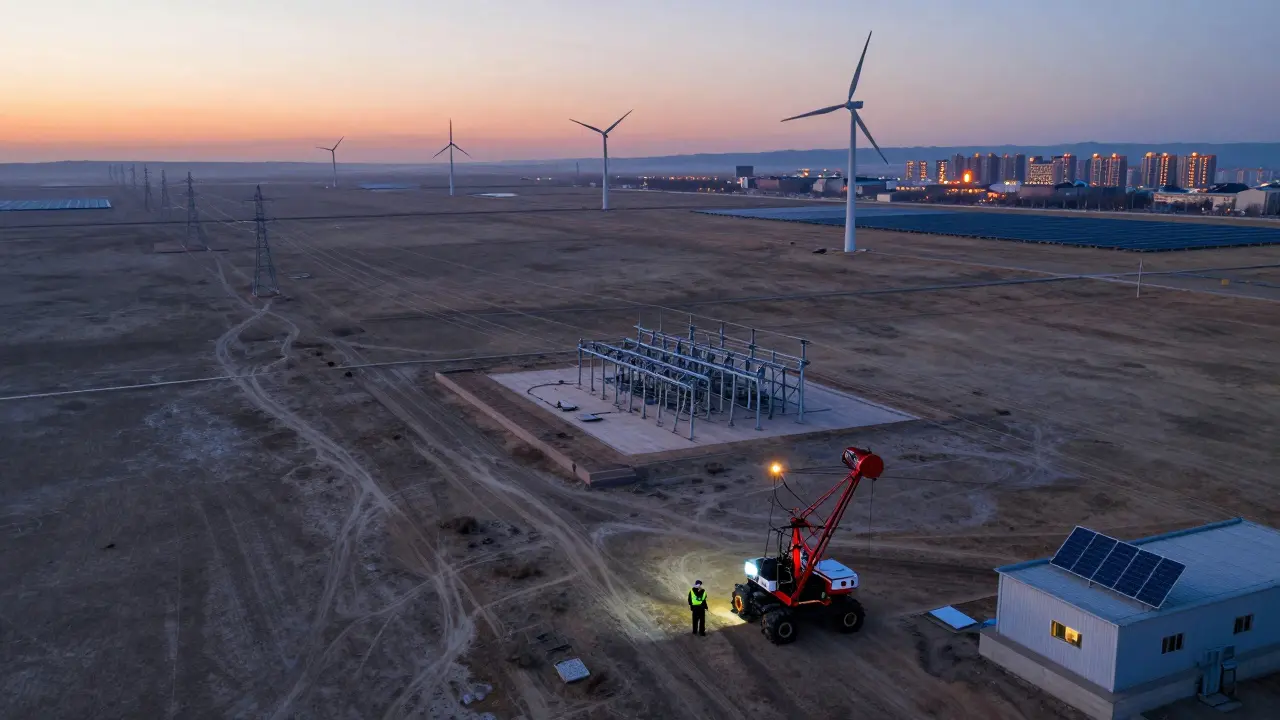
Kazakhstan has the sun, the wind, and the space to become a renewable energy leader. The government announced plans to build three 1-gigawatt wind farms. Solar and wind generation are on track to surpass hydropower this year, and renewables could overtake coal by 2025. Over $2.6 billion has been pledged to the sector.But here’s the catch: most of that money is going into large-scale projects far from where people live. The real bottleneck isn’t generation - it’s distribution. The grid can’t absorb intermittent power from solar panels or wind turbines without major upgrades. Smart meters, grid-balancing tech, and flexible transmission corridors? Still in planning stages.
Small businesses and households want to install rooftop solar. The law allows it. But the upfront cost - $3,000 to $5,000 for a system that pays for itself in 7-10 years - is out of reach for most. Without subsidies, loans, or financing programs, distributed generation remains a dream.
Crypto Mining: Scapegoat or Symptom?
You’ve probably heard that Kazakhstan banned crypto mining to save electricity. That’s not true - not yet, anyway.There’s no official ban on cryptocurrency mining in Kazakhstan as of early 2026. But the government has quietly started pressuring miners. In late 2024, regional energy companies began shutting down unlicensed mining operations. In some areas, miners were told to reduce power use by 30% or face disconnection. Others received bills for electricity they didn’t pay - because their mining rigs were running on stolen or unmeasured power.
Why now? Because crypto miners are using up to 20% of Kazakhstan’s total electricity output during peak hours. In Almaty and Nur-Sultan, miners account for nearly 15% of winter demand. That’s not a small number. It’s enough to trigger rolling blackouts in nearby villages.
Unlike factories or hospitals, mining rigs run 24/7. They don’t pause for holidays. They don’t respond to conservation appeals. And they pay far less per kilowatt than residential users - because of outdated pricing rules.
The Ministry of Energy has tried to fix this. In 2025, they introduced a new tariff structure that charges miners 2.5 times the residential rate. But enforcement is patchy. Many miners still operate under fake business licenses or through shell companies registered in other regions.
Who Pays the Price?
When the grid fails, it’s not the miners who suffer. It’s the elderly woman in Karaganda who can’t heat her home. The child in Shymkent studying under a flickering bulb. The factory worker whose shift gets canceled because the power went out at 3 a.m.Electricity tariffs jumped 50% across the country by April 2025. The government blames rising fuel costs and grid maintenance. But many locals know the truth: the grid is being stretched thin by energy-hungry industries that don’t pay their fair share.
There’s a deeper issue here too: corruption. Many of the largest mining operations are linked to politically connected companies. Regulatory inspections are rare. Fines are rarely paid. And when a miner gets disconnected, it’s often just for a few days - until they reconnect through a new line or a bribed technician.
The Path Forward
Kazakhstan has a plan. KEGOC’s 2023-2032 roadmap includes building a 2,000 MW North-South HVDC line, modernizing interzonal connections, and integrating renewables into the national grid. By 2040, they hope to unify the entire country’s power system.But time is running out. Without immediate action, Kazakhstan could face electricity shortages by 2030. The government needs to do three things:
- Enforce real-time metering for all large consumers - especially miners - and cut off those who bypass it.
- Restructure pricing so miners pay market rates, not subsidized ones, and use that revenue to upgrade the grid.
- Launch a national program to help households and small businesses install solar panels with low-interest loans and tax credits.
It’s not about banning crypto mining. It’s about making sure everyone pays their fair share - and that the grid doesn’t collapse under the weight of its own neglect.
What’s Next?
If you’re a crypto miner in Kazakhstan, your days of cheap power are numbered. The government isn’t banning you - but it’s making it harder to hide. Expect more audits, stricter metering, and higher bills. If you’re a homeowner, the same rules apply: if you want solar, you’ll need to find funding. No handouts. No subsidies. Just a grid that’s slowly, painfully, being rebuilt.The real story here isn’t about Bitcoin or Ethereum. It’s about who gets power - and who gets left in the dark.
Is there an official ban on crypto mining in Kazakhstan?
No, there is no official nationwide ban on cryptocurrency mining in Kazakhstan as of early 2026. However, regional energy providers have begun shutting down unlicensed or non-compliant mining operations due to grid strain. Miners are being required to pay higher electricity rates and install certified meters. Those who evade regulation face disconnection and fines.
How much electricity does crypto mining use in Kazakhstan?
Crypto mining consumes an estimated 15-20% of Kazakhstan’s total electricity during peak winter months. In major cities like Almaty and Nur-Sultan, miners account for nearly 15% of residential demand. This has led to rolling blackouts in nearby rural areas where grid capacity is already weak.
Why are electricity prices rising in Kazakhstan?
Electricity prices rose by 50% by April 2025 due to a combination of factors: aging infrastructure requiring costly repairs, increased demand from mining operations, and the government’s decision to shift costs onto high-consumption users. The single buyer system in the energy market has also become financially unstable, forcing tariff hikes to cover operational losses.
Can households install solar panels in Kazakhstan?
Yes, households and small businesses can legally install solar panels. The law supports net metering and distributed generation. However, the upfront cost - typically $3,000-$5,000 - is prohibitive for most families. Without government subsidies, loan programs, or tax incentives, adoption remains very low, despite favorable regulations.
What’s being done to fix the grid?
Kazakhstan’s grid operator, KEGOC, is working on a 10-year modernization plan that includes building a 2,000 MW North-South HVDC transmission line between 2024 and 2029, upgrading aging substations, and integrating renewable energy sources. Smart grid technology is also in development, but implementation is slow due to funding gaps and bureaucratic delays.








Tarun Krishnakumar
February 16, 2026 AT 15:44 PMLet me tell you something nobody in the mainstream media will admit: this whole "energy crisis" is a psyop. The grid isn't failing because of mining-it's failing because the oligarchs sold off the maintenance budget to buy private jets and offshore condos. You think those 1970s transformers are just "old"? Nah. They were deliberately kept that way. Why? So when the lights go out in Karaganda, the people blame the miners, not the guys who signed the contracts. And don't even get me started on the "renewables" plan-solar farms in the desert? Brilliant. Except the transmission lines to the cities? Still made of rust and hope. The real story? The state is using crypto as a convenient scapegoat so they don’t have to fix their own corruption. Every time they "audit" a miner, three more pop up under shell companies registered in Astana. It's not about power. It's about control. And the people? They're just collateral damage in a game they never signed up for.
jennifer jean
February 17, 2026 AT 02:11 AMThis is so heartbreaking 😭 I just can't believe how unfair this is. Elderly people freezing while miners run rigs 24/7? That's not progress-that's cruelty. I hope someone finds a way to help those families. Maybe a crowdfunding thing? Or community solar co-ops? We need to fix this, not just complain.
Charrie VanVleet
February 18, 2026 AT 20:44 PMHey, I really appreciate how detailed this post is. It's easy to blame crypto, but the real issue is systemic neglect. I work in grid tech back in Texas, and I can tell you-aging infrastructure + no investment = disaster waiting to happen. The fact that they're even trying to modernize with HVDC lines is a step forward. Maybe the answer isn't banning miners, but taxing them heavily and reinvesting that into rural microgrids? If miners pay market rates, and that money goes to solar panels for schools and clinics? That’s a win-win. We need smart policy, not panic.
Geet Kulkarni
February 20, 2026 AT 06:22 AMHow quaint. You expect a developing nation to manage a 21st-century grid with 1970s hardware? The real tragedy is not the miners-it’s the naïve Westerners who assume infrastructure is a given. Kazakhstan is not Germany. It never was. The fact that they even have electricity at all is a minor miracle. If you can't afford a $5,000 solar system, then perhaps you shouldn't be consuming energy at the level of a first-world citizen. This isn't injustice-it's economics. And the miners? They're the only ones contributing value. The rest are just passive consumers waiting for handouts.
Paul David Rillorta
February 21, 2026 AT 07:01 AMokay so here’s the truth no one wants to admit: the u.s. and china are secretly funding these mining ops to destabilize kazakhstan’s grid so they can take over the lithium mines. the "miners"? totally fake. it’s all a cover. the real power grabs are happening in the shadows. they’re using crypto as a distraction while they reroute the entire transmission network. you think the transformers are old? they were sabotaged. i’ve seen the leaked docs. the government’s "plans"? just a smoke screen. the real solution? nuke the whole grid and start over. or better yet-let the miners win. they’re the only ones who know what they’re doing.
andy donnachie
February 23, 2026 AT 06:45 AMAs someone who’s worked with grid operators in Eastern Europe, I can say this: the issue isn’t crypto mining-it’s the lack of a coherent national strategy. The fact that transmission losses are at 18% is alarming, but not unique. What’s missing is a clear regulatory framework that incentivizes compliance, not punishment. If miners are paying below-market rates, fix the pricing. If they’re stealing power, install smart meters. Simple. The renewables are fine, but without grid modernization, they’re just expensive decorations. The real bottleneck? Bureaucracy. Not miners. Not even corruption. Just... inertia.
Lauren Brookes
February 24, 2026 AT 08:07 AMIt’s funny how we always look for villains when the real problem is just... silence. No one talks about the engineers who retired in the 90s and never got replaced. No one mentions the kids who left for Dubai because there was no future in power engineering here. The grid didn’t break because of Bitcoin. It broke because we stopped caring. We stopped training people. We stopped investing in the people who keep the lights on. The miners? They’re just using the system the way it was designed. The system was designed to let them. And we’re shocked? We built this. We didn’t mean to. But we did.
Chris Thomas
February 25, 2026 AT 22:50 PMLet’s cut through the rhetoric. The entire narrative is a classic case of misaligned incentives. You have a centralized, state-controlled utility with outdated tariff structures, while private actors exploit regulatory arbitrage. The miners aren’t evil-they’re rational actors maximizing ROI within a broken system. The solution isn’t moral outrage-it’s economic redesign. Implement real-time dynamic pricing. Introduce congestion charges. Create a capacity market. Allow third-party grid access. Stop treating this like a morality play and start treating it like an engineering problem. The grid isn’t failing because of crypto. It’s failing because we’re still using 20th-century economic models to manage 21st-century demand.
Andrew Edmark
February 26, 2026 AT 05:20 AMI just want to say-this is so human. Behind every statistic is someone’s grandmother shivering. Someone’s kid trying to finish homework with a flashlight. I’ve been there. I grew up in a town where the power went out every winter. We didn’t have miners. We had neighbors who shared generators. Maybe that’s the answer? Community resilience. Not just tech upgrades. Not just fines. What if we helped people install solar panels together? Shared storage? A local microgrid co-op? It’s not sexy, but it’s real. And it works. Let’s not forget: we’re talking about people, not power loads.
Dominica Anderson
February 27, 2026 AT 03:14 AMWhy are we even discussing this? The West has been outsourcing its dirty energy to places like Kazakhstan for decades. Now that the bill’s due, suddenly it’s a crisis? Wake up. This isn’t about fairness. It’s about accountability. If you want clean energy, build it at home. Don’t export your emissions and then cry when the host country can’t handle the load. The miners are doing what capitalism intended: exploiting inefficiency. The real sin? Our hypocrisy.
kieron reid
February 27, 2026 AT 19:33 PMSo let me get this straight. A country with 18% transmission losses is blaming a few thousand rigs for blackouts? That’s like blaming a candle for a house fire. The real issue? The entire grid was built on Soviet-era trash and hasn’t been touched since. Miners are 20% of demand? That’s not a crisis. That’s a statistical rounding error. The fact that they’re even trying to fix this now proves how long they’ve been ignoring it. This isn’t about crypto. It’s about incompetence.
Avantika Mann
February 28, 2026 AT 14:23 PMI just wanted to say-I’m from India, and I’ve seen this exact pattern. Power cuts, corruption, tech being blamed for infrastructure failure. But here’s what helped us: community solar. Small groups of 5-10 households pooled money, got a grant, installed panels, and shared the output. No fancy tech. Just teamwork. Maybe that’s the real solution here? Not government plans. Not miner bans. Just people helping each other. The grid won’t save you. Your neighbors might.
Nikki Howard
March 2, 2026 AT 11:00 AMIt is imperative to note that the regulatory framework governing energy distribution in Kazakhstan remains fundamentally incompatible with the exigencies of a digital economy. The absence of real-time metering infrastructure constitutes a systemic failure of governance, and the reliance upon antiquated tariff structures exacerbates market distortions. Furthermore, the opacity surrounding the ownership structures of mining operations suggests a profound failure in corporate governance and state oversight. To address this, a technocratic intervention is required-one that prioritizes data-driven policy over populist narratives.
Sasha Wynnters
March 2, 2026 AT 23:43 PMIt’s like watching a man pour gasoline on a campfire and then scream when it burns down. We built this. We let the grid rot because it was cheaper than fixing it. We let miners in because they paid in dollars, not votes. We told people to "adapt" while the transformers screamed. Now we’re surprised the whole damn thing exploded? Nah. We knew. We just didn’t care enough to stop it. The miners didn’t break the grid. We did. And now we’re trying to blame the spark for the inferno.
george chehwane
March 3, 2026 AT 03:43 AMLet’s apply some game theory here. The state is a monopolist with a broken pricing mechanism. Miners are arbitrageurs exploiting a mispriced externality. The optimal equilibrium? Either raise rates to market-clearing levels or nationalize the miners and integrate them as load-balancing assets. But no-instead, we get performative regulation: audits that never lead to fines, tariffs that are never enforced, and a public narrative that turns miners into cartoon villains. This isn’t policy. It’s theater. And the audience? The people who can’t afford to turn on their heaters.
Scott McCrossan
March 4, 2026 AT 12:52 PMWHY IS NO ONE TALKING ABOUT THE CHINESE COMPANY THAT OWNED 70% OF THE MINING RIGS? THEY’RE NOT EVEN LEGALLY REGISTERED IN KAZAKHSTAN. THEY’RE RUNNING THROUGH A LUXEMBOURG SHELL AND PAYING IN BITCOIN. THIS ISN’T A GRID CRISIS. IT’S A NATIONAL SECURITY THREAT. THEY’RE NOT MINING CRYPTO. THEY’RE MINING INTELLIGENCE. THE POWER OUTAGES? A DISTRACTION. THE "RENEWABLES"? A COVER FOR A MILITARY GRID. I’VE SEEN THE BLUEPRINTS. THEY’RE BUILDING A SUBTERRANEAN DATA CENTER UNDER THE CASPIAN SEA. AND WE’RE ARGUING ABOUT TAXES?!