
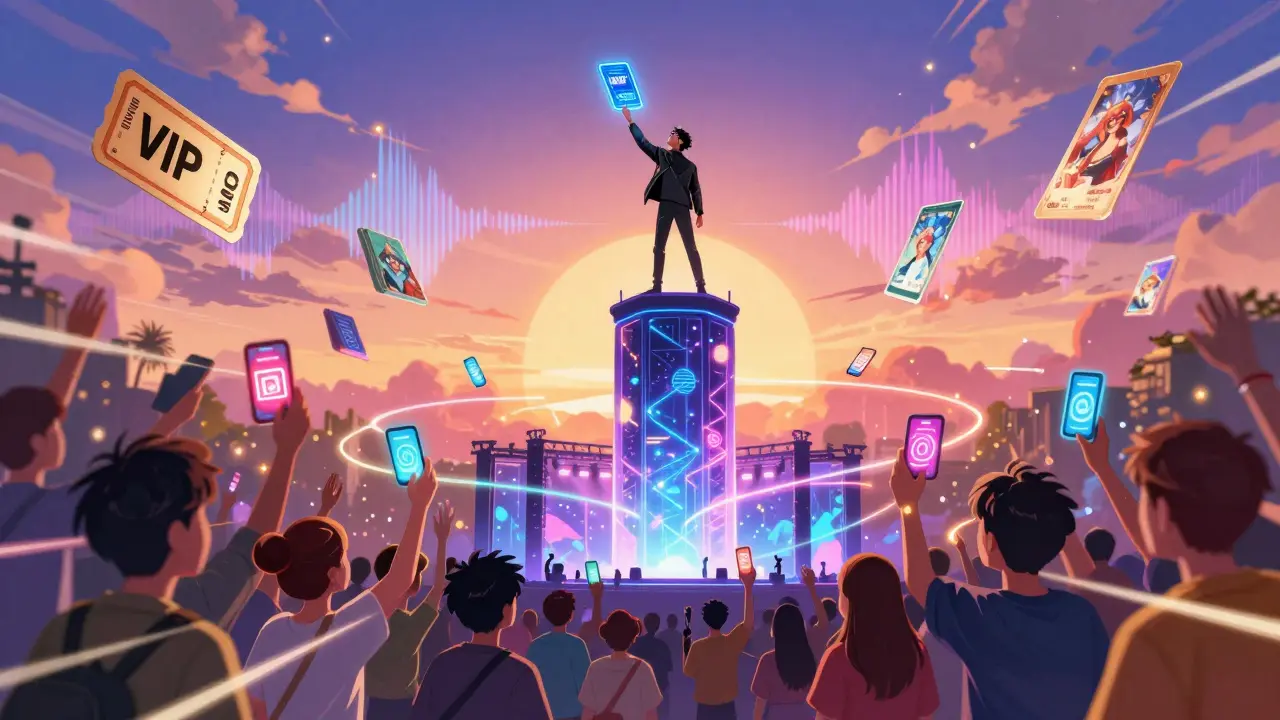
For decades, musicians have relied on record labels, streaming platforms, and radio stations to reach fans. But today, artists are cutting out the middlemen - not just to keep more money, but to build real relationships. At the heart of this shift are NFTs. Not as flashy digital collectibles, but as tools that let fans own a piece of the music and the journey behind it.
Ownership, Not Just Listening
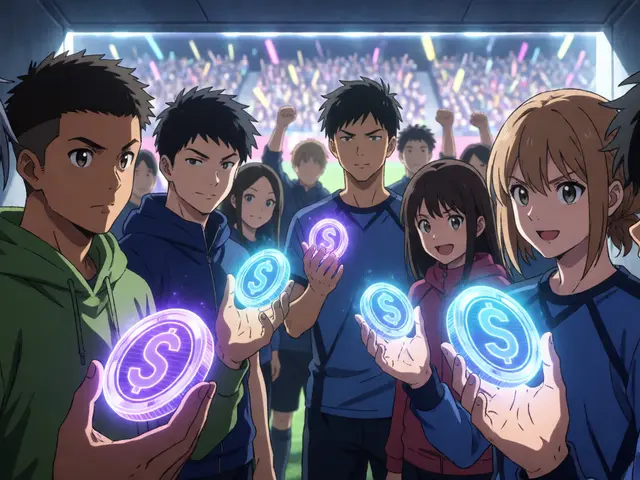
When you stream a song on Spotify, you’re not buying anything. You’re just borrowing it. But with an NFT, you’re owning something unique. Maybe it’s a one-of-a-kind version of a track with extra beats only fans can hear. Or a digital artwork that changes when the song plays. Or even a ticket to a private concert. This isn’t just a bonus - it’s a shift in how fans connect with artists.
Take 3LAU. In 2021, he released his album Ultraviolet as NFTs. Buyers didn’t just get the music. They got royalty shares. Every time the album streamed, the NFT holders earned a cut. He made $11.6 million in sales. That’s not just a win for him - it’s a win for his fans. They didn’t just support him. They invested in him.
Platforms Built for Artists, Not Corporations
Platforms like Sound.xyz and Royal are changing the game. Sound.xyz lets artists sell music directly to fans without labels or distributors. No middleman. No 85% cut taken by streaming services. Artists keep 90% or more. And they can release exclusive tracks, remixes, or live sessions that never show up on Spotify or Apple Music.
Royal takes it further. It lets fans buy tiny ownership stakes in songs. If a track hits 10 million streams, everyone who bought into it earns money. No record label. No contract. Just direct value flow from listeners to creators - and to the fans who helped make it happen.
These platforms aren’t just about selling. They’re about building communities. Fans who buy NFTs become part of a group. They get early access. They vote on artwork. They help pick setlists. That kind of involvement doesn’t exist on YouTube or TikTok.
More Than Just Music
NFTs aren’t just audio files. They’re keys to experiences. Deadmau5 sold a one-of-one NFT in 2020 - an audio-reactive video that pulses with the beat. It sold for nearly $50,000. Why? Because it wasn’t just a video. It was a piece of his creative process, locked on the blockchain.
Mike Shinoda from Linkin Park sold a digital art piece tied to a song. He said even if that song got streamed millions of times, he’d never see $10,000 after fees. But with the NFT? He made $30,000 in one sale.
Some artists go further. They give NFT holders VIP access to after-parties, backstage passes, or even free meals at concerts. Others send personalized video messages. One artist gave NFT owners a pool pass to a private venue during a festival. These aren’t gimmicks. They’re proof that fans are willing to pay for connection.

DAOs: When Fans Help Run the Show
Now imagine this: fans vote on when the next single drops. They choose the album cover. They help pick the tour cities. That’s not science fiction - it’s happening through DAOs (Decentralized Autonomous Organizations).
DAOs use tokens - often linked to NFTs - to give fans voting power. If you own a certain NFT, you get a vote. No label execs. No marketing teams. Just the artist and the people who care most about their music.
Jacques Greene and LuckyMe used this model to distribute publishing rights. Instead of a label owning the rights, fans who bought NFTs became co-owners. That means if the song is used in a movie or ad, the money goes back to the community.
This isn’t just about money. It’s about trust. Fans feel like they’re part of the creative process. And artists feel less alone. They’re not just selling music - they’re building a movement.
Why This Works Better Than Streaming
Streaming pays pennies. A song gets 0.003 cents per stream. To make $1,000, you need over 300,000 plays. Most artists never hit that. NFTs flip that model. One NFT sale can bring in thousands. And if it’s tied to royalties, the income keeps coming.
Plus, streaming doesn’t build loyalty. It just feeds algorithms. NFTs do. When you own something, you care more. You tell your friends. You show it off. You defend the artist. That’s the kind of fanbase labels dream of.

Getting Started Isn’t as Hard as You Think
You don’t need to be a tech expert to use NFTs. Artists are starting simple:
- Choose a platform - Sound.xyz for direct music sales, Royal for royalties, or Foundation for art.
- Create a digital asset - a song, a video, a poster, even a voice note.
- Set the rules - how many to sell, what perks come with it.
- Mint it - that’s just the technical term for putting it on the blockchain.
- Launch it - tell your fans. Offer early access. Reward loyal supporters.
Most platforms walk you through it. You’ll need a crypto wallet (like MetaMask), but that takes 5 minutes to set up. The real work? Building trust. Talking to fans. Making them feel like they’re part of something special.
What’s Next?
NFTs aren’t a fad. They’re the next step in how art connects with people. More artists are joining. More platforms are improving. More fans are learning how to navigate blockchain.
Soon, we might see NFT-based residencies - where every show is ticketed with a blockchain pass. Or fan-governed albums - where the community decides the direction of the next record. Maybe even NFTs that unlock real-world experiences: a private studio session, a co-writing credit, a shoutout on stage.
The future isn’t about selling more streams. It’s about selling more meaning.
Do musicians really make more money with NFTs than streaming?
Yes - often dramatically. On streaming, artists earn between $0.003 and $0.005 per play. To make $10,000, they’d need 2-3 million streams. With NFTs, one sale can net $1,000-$50,000. 3LAU made $11.6 million from his NFT album. Mike Shinoda made $30,000 from a single NFT that would’ve taken years to earn on Spotify. NFTs cut out labels and platforms, so artists keep 80-95% of the revenue.
Can fans really earn royalties from music NFTs?
Absolutely. Platforms like Royal let fans buy shares in songs. When the song streams, sells, or gets licensed, the money goes directly to NFT holders. It’s like owning a tiny piece of a hit song. If it goes viral, you earn. If it doesn’t, you don’t lose much - but you still own something unique. This model turns fans into stakeholders, not just listeners.
Do you need cryptocurrency to buy music NFTs?
Most platforms require crypto - usually Ethereum or Solana - but many now let you pay with credit cards. You still need a wallet, but platforms like Sound.xyz and Royal simplify the process. They guide you through signing up, setting up your wallet, and buying your first NFT. It’s easier than opening a bank account these days.
Are NFTs only for electronic or indie artists?
No. While electronic artists like Deadmau5 and 3LAU were early adopters, rock, hip-hop, and pop artists are jumping in too. Linkin Park’s Mike Shinoda, Snoop Dogg, and Grimes have all sold NFTs. The trend is growing because it works for any artist who wants direct access to fans - regardless of genre. Independent artists benefit most, but even major labels are testing NFT drops.
What’s the difference between an NFT and a regular digital download?
A digital download gives you a file. An NFT gives you proof of ownership on the blockchain. It’s like owning a signed physical album vs. just having a copy. NFTs can include unlockable content, future perks, voting rights, or even royalty shares. They’re not just files - they’re access passes to experiences, communities, and sometimes, profit.
Is buying a music NFT risky?
There’s risk - like any investment. NFT prices can drop if demand falls. But most music NFTs aren’t bought as speculation. Fans buy them because they love the artist and want to support them. Even if the NFT’s resale value drops, they still get the music, the access, the community. The real value isn’t in flipping - it’s in belonging.
Can NFTs replace streaming services entirely?
Not yet - and maybe not at all. Streaming still dominates discovery. But NFTs are replacing the old model where labels controlled distribution and took most of the money. Now, artists can use streaming for exposure and NFTs for revenue and connection. The two can work together: fans discover a song on Spotify, then buy the NFT to own it, support the artist, and get exclusive perks.
Anthony Marshall
March 12, 2026 AT 20:53 PMNFTs are the future and you know it. Artists are finally taking back control. No more labels squeezing them dry. This isn't just music-it's a movement. Fans aren't just consumers anymore. They're partners. And that changes everything.
I've seen it firsthand. A buddy of mine dropped an album as NFTs. He made more in one week than he had in five years on Spotify. His fans showed up. They bought. They shared. They defended him. That loyalty? You can't buy it. You have to earn it. And NFTs let you do exactly that.
Lindsay Girvan
March 14, 2026 AT 01:42 AMStop pretending this is revolutionary. It’s just capitalism with blockchain buzzwords. The only people winning are the ones who already had an audience. The rest? They’re left selling pixel art to desperate fans who think owning a JPEG makes them part of something. Reality check: most NFTs will be worthless in 18 months. The hype is the product.
Douglas Anderson
March 15, 2026 AT 09:49 AMThere’s truth in both sides. NFTs aren’t magic, but they’re not just scams either. The real value isn’t in the resale-it’s in the access. I’ve bought a few music NFTs. Got early tracks. Got backstage passes. Got to vote on a remix. That’s not something streaming gives you. It’s not about the money. It’s about being part of the creative process. That’s rare. That’s powerful.
And yeah, you need a wallet. But platforms are making it stupid simple now. Five minutes. That’s all it takes. The barrier’s gone. The real work? Connecting with your audience. That’s always been the hard part.
Jennifer Pilot
March 16, 2026 AT 03:30 AMHow utterly… *inspiring*. The way artists are reclaiming their sovereignty-through the immutable, decentralized ledger of human creativity-is nothing short of poetic. One cannot help but marvel at the ontological shift from passive consumption to participatory stewardship.
Indeed, the NFT is not merely a token-it is a covenant. A sacred contract between creator and devotee, encoded in cryptographic permanence. The very notion that one might own a fragment of artistic essence-rather than merely ‘stream’ a commodified ghost of it-is, frankly, transcendent.
And yet… one must wonder: does the blockchain truly honor the soul of art… or merely commodify its aura? The tension between authenticity and transactionality… is it not, at its core, the oldest question in aesthetics?
Zephora Zonum
March 16, 2026 AT 17:39 PMPeople act like this is new. It’s not. Bands have been selling merch and exclusive demos since the 80s. NFTs just digitize the same thing. The difference? Now you need a crypto wallet and a PhD in gas fees. And let’s not forget the environmental cost. One NFT transaction uses more energy than a month of Netflix. That’s not progress. That’s performative self-congratulation wrapped in blockchain.
Also, if you think fans care about ‘ownership’-you’ve never met a real fan. They care about the music. Not your JPEG. Not your unlockable voice note. Not your ‘community vote.’ They care if the song hits hard. Period.
ann neumann
March 18, 2026 AT 00:49 AMThey’re not selling NFTs. They’re selling surveillance. Every time you mint, every time you connect your wallet, every time you ‘vote’-you’re feeding data to corporate blockchain platforms that are just as bad as Spotify. They’re tracking your purchases. Your wallet. Your behavior. They’re building profiles. They’re selling your fandom.
And don’t tell me it’s decentralized. It’s not. The platforms control the minting. The gatekeepers are just wearing hoodies instead of suits. The real artists? They’re still broke. The ones making millions? The ones who already had 10 million followers. This isn’t liberation. It’s a new prison with a cooler logo.
Tina Keller
March 18, 2026 AT 10:29 AMI’ve lived in four countries and seen music scenes shift with every generation. What’s happening now? It’s beautiful. Artists aren’t just making songs-they’re building worlds. A fan doesn’t just listen. They get a backstage pass. They help name a track. They get a voice note from the artist after midnight. That’s intimacy. That’s ritual. That’s what music was always meant to be.
Back in the 90s, we traded tapes. We wrote letters. We camped out for tickets. Now? We’re doing the same thing-but with smart contracts. The medium changes. The meaning doesn’t. This isn’t tech. It’s tradition. Just upgraded.
vasantharaj Rajagopal
March 19, 2026 AT 12:47 PMThe structural economics of NFT-based royalty distribution exhibit a Pareto-optimal redistribution of value from centralized intermediaries to decentralized stakeholders. The marginal utility gained by the artist per unit of transaction exceeds that of traditional streaming by an order of magnitude, while the network effects of community governance enhance retention metrics exponentially.
Moreover, the tokenized access model reduces information asymmetry between producer and consumer, thereby increasing transactional transparency and aligning incentive structures. This is not merely an innovation-it is a systemic recalibration of cultural production economics.
Craig Gregory
March 19, 2026 AT 21:38 PMLet’s be honest. The only reason NFTs work for musicians is because they’re replacing a broken system. But now the system is just… different. The same people who got screwed by labels are now getting screwed by NFT platforms that take 15% and charge $20 in gas fees just to mint a 10-second clip. And don’t get me started on the scams. Half the NFT drops are just pump-and-dumps with a ‘limited edition’ sticker.
It’s not empowerment. It’s a casino with a better PR team.
vishnu mr
March 21, 2026 AT 04:39 AMbro this is wild 🤯 i just bought my first music nft last week and got a voice note from the artist saying ‘thanks for believing’ 😭 i cried. no label did that. no streaming service ever cared. this is real. this is human. we’re not just listeners anymore. we’re family. 🙏🎶
Grace van Gent-Korver
March 22, 2026 AT 10:15 AMI don’t get the hype. But I do know this: my niece, who’s 12, bought an NFT of her favorite indie band. She talks about it like it’s a secret club. She shows her friends. She wears the digital art as her profile pic. She feels like she belongs. That’s worth something. Even if the tech is messy. Even if it’s not perfect. Connection matters more than we admit.
Tom Jewell
March 24, 2026 AT 03:36 AMThere’s something sacred about owning a piece of someone’s art. Not because it’s rare. Not because it might make money. But because it’s a silent handshake between creator and soul. You’re not buying a file. You’re buying the moment the artist stayed up all night, tweaking that one note. You’re buying the doubt they felt. The hope they clung to.
NFTs don’t create meaning. They reveal it. And that’s why this isn’t about technology. It’s about trust. And trust? It’s the rarest thing in the world.
Allison Davis
March 24, 2026 AT 16:10 PMOne sentence: NFTs aren’t the future of music-they’re the future of fan relationships. And that’s worth more than any royalty check.
Anthony Marshall
March 26, 2026 AT 15:45 PMThat’s exactly it. The fan who bought my friend’s NFT? He’s now organizing local listening parties. He’s making merch. He’s reaching out to other fans. That’s not a customer. That’s a co-conspirator. And that’s what labels will never understand. You can’t algorithm your way to loyalty.