

But here's the catch: it's not a free-for-all anymore. Since the 2023 updates to the Orçamento de Estado (State Budget), the rules have shifted. You can't just day-trade your way to a tax-free life. There is a very specific line between what's free and what's taxed at a flat 28%. If you're planning to move or already live in the sunny coast of the Algarve, understanding the 365-day rule is the difference between a stress-free retirement and a massive tax bill.
The Magic Number: Why 365 Days Matters
The core of the Portuguese system is simple: time is money. Specifically, 365 days of holding. In Portugal, Capital Gains (known as Category G income) are handled differently based on how long you've owned the asset. If you hold your coins for more than one year, the gains you make when selling them for Euros or other fiat currencies are completely tax-exempt.
This isn't just a loophole; it's a strategic policy. The government wants to attract "HODLers"-long-term investors who bring capital into the country-rather than high-frequency traders who might just be passing through. If you sell your Ethereum after 366 days, you pay 0%. If you sell it after 364 days, you're looking at a 28% hit on your profits. It's a brutal cliff, but a clear one.
It is also worth noting that Crypto-to-crypto trades are generally exempt from taxation. This means you can swap Bitcoin for Solana or a stablecoin without triggering a taxable event, as long as you aren't converting to a government-issued currency or buying a physical product.
Breaking Down the Three Tax Categories
To navigate the Portuguese tax system, you need to know which "bucket" your income falls into. The Personal Income Tax Code (PIT Code) splits crypto activities into three distinct categories. Most people get these mixed up, leading to expensive mistakes during filing.
- Category G (Capital Gains): This is where most casual investors live. It covers the profit made from selling crypto. As we discussed, if the asset was held for >365 days, it's 0%. If <365 days, it's a flat 28% tax.
- Category E (Capital Income): This is for passive income. If you are staking your coins or lending them out to earn interest, that income is taxed at a flat 28% from day one. There is no "long-term" exemption for staking rewards; they are treated as income the moment you receive them.
- Category B (Self-Employment Income): This is for the pros. If you run a crypto mining farm, work as a professional trader, or validate transactions for a living, the government views this as a business. You'll be taxed progressively, with rates ranging from 14.5% all the way up to 53% depending on how much you earn.
| Category | Activity Type | Holding Period | Tax Rate |
|---|---|---|---|
| Category G | Selling Assets | > 365 Days | 0% (Exempt) |
| Category G | Selling Assets | < 365 Days | 28% Flat |
| Category E | Staking/Lending | Any | 28% Flat |
| Category B | Professional Trading/Mining | Any | 14.5% - 53% (Progressive) |

Portugal vs. The Rest of Europe
When you look at the map of the European Union, Portugal looks like a sanctuary. Most EU nations are tightening the screws on crypto. For instance, France maintains a steady 30% capital gains tax regardless of whether you held the asset for a week or a decade. Italy is slightly lower at 26%, and Spain's rates can climb quite high, especially for staking rewards where progressive brackets can hit 47%.
Germany is the only real rival to Portugal in terms of friendliness. Germany also offers an exemption for assets held over a year. However, Portugal's framework is often seen as more straightforward for expats and digital nomads because it doesn't have as many complex conditions attached to the private investor status.
The entry of the MiCA (Markets in Crypto-Assets) regulation across the EU has brought a lot of standardization regarding consumer protection and anti-money laundering (AML), but tax laws remain a national choice. Portugal has used this freedom to keep itself competitive, ensuring that while they follow EU law, they keep the tax incentives that attract wealthy investors.
Practical Steps for Compliance
You might think, "If it's tax-free, why do I need to report it?" Here is the reality: the burden of proof is on you. If the Portuguese tax authority asks why you suddenly have 500,000 Euros in your bank account, "I held Bitcoin for a year" isn't a legal defense unless you have the paperwork to back it up.
The Portuguese system works on a realization basis. This means you don't owe anything while your portfolio is just growing in value (unrealized gains). The clock starts ticking the moment you acquire the asset and stops the moment you convert it to fiat or spend it on a physical good. To stay safe, you need a bulletproof audit trail.
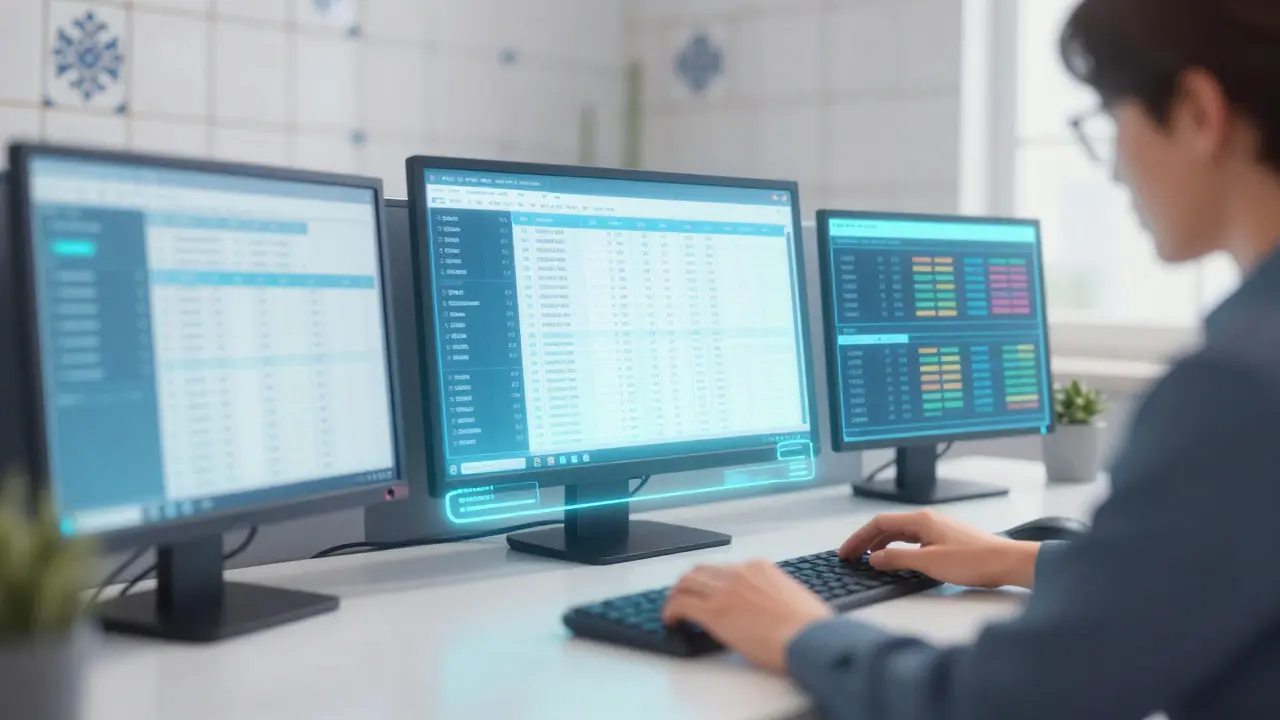
- Track Acquisition Dates: You must be able to prove exactly when you bought each coin. A simple spreadsheet isn't enough for large sums; use CSV exports from exchanges.
- Document the Cost Basis: Keep records of the price you paid in Euros at the time of purchase.
- Use Specialized Software: Tools like CoinTracking are widely used in Portugal because they can automate the 365-day calculation and generate reports that align with the PIT Code.
- Separate Personal from Professional: If you're mining or trading daily, keep those funds in a separate wallet from your long-term holdings to avoid the tax office accidentally classifying your personal savings as "professional income" (Category B).
Common Pitfalls and Nuances
It's not all sunshine and zero taxes. There are a few "gotchas" that can trigger a tax bill even if you've held your assets for years. First, the long-term exemption generally applies to standard crypto assets. If your token is legally classified as a security (which some utility tokens or equity-based tokens are), different rules may apply.
Second, be careful with assets kept outside the European Economic Area (EEA). While the 365-day rule is generous, the tax authorities have a closer eye on offshore accounts and non-EU exchanges. Ensuring your assets are transparently documented is key.
Lastly, remember that Non-Fungible Tokens (NFTs) are often treated differently. Because they are unique assets, they aren't always lumped into the same category as fungible tokens like Bitcoin or Ether. If you're a high-value NFT collector, you should consult a local specialist to see if your collection falls under the standard crypto rules or a different asset class entirely.
Do I have to pay tax if I trade one cryptocurrency for another in Portugal?
No, crypto-to-crypto trades are generally exempt from taxation in Portugal. A taxable event is only triggered when you convert your cryptocurrency into fiat currency (like Euros) or use it to purchase goods and services.
Is staking income tax-free if I hold the rewards for over a year?
No. Staking and lending rewards fall under Category E (Capital Income) and are taxed at a flat rate of 28% regardless of how long you hold the rewards after receiving them.
What happens if I sell my crypto after 11 months?
If you sell before the 365-day mark, your gains are considered short-term and are subject to a flat tax rate of 28% under Category G.
Do I need to report my crypto holdings even if they are tax-exempt?
Yes, you should include relevant gains in your annual tax return to ensure transparency and provide a legal record of your wealth, even if the final tax owed is zero.
Am I considered a professional trader if I trade frequently?
If the tax authority determines that your trading activity is your primary source of income or is conducted as a business, you may be moved to Category B. This involves progressive tax rates from 14.5% to 53% instead of the flat 28% capital gains rate.
Next Steps for Investors
If you're looking to optimize your tax position in Portugal, your first move should be a wallet audit. Go through your history and mark the exact date of every major acquisition. If you're close to the one-year mark on a large position, the math is simple: wait. Selling a day early could cost you nearly a third of your profit.
For those earning significant passive income from DeFi or staking, look into whether incorporating your activity into a business structure (Category B) might actually be cheaper than the 28% flat rate, depending on your total annual income brackets. Finally, always keep your exchange CSVs in a secure, backed-up location. The Portuguese tax office doesn't accept "the exchange went bankrupt" as a reason for missing cost-basis records.










Tracie and Matthew Hartley
April 12, 2026 AT 21:21 PMidk why everyone thinks portugal is some kind of paradise lol. they'll probably change the rules again by next tuesday just to screw over the nomads anyway
Omotola Balogun
April 13, 2026 AT 23:18 PMActually, the distinction between Category G and Category B is vital because if the tax authorities deem your activity as "professional trading" due to volume, the 365-day rule is completely irrelevant and you'll be taxed on a progressive scale. Most amateurs fail to realize that the AT (Autoridade Tributária) looks at frequency of trades, not just the holding period. You need a solid accounting trail to prove you aren't running a business from your beachfront villa otherwise the audit will be a nightmare. I've seen people get hit with massive fines because they thought crypto-to-crypto swaps were a free pass to hide their volume. It is fundamentally about the intent of the investor and the manifestation of the profit activity. Proper documentation is the only way to survive a Portuguese tax audit in the long run.
ssjuul z
April 15, 2026 AT 20:52 PMThis is huge! 🚀 Definitely looking into moving my portfolio over there!
Carroll Foster
April 15, 2026 AT 23:42 PMOh sure, just move to the Algarve and enjoy the "low tax" dream while the local bureaucracy slowly suffocates you with paperwork for a residency permit. The alpha here is obviously the exit liquidity for the government's tax coffers, but hey, stay bullish on the sunshine!
logan bates
April 17, 2026 AT 08:21 AMTypical of people to leave their own country just to dodge taxes. Pathetic.
Lane Montgomery
April 17, 2026 AT 13:45 PMHow much you made?
EDOZIEM MICHAEL
April 17, 2026 AT 15:39 PMmoney is just a shadow of value and moving for taxes is just chasing shadows in a different timezone
Hope Johnson
April 19, 2026 AT 00:11 AMWe must consider if the act of relocating one's entire existence for the sake of financial optimization aligns with a meaningful life, or if it simply reinforces the idea that our worth is tied to the percentage of our assets that the state cannot touch. It is interesting to see how the digital age has decoupled the concept of "home" from the concept of "tax residency," effectively creating a new class of global citizens who are more loyal to their private keys than to any particular flag or community. In the long run, the search for a tax haven might just be a modern metaphor for the ancient search for utopia, though in this case, utopia is simply a 0% capital gains rate on a blockchain asset. Perhaps we should ask ourselves what we are actually gaining when we trade the stability of our native social structures for the sunny coasts of a foreign land just to preserve a few more decimals of a volatile digital currency.
Chidinma Sandra okafor
April 19, 2026 AT 22:10 PMWow, so the dream is to move to a country that can barely handle its own inflation just to save some pennies. Absolutely brilliant strategy.
Scott Fenton
April 20, 2026 AT 15:41 PMIt is imperative to note that the 365-day rule applies strictly to assets held in a personal capacity. If the assets are held within a corporate structure, the taxation regime differs significantly.
Mikayla Murphy
April 21, 2026 AT 16:31 PMI've heard the weather in Portugal is lovely, though the bureaucracy can be a bit overwhelming for newcomers.
Kelly Cantrell
April 23, 2026 AT 14:40 PMThe government only wants you there so they can track your wallets better. Once they have all the HODLers in one place, they'll just flip a switch and tax everything retroactively. It's a trap to get the wealth out of the US and into a system where they can freeze it easier.
Alan Seiden
April 24, 2026 AT 12:45 PMAbsolute rubbish. The British system is far more robust than this Portuguese nonsense. Why anyone would trust their retirement to a country that changes laws every time the wind blows is beyond me.
Terrance Hausmann
April 25, 2026 AT 08:37 AMJust keep it simple. Hold, wait, and enjoy the beach.
Will Dixon
April 27, 2026 AT 00:06 AMi think its a cool way to save money for later
Akshay Gorad
April 27, 2026 AT 10:13 AMThis sounds like a very fair approach to encourage long term investment.
Rima Dinar
April 29, 2026 AT 08:28 AMIf you are thinking of making the move, please remember to consult with a certified tax professional in Portugal because the nuances of the law can be quite tricky and a mistake could lead to a very stressful situation with the tax authorities. It's also worth looking into the NHR program if you're eligible, as it can provide additional benefits that make the transition much smoother and more financially rewarding for those who are truly committed to staying for the long haul.
Agnessa Dale
April 29, 2026 AT 13:08 PMSuch a great opportunity for anyone looking to start fresh!
Stanly Hayes
April 30, 2026 AT 14:41 PMWho cares about the rules? If you've got the coins and a plane ticket, just go. Stop overthinking the legalities and just get it done!
Lauren Abrams
May 2, 2026 AT 09:31 AMInteresting point about the crypto-to-crypto swaps being exempt.