
Remember the chaos of May 2021? The crypto market was on fire, gas fees were skyrocketing, and everyone was hunting for free money. If you were part of the YooShi community back then, you likely spent those four frantic days trying to claim your slice of the SHIB ARMY NFT airdrop. It wasn’t just another meme coin gimmick; it was a coordinated effort involving CoinMarketCap and the broader Shiba Inu ecosystem to reward early adopters on the Binance Smart Chain.
But what exactly happened? Who got in, who missed out, and where do these digital collectibles stand today? Whether you’re looking back with nostalgia or researching how these historical airdrops shape current DeFi strategies, understanding the mechanics of this specific event offers valuable lessons for navigating future token distributions.
The Core Mechanics of the YooShi Airdrop
The YooShi SHIB ARMY NFT airdrop ran from May 27 to May 31, 2021. Unlike many chaotic drops that vanish as quickly as they appear, this one had a structured four-day claiming window. The goal was simple: distribute exclusive non-fungible tokens to users who had already engaged with the project. This wasn’t a "spray and pray" approach where random wallets received assets. Eligibility was strictly tied to prior participation.
To qualify, participants needed to have joined both the #YOOSHI and #CMC (CoinMarketCap) campaigns. This dual-requirement strategy served two purposes. First, it verified that users were genuinely interested in the Shiba Inu ecosystem rather than just airdrop hunters. Second, it leveraged CoinMarketCap’s massive user base to drive visibility. Once whitelisted, users had to connect their Binance Smart Chain (BSC) wallets to yooshi.io to claim their rewards.
| Feature | Details |
|---|---|
| Claiming Window | May 27-31, 2021 (UTC) |
| Blockchain | Binance Smart Chain (BSC) |
| Eligibility | Whitelisted via #YOOSHI and #CMC campaigns |
| NFT Tiers | Bronze, Silver, Gold Editions |
| Total Token Supply | 45,896,736,161,754 YOOSHI tokens |
Why Binance Smart Chain Mattered
In mid-2021, Ethereum mainnet was practically unusable for small-scale interactions due to exorbitant gas fees. By choosing the Binance Smart Chain, YooShi made a pragmatic decision that significantly lowered the barrier to entry. Users didn’t need hundreds of dollars in ETH just to mint an NFT. They only needed a small amount of BNB for gas, making the process accessible to the average retail investor.
This choice also aligned with the growing trend of cross-chain compatibility within the Shiba Inu universe. While SHIB itself remained primarily on Ethereum, its ecosystem projects began experimenting with Layer-2 solutions and alternative chains like BSC to improve scalability. For the SHIB ARMY NFTs, this meant faster transactions and lower costs, which directly contributed to higher participation rates during the claiming period.
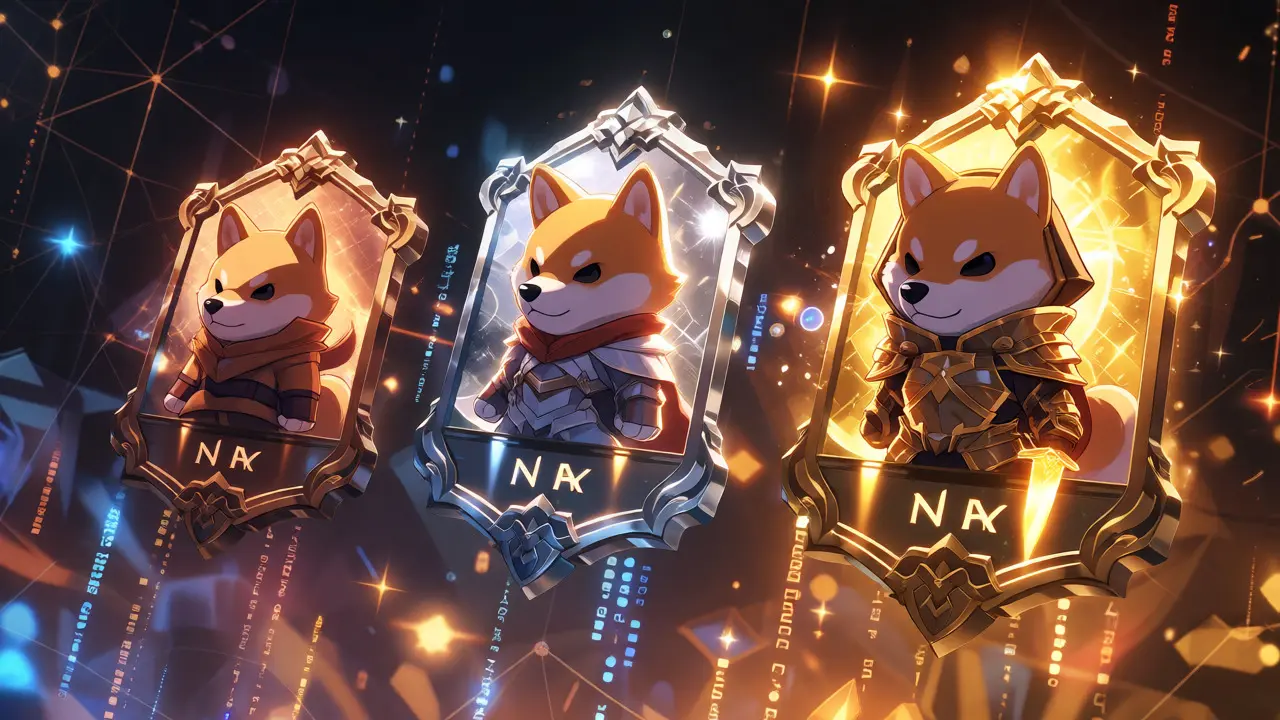
The Tiered Rarity System: Bronze, Silver, and Gold
Not all SHIB ARMY NFTs were created equal. The collection featured a tiered structure-Bronze, Silver, and Gold editions. This rarity framework is standard in NFT projects because it creates immediate value differentiation. Gold edition holders often received priority access to future drops or governance rights, while Bronze holders formed the bulk of the community.
The scarcity model played into the psychological appeal of collecting. Even if you couldn’t snag a Gold edition, holding a Bronze NFT still granted you status within the YooShi community. These tiers weren’t just cosmetic; they influenced secondary market dynamics. During the peak hype cycle, rare NFTs traded at significant premiums, allowing early claimers to flip their assets for profit before the market cooled down.
The Role of Community and Marketing Partnerships
You don’t survive in the memecoin space without a loud community. The YooShi Official Telegram Channel became the heartbeat of this campaign. Announcements like "5 Days left to join #YOOSHI's SHIB ARMY" created urgency and FOMO (Fear Of Missing Out). Partnering with CoinMarketCap added legitimacy, signaling to skeptical investors that this wasn’t a fly-by-night operation.
This marketing blitz coincided with the absolute peak of the 2021 bull run. Demand for NFTs was insatiable, and any project associated with the Shiba Inu brand could expect high engagement. The synergy between social media buzz, platform partnerships, and favorable market conditions created a perfect storm for the airdrop’s success.
What Happened After the Airdrop?
Fast forward to September 2026, and the landscape has changed dramatically. The initial frenzy of 2021 has settled into more mature utility-driven developments. The original SHIB ARMY NFTs haven’t disappeared, but their primary value shifted from speculative trading to community membership badges.
Meanwhile, the broader Shiba Inu ecosystem evolved with the launch of Shibarium, a Layer-2 scaling solution. Recent updates, such as the Cancun hardfork, focused on enhancing decentralized finance (DeFi) applications and gaming integration. While the direct connection between the old YooShi NFTs and new Shibarium initiatives isn't always explicit, the spirit of rewarding loyal community members persists. Today’s airdrops are more sophisticated, often requiring staking or active participation in dApps rather than simple wallet registration.
If you held onto your SHIB ARMY NFTs, you might not see massive liquidity in the secondary markets today compared to 2021 highs. However, they remain proof-of-participation in one of the most vibrant communities in crypto history. For many, that social capital holds more weight than the floor price.
Lessons for Future Airdrop Hunters
The YooShi case study teaches us three critical things about cryptocurrency airdrops:
- Preparation beats reaction: Those who had already interacted with the project and whitelisted early avoided last-minute server crashes and gas wars.
- Chain selection matters: Choosing a low-cost chain like BSC ensured that even small holders could participate, widening the distribution net.
- Utility evolves: An NFT’s value isn’t static. It shifts from speculation to utility or community status over time. Always assess long-term roadmap alignment, not just immediate hype.
As we move deeper into 2026, keep an eye on how legacy NFT collections integrate with newer infrastructures like Shibarium. The winners will be projects that bridge the gap between historical community loyalty and modern technological capability.
How do I know if my wallet was eligible for the YooShi SHIB ARMY airdrop?
Eligibility was determined by whether your Binance Smart Chain address was successfully whitelisted through the combined #YOOSHI and #CMC campaign requirements before the claiming window opened on May 27, 2021. You can check past transaction histories on BscScan to confirm if you claimed an NFT during that period.
Are YooShi SHIB ARMY NFTs still tradable?
Yes, they are technically tradable on NFT marketplaces that support Binance Smart Chain assets, such as PancakeSwap NFT or OpenSea (if bridged properly). However, trading volume and liquidity are significantly lower than during the 2021 peak, so selling may require patience or accepting lower prices.
Did the SHIB ARMY NFTs have any burn mechanism?
While the specific YooShi SHIB ARMY NFT documentation doesn't detail a direct burn mechanism for every sale, related projects in the Shiba Inu ecosystem, like Shib Army Inferno, implemented systems where 30% of minting proceeds bought and burned SHIB tokens. This deflationary pressure was a common theme across the ecosystem to reduce circulating supply.
What is the difference between Bronze, Silver, and Gold editions?
These tiers represented different levels of rarity and potential perks. Gold editions were the scarcest and often came with exclusive community roles or future benefits. Bronze editions were the most common. The distinction helped create a hierarchy within the holder community and influenced secondary market pricing.
Is YooShi still active in 2026?
The YooShi project has evolved alongside the broader Shiba Inu ecosystem. While the initial hype has subsided, the team continues to contribute to the ecosystem's growth, particularly with the rise of Shibarium. Their focus has shifted from simple meme-based promotions to more sustainable community and utility-driven initiatives.

Christy Keirn
September 15, 2026 AT 23:45 PMOh wow, another nostalgic trip down memory lane? How original. I remember when people actually cared about utility instead of just chasing JPEGs on a chain that was basically a copycat of Ethereum with worse security... or did I miss the memo where BSC became the gold standard for decentralization? It’s cute how everyone pretends this wasn’t just a marketing stunt to pump bags before dumping on retail.
Harmony Davidson
September 16, 2026 AT 00:17 AMI still have nightmares about those gas fees!! The anxiety... it was suffocating! You’d click claim and your heart would stop because you didn't know if the transaction went through or if you just got rekt by some invisible hand manipulating the mempool!!! It felt like we were being watched... always watched... waiting for us to make one mistake so they could snatch our NFTs right out of our wallets...
Manoj Ramachandran
September 16, 2026 AT 03:55 AMIt is indeed fascinating to reflect upon the strategic decisions made during that period. The choice of Binance Smart Chain was primarily driven by economic pragmatism rather than ideological purity regarding decentralization. For many users in developing nations, the lower transaction costs were not merely a convenience but a necessity for participation. This accessibility allowed for a broader demographic inclusion which is often overlooked in Western-centric narratives of crypto history.