
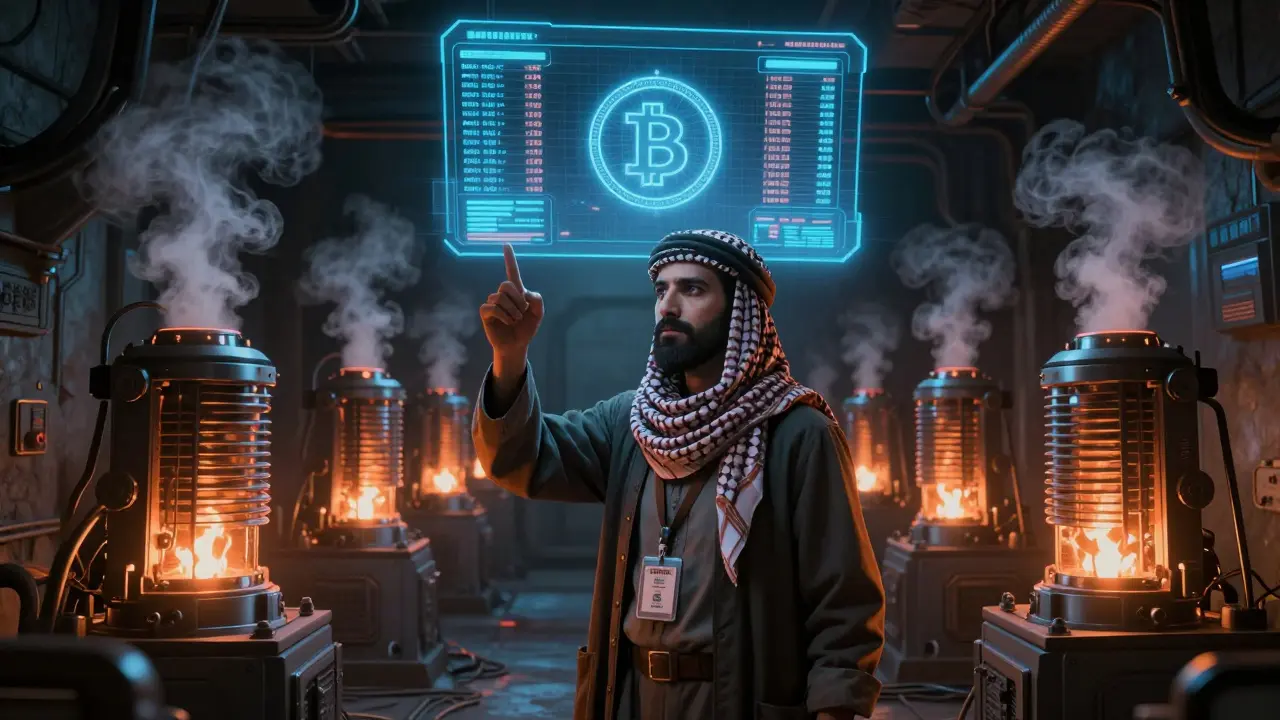
Iran doesn’t ban cryptocurrencies - it controls them. While many countries struggle to decide whether crypto is a threat or an opportunity, Iran has made its choice: use it, but only on the government’s terms. Since 2019, mining and trading have been legal, but under a web of rules that make it harder to operate outside state oversight than to follow them. For ordinary Iranians, crypto isn’t a luxury or a gamble - it’s a survival tool. For the government, it’s a revenue stream, a sanctions workaround, and a power grid crisis waiting to happen.
Legal Mining: Licensed, Monitored, and Taxed
If you want to mine Bitcoin or Ethereum in Iran, you need a license. Not from some anonymous online form, but from the Ministry of Industry, Mine and Trade. And it’s not enough to just get the paperwork. The government sets the price of electricity for miners - not the cheap, subsidized rate locals pay, but the export price. That means mining operations pay nearly five times more for power than a household does. The goal? To stop illegal farms from draining the national grid. In 2025, Iran dismantled over 100 unauthorized mining sites and seized more than 250,000 mining rigs. But experts say 95% of mining still happens illegally. Why? Because even at export rates, mining can still be profitable when the Iranian rial is losing value by the hour.
Legal miners don’t get to keep what they mine. They’re required to sell all their cryptocurrency to the Central Bank of Iran (CBI) through the National Iranian Money Changer Association (NIMA). The money goes straight into state coffers. It’s not a suggestion - it’s the law. And the CBI doesn’t just collect the coins. They have full, unrestricted access to every transaction, wallet, and mining rig in the system. If you’re mining legally, the government knows exactly how much you’re producing, when, and where.
Trading Crypto: Only Through Approved Channels
Buying or selling Bitcoin, Ethereum, or USDT in Iran? You need a license from the Central Bank of Iran. No exceptions. This rule applies to individuals, businesses, and exchanges alike. In early 2025, President Masoud Pezeshkian made it official: the CBI is the only authority that can regulate digital assets. That means every exchange operating in Iran - including Nobitex, which handles 87% of all crypto trades - must be approved, monitored, and report every transaction in real time.
Transactions must happen in Iranian rials. You can’t directly buy Bitcoin with dollars or euros. You convert your rials to crypto through a CBI-approved platform, and the bank tracks every step. This isn’t about stopping crypto - it’s about controlling how money moves. The government wants to know who’s buying, who’s selling, and where the money ends up. It’s a system designed to prevent money laundering, but it also makes it harder for Iranians to access global markets without government permission.
The Stablecoin Shift: From USDT to DAI
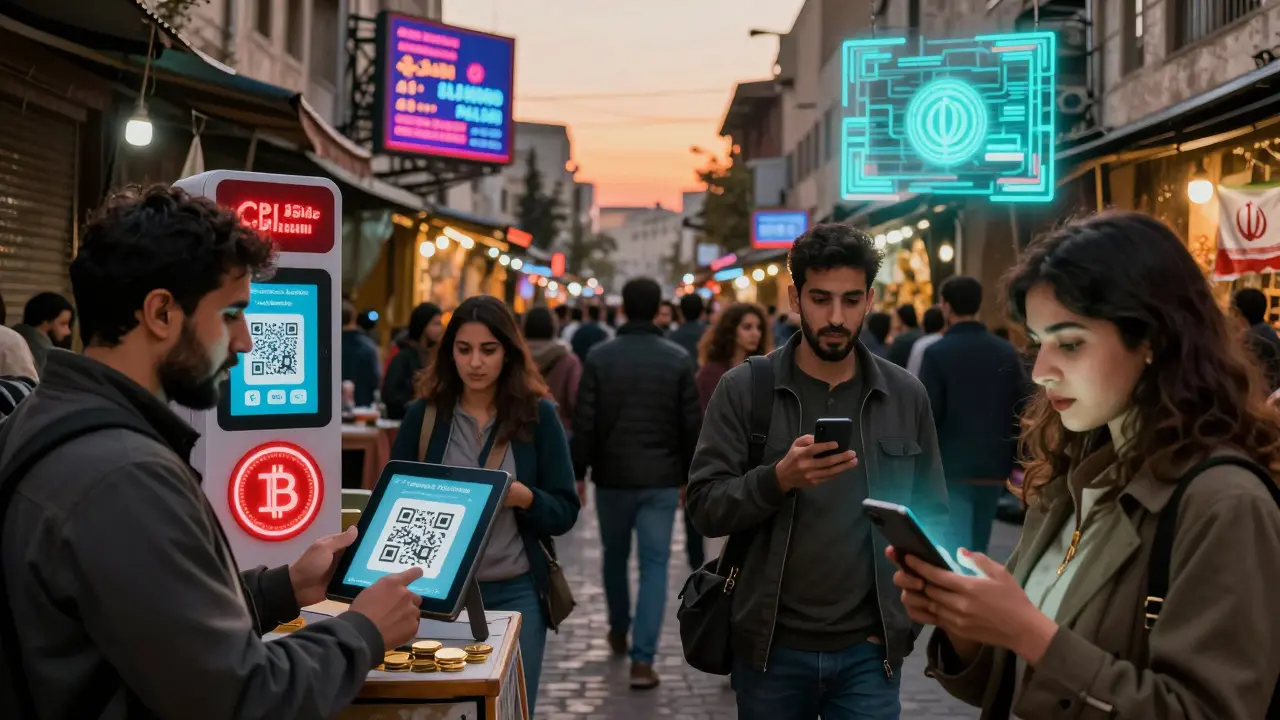
In July 2025, something unexpected happened. Tether froze dozens of Iranian-linked USDT wallets. Overnight, billions of dollars in value became locked. For Iranians who relied on USDT to protect savings from inflation, it was a shock. But they didn’t panic. They adapted. Within days, Iranian exchanges, influencers, and users started pushing a new strategy: swap USDT for DAI on the Polygon network. DAI, a decentralized stablecoin backed by crypto collateral, wasn’t under Tether’s control. It was open, censorship-resistant, and still pegged to the dollar.
This wasn’t just a technical workaround - it was a political one. Iranians didn’t wait for permission. They found a way to keep their money usable, even when the U.S. and its allies tried to cut them off. The government didn’t stop them. In fact, it quietly tolerated the shift. Why? Because even though DAI isn’t state-controlled, it still keeps crypto flowing through the Iranian economy. And as long as people are using crypto to buy goods and protect savings, the government benefits - through taxes, through control, and through reduced pressure on the rial.
Capital Gains Tax: Crypto Is Now a Speculative Asset
In August 2025, Iran passed its first law taxing cryptocurrency profits. The Law on Taxation of Speculation and Profiteering put crypto on the same level as gold, real estate, and foreign currency trading. If you buy Bitcoin at 10 million rials and sell it for 15 million, you owe tax on the 5 million profit. The tax rate isn’t public, but it’s structured like other speculative investments - meaning it’s steep enough to discourage short-term trading, but not so high that it kills the market.
This was a major shift. Before, crypto was a gray area - unregulated, untaxed, and unofficial. Now, it’s part of the formal economy. The government isn’t trying to shut it down. It’s trying to capture value from it. Traders now have to keep records. Exchanges have to report. The CBI has a new tool: tax compliance. And while many still trade without declaring, the risk of being caught has gone up. For the first time, crypto isn’t just a tool for survival - it’s a taxable income source.

Why Iranians Still Use Crypto Despite the Rules
Iran’s inflation rate hit 50% in 2024. The rial lost more than 70% of its value against the dollar in three years. People can’t trust their own currency. Banks are slow, corrupt, or inaccessible. Foreign remittances are blocked. So what’s left? Crypto. It’s not about getting rich. It’s about not losing everything.
Millions of Iranians use crypto to buy food, medicine, and internet services. They trade it peer-to-peer through Telegram groups. They hold DAI like cash. They mine Bitcoin not for profit, but to convert it into something that won’t vanish overnight. Even with strict rules, the demand hasn’t dropped. In fact, between January and July 2025, Iran saw $3.7 billion in crypto flows - only 11% down from the same period in 2024. That’s resilience. That’s necessity.
The government knows this. That’s why it doesn’t ban crypto. It regulates it. It taxes it. It takes a cut. But it lets it live - because if it shuts crypto down, it shuts down a vital economic safety valve for 85 million people.
What’s Next? Tighter Control, Not a Ban
The direction is clear: more oversight, not less. The CBI is expanding its monitoring tools. New licensing requirements are coming. More mining farms will be shut down. But the government isn’t moving toward prohibition. It’s moving toward total control. The goal isn’t to eliminate crypto - it’s to make sure every coin mined, traded, or held flows through state-approved channels.
Iran is also exploring crypto for international trade. Reports suggest collaboration with Russia on a gold-backed stablecoin to bypass Western payment systems. Iranian companies have been allowed to pay for imports using crypto since 2023. This isn’t just about survival anymore - it’s about building an alternative financial system, one coin at a time.
For now, the rules are strict. The penalties are real. But the system works - because it has to. Iranians don’t use crypto because it’s cool. They use it because they have no other choice. And the government? It’s not fighting that reality. It’s building its power on top of it.










Ellen Sales
December 19, 2025 AT 01:26 AMso iran just turned crypto into a state-run lottery where you pay extra for electricity to give your coins to the government... and somehow it's still better than watching your savings evaporate? 🤯 i mean, i get it, but also... wow.
Sheila Ayu
December 20, 2025 AT 04:39 AMWait-so they tax crypto profits... but also force you to sell to the central bank? That’s not regulation-that’s extortion with a side of blockchain! And don’t even get me started on the electricity prices! Why not just print more rials? Oh wait...
Janet Combs
December 20, 2025 AT 19:49 PMthis is wild. people are using crypto just to buy bread. like, imagine having to trade bitcoin for milk. it’s not crypto bro stuff. it’s survival. and the government? they’re just taking their cut. kinda sad. kinda brilliant.
vaibhav pushilkar
December 21, 2025 AT 14:11 PMIran's approach is pragmatic. Control the flow, tax the gain, let the people survive. No bans = less unrest. Smart.
Lloyd Yang
December 23, 2025 AT 12:07 PMI’ve read a lot about crypto in authoritarian states, but this is next-level. It’s like they built a parallel economy on top of a collapsing one, and now the state is the landlord, the bouncer, and the accountant-all while pretending it’s not a total mess. The fact that people switched to DAI overnight? That’s not tech literacy-that’s human ingenuity under pressure. And honestly? The government letting that slide? That’s not tolerance. That’s surrender wrapped in a tax form.
Luke Steven
December 24, 2025 AT 06:49 AMit’s not about freedom. it’s about function. when your currency is a ghost, you don’t ask for permission to use something that works. the state knows this. so they don’t kill it-they domesticate it. like a feral cat that brings you mice. you don’t chase it away. you leave out food. and take the mice.
Dan Dellechiaie
December 25, 2025 AT 13:26 PMThis is a textbook case of state capture of decentralized tech. The CBI isn’t regulating-it’s weaponizing. They’re using crypto as a fiscal tool while pretending it’s a market. The DAI pivot? That’s civil society outmaneuvering central planning. And the fact that they didn’t shut it down? That’s admission of defeat wrapped in bureaucracy.
Radha Reddy
December 26, 2025 AT 00:56 AMIt is fascinating how economic necessity can reshape policy. Iran's strategy, while rigid, demonstrates a deep understanding of the people's needs. The taxation framework, though strict, brings legitimacy to an otherwise chaotic space. Respect for the balance they have struck.
Craig Fraser
December 27, 2025 AT 17:44 PMSo they tax it, control it, monitor it, and still can’t stop 95% of mining? Then why bother? This isn’t regulation. It’s performance art. The government is just pretending to be in charge while everyone laughs at them.
Jacob Lawrenson
December 29, 2025 AT 17:07 PMYESSSSS this is the future!! 💪 People aren’t waiting for permission to survive. Iran’s crypto scene is basically a hackathon run by desperate geniuses. DAI over USDT? ICONIC. The state might own the license, but the people own the network. 🔥
Zavier McGuire
December 31, 2025 AT 13:21 PMthey let people mine but charge them export rates like its a business deal not a survival tactic and then act like theyre doing everyone a favor its not control its exploitation
Sybille Wernheim
January 1, 2026 AT 22:26 PMI love how people just adapted. No big announcement. No protest. Just swapped USDT for DAI and kept going. That’s the real power of crypto-not the tech, but the people behind it. So proud of Iranians right now. 💙
Cathy Bounchareune
January 3, 2026 AT 01:19 AMThis isn’t just crypto policy-it’s poetry in motion. A nation with no trust in its own money, building a new one out of code, and the state? It’s not trying to stop it. It’s trying to choreograph the dance. The DAI shift? That’s not a workaround. That’s a revolution in lowercase.
Jordan Renaud
January 4, 2026 AT 13:02 PMThere’s something quietly beautiful about this. People aren’t using crypto to get rich. They’re using it to stay human. And the government? It’s not evil. It’s terrified. Terrified of collapse. So it lets the people live-on its terms. That’s not tyranny. That’s tragedy with a tax code.
roxanne nott
January 5, 2026 AT 14:10 PMThe 95% illegal mining stat is fake. They’re inflating it to justify crackdowns. Also, DAI isn’t censorship-resistant-it’s just less monitored. And the tax law? It’s unenforceable. This whole article is propaganda dressed as journalism.
Ashley Lewis
January 6, 2026 AT 05:21 AMThe notion that this constitutes 'pragmatism' is laughable. A state that monopolizes digital assets while enforcing punitive electricity tariffs is not governing-it is parasitizing. The entire framework is a violation of economic liberty, dressed in bureaucratic euphemisms.
Vyas Koduvayur
January 6, 2026 AT 14:19 PMHonestly, the DAI shift is the most fascinating part. People didn’t wait for permission. They didn’t petition. They didn’t protest. They just… switched. And the government didn’t stop them. Why? Because even though DAI is decentralized, it still keeps the rial from collapsing completely. The state doesn’t care who holds the money-as long as the money keeps moving. It’s not control. It’s triage. And honestly? That’s the most honest thing I’ve seen from any government in years. They’re not trying to win. They’re just trying to not lose.
Charles Freitas
January 8, 2026 AT 03:08 AMThey tax it, monitor it, force you to sell to the state, and still can't stop the underground market? Then why not just legalize mining and cut the middleman? This isn't control-it's incompetence with a spreadsheet. Also, DAI? Cute. But if the CBI can track every legal transaction, they'll find a way to freeze DAI wallets too. They always do.