
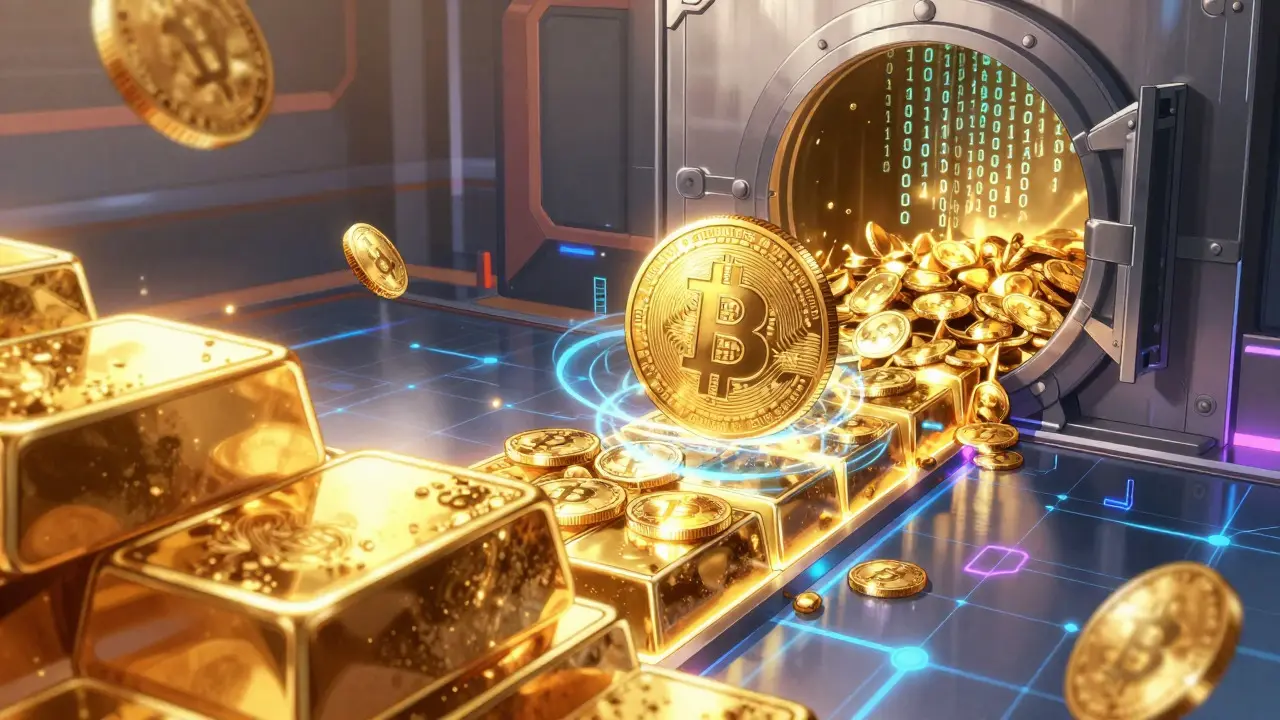
Have you ever wondered if your crypto portfolio could hold the same stability as a bar of gold? That’s the promise behind InfinitiCoin, a project that tries to bridge the wild volatility of digital assets with the steady value of precious metals. Launched in January 2024, this token isn’t just another meme coin hoping for a viral moment. It aims to combine decentralized finance, non-fungible tokens, and traditional asset investments into one ecosystem. But does it actually work, or is it just another complex idea struggling to find its footing?
The Core Concept: Bridging Crypto and Gold
At its heart, InfinitiCoin (INCO) is an experiment in hybrid utility. Most cryptocurrencies operate in a vacuum-they are either speculative bets on future adoption or tools for specific networks like Ethereum or Solana. INCO attempts something different by linking itself to tangible assets, specifically gold. The goal is simple: give users the speed and accessibility of blockchain transactions while offering the psychological comfort of backing their holdings with real-world commodities.
This approach targets a specific gap in the market. Many investors want exposure to crypto but fear the crash risk. Others want gold exposure but hate the storage fees and physical security risks. By creating a token that represents access to both worlds, the project hopes to attract a broader audience. However, executing this triple-threat model-DeFi, NFTs, and gold backing-is incredibly difficult. It requires not just smart code, but legal frameworks, physical audits, and robust financial partnerships.
Technical Foundations: Built on Binance Smart Chain
When looking under the hood, INCO runs on the Binance Smart Chain (BSC). This choice is strategic. BSC offers fast transaction times and significantly lower gas fees compared to the Ethereum mainnet. For a project trying to onboard everyday users who might be intimidated by high network costs, BSC is a practical foundation. It allows for micro-transactions and frequent interactions without draining the user’s wallet balance on fees alone.
The token operates via a smart contract, which acts as the rulebook for how INCO behaves. Security is a major concern for any new token, especially one dealing with hybrid assets. According to available data, the smart contracts have undergone audits to ensure they are free from critical bugs. While the identity of the auditing firm isn't always highlighted in marketing materials, the presence of an audit is a basic requirement for trust. The contract address for verification is publicly listed on major trackers, allowing tech-savvy users to inspect the code themselves.
Tokenomics: Supply and Circulation
Understanding the economics of a token is crucial before buying. INCO has a total supply cap of 1 billion tokens. This fixed number prevents infinite inflation, a common problem in poorly designed projects. However, not all tokens are in play at once. Reports indicate a circulating supply hovering around 799.8 million INCO. This means roughly 80% of the total supply is actively trading in the market, while the rest may be locked in reserves, team wallets, or staking pools.
A high circulating supply relative to the total supply can indicate that the project is mature enough to have distributed most of its tokens, or conversely, that there are few locked incentives left to drive long-term holding behavior. Investors should watch for unlock schedules. If large chunks of the remaining 20% are released suddenly, it could flood the market and drop the price. Transparency here is key.

Market Performance and Liquidity Realities
Let’s talk numbers, because that’s what matters most when you’re thinking about investing. As of mid-2026, INCO trades in the micro-cap range. Prices fluctuate between exchanges, typically sitting around $0.009 to $0.010 USD. You’ll see slight variations depending on where you look. CoinMarketCap might show one price, while Coinbase or Crypto.com shows another. These differences happen because each exchange has its own order book-its own pool of buyers and sellers.
The market capitalization reflects this modest scale, ranging from $8 million to $10 million across different platforms. To put that in perspective, top-tier cryptos like Bitcoin or Ethereum have market caps in the hundreds of billions. INCO is ranked somewhere between #1700 and #3000 globally. This ranking tells us it’s a niche player. It’s not household name yet, which means higher risk but also potentially higher reward if the project gains traction.
Liquidity is another story. Trading volume varies wildly. Some days, millions of dollars change hands; other times, activity dries up. On some major centralized exchanges, you might see zero volume reported, suggesting that most trading happens on decentralized exchanges (DEXs) within the BSC ecosystem or on specialized platforms like MEXC and Bybit. Low liquidity means you can buy easily, but selling a large amount quickly might cause the price to slip against you. Always check the depth of the order book before making big moves.
Utility: More Than Just a Speculative Asset
If INCO were just a coin with no use, it would likely fade away. Instead, the project pushes three main pillars of utility:
- Decentralized Finance (DeFi): Users can lend, borrow, and yield farm using INCO. This generates passive income opportunities for holders who don’t want to sell their tokens.
- NFT Integration: The ecosystem supports minting and trading non-fungible tokens. This ties into the broader Web3 culture, allowing artists and collectors to interact with the INCO economy.
- Gold Investment Access: This is the differentiator. The platform aims to let users convert or stake INCO for exposure to gold prices. This feature is still evolving, but it’s the hook that distinguishes INCO from thousands of other BSC tokens.
This multi-layered approach is ambitious. It forces the development team to maintain standards across three very different industries. Failure in one area, like a bug in the NFT marketplace, could spill over and hurt confidence in the DeFi lending protocols. Complexity is both the strength and the weakness here.

Risks and Challenges to Consider
No investment is safe, and INCO carries specific risks you need to weigh. First, there’s execution risk. Building a gold-backed crypto system involves regulatory hurdles. Different countries treat digital representations of physical assets differently. If regulations tighten, the project might struggle to maintain its gold-linking features.
Second, there’s competition. Established players already offer gold-backed tokens or stablecoins. Why would someone choose INCO over a more established option? The answer lies in community and innovation, but those are hard things to quantify. The project launched in early 2024, so it’s still relatively young. It hasn’t survived multiple full market cycles, which makes predicting its long-term viability tricky.
Finally, transparency gaps remain. Detailed information about the founding team’s background, institutional funding sources, and specific partnership agreements is often sparse. In the crypto world, anonymity is common, but for a project claiming to handle real-world assets like gold, knowing who is behind the curtain adds a layer of security. Do your due diligence. Check the whitepaper. Look for updates on their official channels. Don’t rely solely on third-party summaries.
How to Buy and Trade INCO
If you decide INCO fits your strategy, getting your hands on the tokens requires a bit of navigation. It’s not available for direct fiat purchase on every major platform. For instance, while Coinbase lists the price data, it may not support active trading yet. Your best bet is often decentralized exchanges (DEXs) like PancakeSwap, which runs natively on Binance Smart Chain.
- Set up a Wallet: Download MetaMask or Trust Wallet. Make sure you’re connected to the Binance Smart Chain network.
- Fund with BNB: You’ll need BNB to pay for gas fees and to swap for INCO. Buy BNB on a major exchange and send it to your wallet.
- Connect to DEX: Go to PancakeSwap.io and connect your wallet.
- Swap Tokens: Paste the official INCO contract address (0xb617fab6b94ed1fe6df3cad71e1dc997927a2a0e) to ensure you’re getting the right token. Set your slippage tolerance appropriately, as volatile tokens can fail transactions if the price moves too fast.
Alternatively, check centralized exchanges like MEXC or Bybit if they support spot trading for your region. These platforms offer easier interfaces but may charge higher withdrawal fees. Always verify the contract address before swapping. Scammers often create fake tokens with similar names.
Is InfinitiCoin Worth Your Attention?
InfinitiCoin represents a bold attempt to merge the best parts of crypto with the stability of traditional finance. It’s not for everyone. If you’re looking for a quick flip, the low liquidity might frustrate you. If you’re a conservative investor seeking gold exposure, the regulatory uncertainty might keep you up at night. But for those interested in the intersection of DeFi, NFTs, and commodity-backed assets, INCO offers a unique case study in modern blockchain innovation.
The project’s success will depend on execution. Can they deliver seamless gold integration? Can they grow their user base beyond the early adopters? Only time will tell. Keep an eye on their development roadmap and community engagement. In crypto, momentum is everything, and building a loyal community is the first step toward lasting value.
What is the current price of InfinitiCoin (INCO)?
As of mid-2026, INCO trades approximately between $0.009 and $0.010 USD. Prices vary slightly across exchanges like CoinMarketCap, Coinbase, and Crypto.com due to differing liquidity pools and trading volumes.
Is InfinitiCoin backed by real gold?
The project aims to provide exposure to gold investments through its ecosystem. While it positions itself as bridging crypto and tangible assets, users should verify the current status of the gold-backing mechanism and audit reports to understand exactly how the value is secured.
Which blockchain does INCO run on?
InfinitiCoin operates on the Binance Smart Chain (BSC). This allows for fast transactions and low fees, making it accessible for daily DeFi interactions and NFT trading.
Where can I buy INCO tokens?
You can trade INCO on decentralized exchanges like PancakeSwap using BNB, or on centralized platforms such as MEXC and Bybit. Availability on major exchanges like Coinbase may be limited to price tracking rather than active trading.
What is the total supply of INCO?
The total supply of InfinitiCoin is capped at 1 billion tokens. Approximately 799.8 million tokens are currently in circulation, meaning about 80% of the supply is available in the market.