You’ve probably heard of OpenSea or Binance NFT. But what happens when you want to buy an NFT that lives on Ethereum, but your wallet is on Polygon, and the game it belongs to runs on BNB Chain? That’s where Spores Network comes in. It’s not just another marketplace; it’s a cross-chain launchpad designed to bridge the gap between creators, gamers, and investors across multiple blockchains. If you’re tired of paying high gas fees or juggling five different wallets, this might be the solution you didn’t know you needed.
The Core Concept: Breaking Down Barriers
At its heart, Spores Network is a decentralized finance (DeFi) and non-fungible token (NFT) platform focused on interoperability. Most NFT platforms lock you into one blockchain. If you minted your art on Ethereum, you can’t easily trade it on Binance Smart Chain without complex bridging tools. Spores Network solves this by supporting multi-chain transactions across Ethereum, BNB Chain, and Polygon. This means you can participate in initial game offerings (IGOs), NFT drops, and land sales using assets from any of these three major networks.
The project was founded by Spores Labs, with a clear mission to empower creators in the digital economy. Their Token Generation Event (TGE) wrapped up in July 2021, marking the official start of the ecosystem. While it’s still in early-stage development as of late 2024, the vision is ambitious: creating a "frictionless" environment for owning and sharing digital assets in the metaverse.
How the SPO Token Works
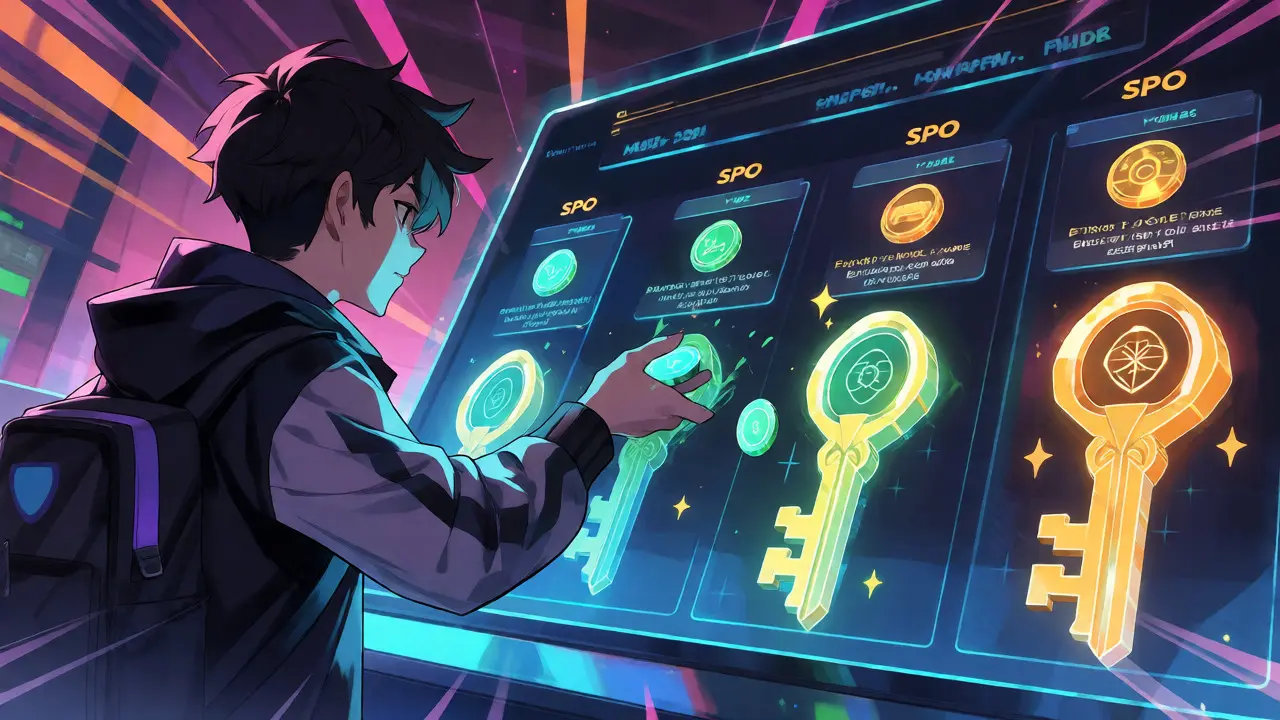
The lifeblood of this platform is the SPO token. It functions as both an ERC20 token on Ethereum and a BEP20 token on BNB Chain, giving it flexibility across ecosystems. The total supply is capped at 5 billion tokens, with about 21% (1.05 billion) in circulation as of October 2024. But what do you actually use SPO for?
- Governance: Holders can vote on platform decisions. Your voting power depends on how many tokens you stake.
- Staking: You can stake SPO to get access to tier-based investment opportunities on the launchpad. Higher tiers often mean earlier access to hot new projects.
- Fees & Discounts: Use SPO to pay for platform fees, often getting a discount compared to paying in stablecoins.
- Subscriptions: The "Elite Club" subscription uses SPO to grant exclusive NFT airdrops and presale access.
Think of SPO less as a speculative asset and more as a utility key. It unlocks doors within the Spores ecosystem. Without it, you’re stuck outside the VIP section.
Who Is It For? Creators vs. Investors
Spores Network targets two main groups: creators and early-stage investors. For creators, whether they make animation, fashion, gaming assets, or sports cards, the platform offers a borderless way to sell their work. They don’t have to worry about which chain their buyers are on because Spores handles the cross-chain complexity.
For investors, the appeal lies in the launchpad. This is where new GameFi and metaverse projects launch their tokens or NFTs. By staking SPO, you gain priority access to these Initial Game Offerings (IGOs) and Initial NFT Offerings (INOs). It’s like being first in line for a concert ticket drop, except the tickets could turn out to be the next big thing in blockchain gaming.
However, there’s a catch. Because it’s niche, the user base is smaller than giants like OpenSea. You won’t find millions of daily users browsing here. Instead, you’ll find a tight-knit community of enthusiasts looking for hidden gems before they hit the mainstream radar.
Market Position and Competition
Let’s look at the numbers. As of late 2024, Spores Network has a market capitalization hovering around $176,000. Compare that to OpenSea’s multi-billion dollar valuation, and you see why Spores is considered a micro-cap player. Its ranking sits near #6538 in the broader crypto market. Daily trading volume is modest, typically around $36,000, with most activity happening on Gate.io, Uniswap, and PancakeSwap.
Why choose Spores over bigger competitors? Here’s a quick comparison:
| Feature | Spores Network | OpenSea | Binance NFT |
|---|---|---|---|
| Primary Focus | Cross-chain Launchpad & DeFi | General Marketplace | Ecosystem Integration |
| Supported Chains | Ethereum, BNB, Polygon | Multi-chain (limited integration) | BNB Chain primarily |
| Token Utility | SPO (Governance, Staking, Fees) | N/A (or partner tokens) | BNB (Fees) |
| Best For | Early GameFi/Metaverse Access | High-volume Trading | Binance Users |
Spores doesn’t try to beat OpenSea on volume. It tries to beat them on accessibility and specialized access. If you’re hunting for the next big Play-to-Earn game before it explodes, Spores gives you a structured way to get in early.

Risks and Realities
No crypto project is without risk, and Spores Network is no exception. First, liquidity is thin. With a small market cap, price swings can be violent. A single large sell order can crash the price temporarily. Second, adoption is slow. The platform needs more creators and more games to join to become truly useful. Without a vibrant ecosystem, the SPO token loses its utility value.
Also, note regional restrictions. Some users report seeing "Spores Launchpad is not available in your country" messages. This regulatory uncertainty can limit growth in certain jurisdictions. Always check if the service is accessible in your location before investing time or money.
Finally, remember that this is an early-stage project. The team is still expanding features. What exists today might look very different in two years. Do your own research and never invest more than you can afford to lose.
Getting Started with SPO
If you want to test the waters, here’s how to get started. You’ll need a compatible wallet like MetaMask or Trust Wallet. Then, acquire SPO tokens through centralized exchanges like Gate.io or decentralized exchanges like PancakeSwap. Once you have tokens, connect your wallet to the Spores website. From there, you can explore active launches, stake your tokens, or browse NFT collections.
The interface is straightforward, but the multi-chain nature requires attention. Make sure you’re selecting the correct network (Ethereum, BNB, or Polygon) before making transactions. Mistakes here can lead to lost funds or failed trades.
Is Spores Network only for Ethereum users?
No. One of Spores Network's key features is its multi-chain support. It operates seamlessly across Ethereum, BNB Chain, and Polygon. This allows users to interact with the platform using assets from any of these three major blockchains, reducing the need for complex bridging.
What is the primary use case for the SPO token?
The SPO token serves multiple purposes within the ecosystem. It is used for governance voting, where staked tokens determine voting weight. It also grants access to tier-based investment opportunities on the launchpad, pays for platform fees with potential discounts, and powers subscriptions like the Elite Club for exclusive NFT airdrops.
How does Spores Network differ from OpenSea?
While OpenSea is a general-purpose NFT marketplace with massive volume, Spores Network focuses specifically on being a cross-chain launchpad for GameFi and metaverse projects. It integrates DeFi features like staking and liquidity mining directly into the NFT experience, targeting early-stage investors rather than high-volume traders.
Where can I buy SPO tokens?
SPO tokens are primarily traded on centralized exchanges like Gate.io and decentralized exchanges such as Uniswap (v2) and PancakeSwap (v2). The SPO/USDT pair typically dominates liquidity, so checking those pairs first is recommended for better execution prices.
Is Spores Network a good long-term investment?
This depends on your risk tolerance. Spores Network is a micro-cap project with significant growth potential if it captures the GameFi market. However, it faces stiff competition and currently has low trading volume. Experts advise careful consideration due to its early-stage development status and market volatility.