
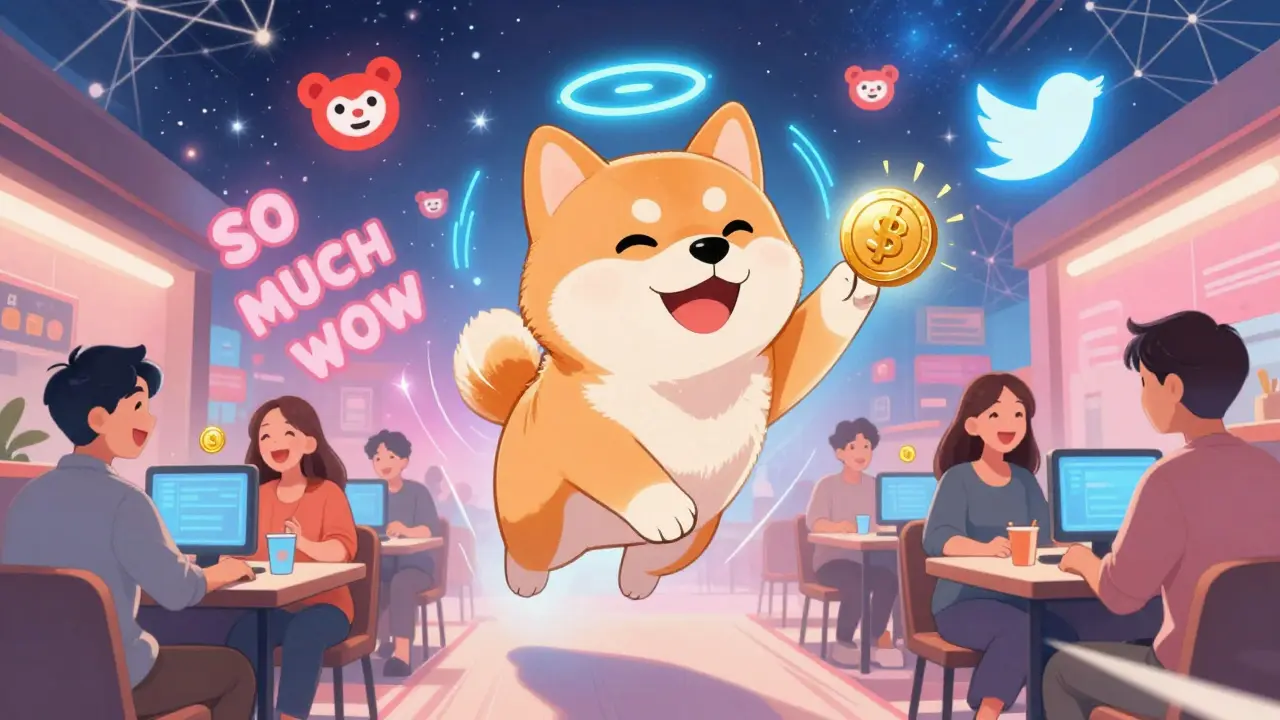
On December 6, 2013, a joke became a cryptocurrency. Not just any joke - a goofy internet meme of a Shiba Inu dog with Comic Sans text saying "such wow" and "many coins". Two guys, Billy Markus and Jackson Palmer, threw it together over a weekend as a parody of the serious, complex world of Bitcoin. They didn’t expect it to last a month. Ten years later, Dogecoin is still here - mining away, tipping strangers on Reddit, and quietly reshaping how people think about money online.
How a Meme Became a Blockchain
Dogecoin wasn’t built to change the world. It was built to make people laugh. Jackson Palmer, working in marketing at Adobe, tweeted about investing in "dogecoin" just to poke fun at the wild crypto hype of 2013. He registered Dogecoin.com on December 4. Two days later, Billy Markus, a software engineer at IBM, saw the site and messaged him. By Saturday, Markus had coded the whole thing. Sunday, it went live. The code? A fork of Litecoin, which itself came from Bitcoin. Nothing fancy. Same Scrypt algorithm. Same proof-of-work. But here’s the twist: while Bitcoin limits itself to 21 million coins, Dogecoin has no cap. Every minute, 10,000 new Dogecoins are born. Forever. No end. No scarcity. That wasn’t an accident. It was the point. Palmer and Markus wanted a currency you could actually use - not hoard. They didn’t want investors driving prices up with FOMO. They wanted people tipping each other $0.01 for funny comments. They wanted it to feel like pocket change, not gold bars.The First 30 Days: A Meme Explosion
Within 30 days, Dogecoin.com got over a million visitors. That’s insane for a crypto project that didn’t even have a whitepaper. No VC funding. No team announcement. Just a dog and a sense of humor. By December 19, just 13 days after launch, the price jumped 300% in 72 hours. People were buying it because it was fun. Because they felt included. Because it didn’t take itself seriously. But then came the crash. Three days later, prices dropped 80%. Why? A few big mining pools realized Dogecoin was easy to mine with basic hardware. They flooded the network, dumped coins, and scared off early buyers. The market panicked. But here’s the thing - the community didn’t leave. Unlike Bitcoin, which had reserved coins for founders and early investors, Dogecoin had a fair launch. No pre-mine. No insider advantage. Everyone started at zero. That fairness built trust. Even when the price tanked, people stuck around because they felt like they were part of something real - not a financial scheme.Why It Works: The Tech Behind the Joke
Don’t let the dog picture fool you. Dogecoin’s blockchain is solid. It uses Scrypt, the same algorithm as Litecoin. That means it’s resistant to the giant ASIC miners that dominate Bitcoin. Early on, you could mine Dogecoin with a regular GPU. That kept it open to everyday people. In 2014, they made a smart move: merge-mining with Litecoin. Now, when someone mines Litecoin, they’re also mining Dogecoin at the same time - no extra power needed. That gave Dogecoin instant security. It didn’t have to build its own mining network from scratch. It piggybacked on Litecoin’s existing power. Transaction speeds? Faster than Bitcoin. Fees? Almost nothing. A typical Dogecoin transfer costs less than a penny. That’s why it became popular for tipping on Reddit, Twitch, and Twitter. Want to reward someone for a great comment? Send 100 DOGE. No paperwork. No bank fees. Just a digital high-five.
The Community That Refused to Die
What kept Dogecoin alive wasn’t the tech. It was the people. In 2014, the community raised over $50,000 in Dogecoin to send the Jamaican bobsled team to the Winter Olympics. In 2015, they funded the cleanup of a highway in Texas. In 2018, they bought a NASCAR race car and painted it with the Doge face. These weren’t marketing stunts. They were real acts of charity, organized by strangers on Reddit who just liked the vibe. The Dogecoin community doesn’t talk about “wealth.” They talk about “fun,” “kindness,” and “being part of something weird.” That’s why it survived the 2018 crypto winter, the 2022 crash, and Elon Musk’s endless tweets. People didn’t invest because they thought Dogecoin would hit $1. They stayed because they liked the people.Why Experts Call It “The Most Honest Sh*tcoin”
Galaxy Digital, a respected crypto research firm, labeled Dogecoin “The Most Honest Sh*tcoin.” That’s not an insult. It’s a compliment. They meant: everyone knew it was a joke from day one. No fake whitepapers. No promises of moonshots. No hidden team wallets. Just a meme with a blockchain attached. Unlike other cryptos that try to sound like Wall Street, Dogecoin never pretended to be anything else. It never claimed to be “decentralized finance.” It never said it would replace banks. It just said: here’s a coin. Have fun with it. Jackson Palmer put it best: “We thought it would go viral, attract a few miners, and then fade away. But something interesting happened - it made people care about cryptocurrency.” For many, Dogecoin was their first crypto. Not because it was profitable. But because it was welcoming. No jargon. No elitism. Just a dog, a smile, and a little bit of magic.
Where It Stands in 2025
Today, Dogecoin trades on every major exchange. You can buy it with a credit card. You can spend it at online stores, from tech shops to coffee vendors. Some businesses even accept it for rent. It’s not the biggest crypto. It’s not the most valuable. But it’s the most recognizable. The Dogecoin Foundation, a non-profit formed in 2014, still handles trademarks and community grants. Developers still push updates. The blockchain still runs. The meme still lives. Critics say it’s pointless. That without scarcity, it has no value. But value isn’t just about supply and demand. It’s about culture. About trust. About shared joy. Dogecoin didn’t win because it was the best tech. It won because it was the most human.Is Dogecoin Still Worth It?
If you’re looking for a store of value? No. Dogecoin’s unlimited supply means it won’t appreciate like Bitcoin. It’s not meant to be held for years. But if you want to send a quick tip? Pay for a digital service? Try out crypto without risking your life savings? Then Dogecoin still works better than almost anything else. It’s the easiest on-ramp for beginners. The cheapest way to send money across borders. The only crypto where you can get a refund in memes. And if you’re just curious? Download a wallet. Buy a few hundred DOGE. Send a tip to someone who made you laugh today. That’s what Dogecoin was always meant for.Is Dogecoin still being mined today?
Yes. Dogecoin is still being mined every minute, with 10,000 new coins added to circulation each time. Since 2014, it’s been merge-mined with Litecoin, meaning Litecoin miners automatically mine Dogecoin too. This keeps the network secure without needing a separate mining community. Anyone with a Scrypt-compatible miner can still join - though most mining is now done by large pools.
Why does Dogecoin have unlimited supply?
The unlimited supply was intentional. The creators wanted Dogecoin to be used for everyday transactions, not hoarded. Bitcoin’s scarcity makes it feel like digital gold - something to save. Dogecoin was designed to feel like digital cash - something to spend. With new coins always being created, miners stay incentivized, fees stay low, and the currency stays fluid. It’s the opposite of Bitcoin’s deflationary model - and that’s exactly why it works for tipping and small payments.
Can Dogecoin reach $1 per coin?
Technically, yes - but it’s extremely unlikely. To hit $1, Dogecoin’s market cap would need to exceed $130 billion, which is more than the entire market cap of Ethereum in early 2025. That would require massive, sustained buying pressure from institutions or governments, which isn’t realistic given Dogecoin’s lack of utility beyond payments and tipping. Most experts agree it will stay in the cents range. But that’s okay - it was never meant to be a billionaire’s asset.
Is Dogecoin safe to use?
The Dogecoin blockchain is secure and has been running without major issues since 2013. Its merge-mining with Litecoin gives it strong network protection. However, like all cryptocurrencies, your safety depends on how you store your coins. Use a reputable wallet like Exodus, Trust Wallet, or the official Dogecoin Core wallet. Never share your private keys. And be wary of scams - Dogecoin’s popularity makes it a target for fake websites and phishing links.
What’s the difference between Dogecoin and Bitcoin?
Bitcoin is designed to be digital gold - scarce, slow, and valuable over time. Dogecoin is digital pocket change - fast, cheap, and meant to be spent. Bitcoin has a 21 million coin cap; Dogecoin has none. Bitcoin uses SHA-256 mining; Dogecoin uses Scrypt. Bitcoin transactions take 10 minutes on average; Dogecoin takes about 1 minute. Bitcoin appeals to investors; Dogecoin appeals to users. They’re not rivals - they’re different tools for different jobs.
Who controls Dogecoin?
No one controls Dogecoin. It’s decentralized. The original creators stepped away years ago. The Dogecoin Foundation handles trademarks and community grants, but doesn’t control the code. Updates come from volunteer developers around the world. Changes require consensus from the mining community and wallet providers. That’s why it’s survived so long - because no single person or company can shut it down or change its rules.







Madhavi Shyam
December 16, 2025 AT 13:19 PMDogecoin's merge-mining with Litecoin is a masterclass in resource optimization. Scrypt-based PoW, no pre-mine, infinite supply - it's the antithesis of Bitcoin's hoarding culture. This isn't speculation, it's behavioral economics in action.
Mark Cook
December 18, 2025 AT 08:09 AMlol who even cares anymore 😂
Jack Daniels
December 20, 2025 AT 02:18 AMi still remember when i mined doge on my laptop back in 2014... felt like i was part of something real. now it's just another coin on binance. sad.
Bradley Cassidy
December 21, 2025 AT 18:57 PMman i still get chills thinking about the jamaican bobsled team getting funded by a bunch of strangers on reddit. that was pure magic. doge didn’t need a whitepaper, it had heart. and yeah, i miss when a 100 doge tip felt like a hug. now it’s just… noise. 🐶💛
Craig Nikonov
December 22, 2025 AT 11:57 AMthey say it’s decentralized but the foundation still holds the trademark. that’s not decentralization - that’s controlled chaos. and don’t get me started on elon’s tweets. this whole thing is a psyop to distract from real crypto innovation. mark my words.
Emma Sherwood
December 23, 2025 AT 19:55 PMyou know what’s wild? dogecoin introduced so many people to crypto who never would’ve touched bitcoin because it felt too serious. i met my best friend through a doge tipping thread on r/dogecoin. we still send each other 500 DOGE every birthday. it’s not about the money - it’s about the ritual. 🌍❤️
Patricia Amarante
December 24, 2025 AT 18:49 PMso cute how it started as a joke. still makes me smile.
Timothy Slazyk
December 25, 2025 AT 17:44 PMthe real genius of dogecoin isn’t the tech - it’s the rejection of scarcity as a moral imperative. capitalism teaches us that value comes from limitation. dogecoin says: what if value comes from generosity? it’s not a currency. it’s a philosophy. and it’s the only one that ever made me feel like crypto could be kind.
Donna Goines
December 27, 2025 AT 02:09 AMthey’re lying about the merge-mining. it’s not secure - the litecoin network is being used as a puppet. and the foundation? funded by shadowy actors who want to normalize crypto for mass adoption. this is the first step to central bank digital currency integration. watch.
Shruti Sinha
December 27, 2025 AT 12:36 PMthe community kept it alive. that’s all that matters.
Cheyenne Cotter
December 28, 2025 AT 19:52 PMokay but let’s be real - the fact that it’s still around after 10 years is a miracle. i mean, think about it: no whitepaper, no roadmap, no team, no VC backing, just a dog and a vibe. and yet, it outlasted every ‘serious’ altcoin that had 100x the funding. it’s like the internet’s way of saying, ‘you can’t kill kindness with greed.’ also, i cried when the nascar car got painted. don’t judge me.
Abby Daguindal
December 29, 2025 AT 14:19 PMdogecoin is a scam. everyone knows it. the only people who still believe in it are the ones who got rich off it and now want to keep the gullible ones buying in. don’t be fooled by the ‘fun’ narrative - it’s just the sugar coating on a Ponzi.
Tom Joyner
December 30, 2025 AT 23:53 PMit’s a novelty asset with no intrinsic value. comparing it to bitcoin is like comparing a party balloon to a titanium alloy. the fact that it still trades at all is a testament to human gullibility - not innovation.
Kelsey Stephens
December 31, 2025 AT 01:02 AMi just want to say thank you to everyone who kept dogecoin alive. even when the world called it stupid, you made it meaningful. i sent my first doge tip to a stranger who made me laugh during a bad day. that moment changed how i saw money. you’re not just holding a coin - you’re holding a piece of humanity.
SeTSUnA Kevin
January 1, 2026 AT 14:18 PMScrypt? Merge-mining? Please. Dogecoin is a blockchain for the emotionally vulnerable. It’s not finance - it’s digital therapy.
Florence Maail
January 2, 2026 AT 16:49 PMelona musk is definitely running a deep state operation through doge. you think the nascar thing was random? it was a test. next, they’ll tie it to social credit. and the ‘community’? just a front for the new global currency rollout. they’re using memes to normalize control. wake up.
🐶👁️🗨️Jesse Messiah
January 3, 2026 AT 08:25 AMhey, if you’ve ever sent a doge tip to someone who needed it - even just 10 coins - you’re part of something beautiful. i used to work at a shelter, and one day a guy sent 5000 DOGE to buy food for the cats. no name, no message. just a receipt. that’s the real crypto revolution right there. keep it going.
Kayla Murphy
January 4, 2026 AT 10:07 AMyou’re not too late to join. buy a few doge. tip someone today. smile. that’s the whole point. 🐶✨
Dionne Wilkinson
January 5, 2026 AT 17:05 PMit’s funny how something so silly became so meaningful. maybe we all just needed something that didn’t take itself seriously.
Amy Copeland
January 5, 2026 AT 22:38 PMoh wow, another ‘dogecoin is magic’ post. how original. the only thing this coin proves is that people will believe anything if you put a cute dog on it. congrats, you’ve been manipulated by a meme.